Table of Contents
- Introduction
- Understanding the Architecture of Gemini 4
- Key Gemini 4 Argon Capabilities
- How Gemini 4 Differs from Previous Generations
- Developer Availability and Access
- Top Gemini 4 Developer Use Cases
- Integrating Argon into Existing Workflows
- Performance Metrics and Benchmarking
- Best Practices for Prompt Engineering
- Managing AI Model Latency
- Implementing Robust AI Guardrails
- Cost Management for Scale
- The Role of Multimodal Processing
- Conclusion
Introduction
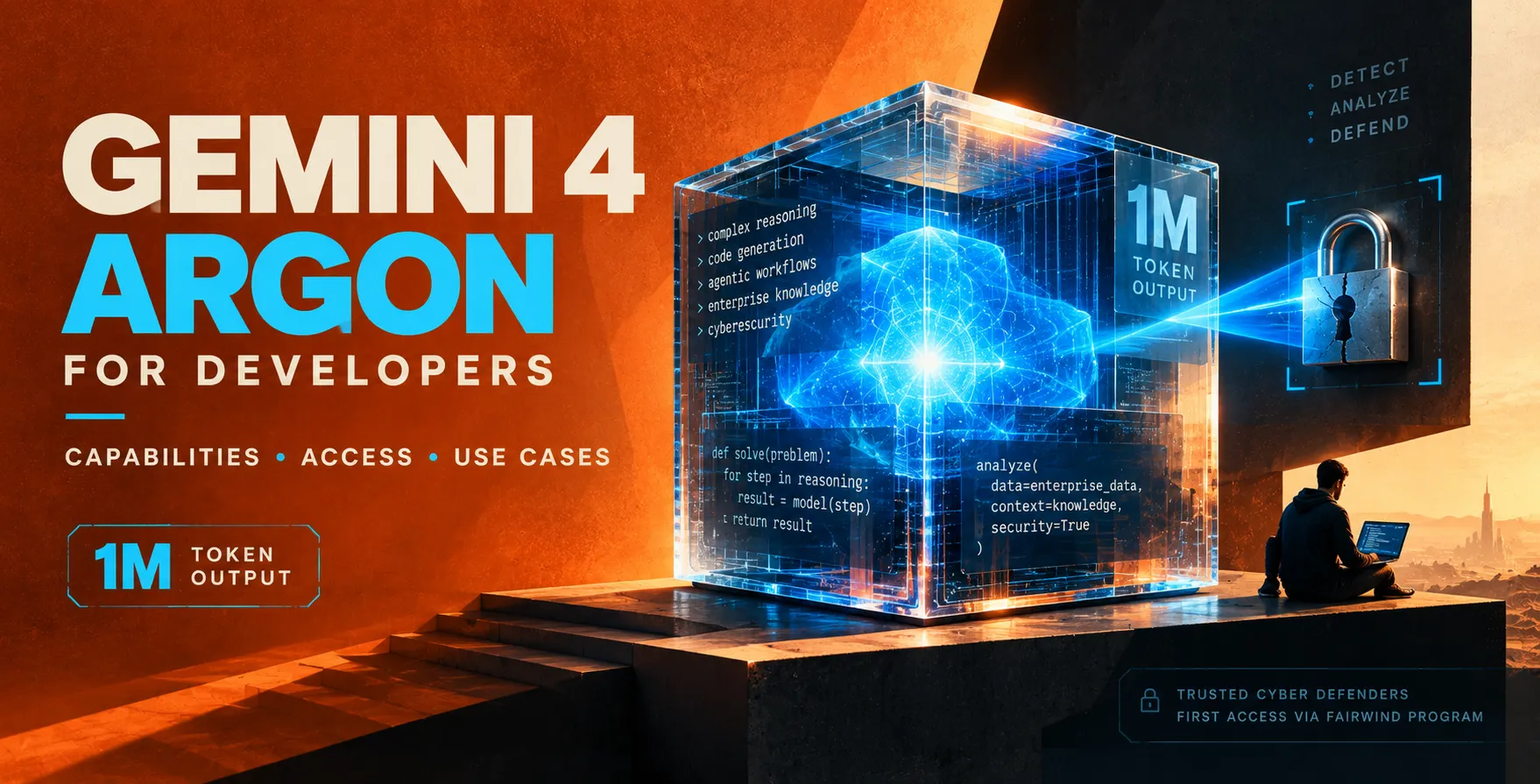
The landscape of large language models evolves at a rapid pace, demanding that engineers stay current. The introduction of Gemini 4 marks a significant leap forward in reasoning, multimodal integration, and raw performance for enterprise applications.
For developers, understanding the specific nuances of the Argon variant is essential for optimizing system performance. This guide covers what you need to know to start building with this powerful technology.
Understanding the Architecture of Gemini 4
At its core, Gemini 4 represents a fundamental shift in how models process information across disparate modalities. Unlike earlier iterations, this architecture prioritizes native multimodal understanding over stitched-together processing pipelines.
The Argon variant is specifically tuned for high-throughput environments where low latency is non-negotiable. It leverages a refined transformer backbone that improves context retention and instruction following.
This architectural change allows developers to handle complex inputs without excessive token bloat. It provides a cleaner, more predictable output stream for mission-critical applications.
- Native multimodal comprehension
- Improved context retention
- Optimized inference pathways
- Lower computational overhead
Key Gemini 4 Argon Capabilities
The Gemini 4 Argon capabilities are designed to solve the most persistent bottlenecks in modern AI engineering. These include advanced reasoning, structured output generation, and improved tool-calling performance.
The model excels at breaking down multi-step tasks into manageable logical segments. This makes it an ideal candidate for agents that require high autonomy and accuracy in unpredictable environments.
Furthermore, Argon supports expanded context windows that maintain coherence even over long-running sessions. This is a game changer for developers building complex document analysis or coding assistants.
- Advanced logical reasoning
- High-fidelity structured data extraction
- Expanded context window support
- Superior tool-calling precision
- Native code execution capabilities
- Multi-language proficiency
How Gemini 4 Differs from Previous Generations
Moving from older models to the latest generation requires a shift in how you structure your API calls. While previous versions were excellent at summarization, this new generation shines in planning and execution.
The differences are most apparent when comparing performance on complex benchmarks. Argon consistently demonstrates higher accuracy in retrieval-augmented generation pipelines compared to its predecessors.
Developers will notice that the model requires less "hand-holding" during prompt engineering. It adheres to complex system instructions with much higher consistency than earlier iterations.
| Feature |
Gemini 3.8 |
Gemini 4 Argon |
| Reasoning |
Standard |
Advanced |
| Latency |
Moderate |
Low |
| Multimodal |
Good |
Excellent |
| Tool Calling |
Reliable |
Superior |
| Context Limit |
Large |
Extended |
Developer Availability and Access
Access to these models is governed through standard cloud-based APIs, ensuring ease of integration for existing infrastructure. Developers can tap into the power of Argon via updated SDKs that simplify authentication and request handling.
Enterprise users gain priority access and higher rate limits, which are crucial for scaling production workloads. Detailed documentation is available to guide teams through the migration process from older endpoints.
We recommend starting with a sandbox environment to test latency and cost profiles. This ensures that your application architecture is fully prepared before transitioning to high-volume production traffic.
- Cloud-native API endpoints
- Up-to-date SDK support
- Tiered rate limiting
Top Gemini 4 Developer Use Cases
There are numerous Gemini 4 developer use cases that capitalize on the model's unique strengths. These range from automated coding assistants to complex data synthesis platforms.
For instance, using the model to power an autonomous agent can significantly reduce the need for manual intervention in repetitive workflows. It can read, analyze, and act upon multi-format data streams in real time.
These capabilities enable the creation of highly responsive interfaces that feel more like human partners than static tools. It is an ideal backbone for any application requiring sophisticated reasoning.
- Autonomous coding agents
- Real-time data analysis
- Complex document synthesis
- Dynamic user interface generation
- Automated customer support
- Predictive workflow automation
Integrating Argon into Existing Workflows
Integrating new AI models into established systems requires careful planning to maintain stability. The best approach involves implementing an abstraction layer between your application code and the API.
This allows you to switch between model versions or providers without rewriting your entire business logic. It also simplifies the process of testing new model capabilities against existing test suites.
Focus on standardizing your input and output formats using JSON schemas. This ensures that the model's output remains machine-readable and consistent across different environments.
Performance Metrics and Benchmarking
Measuring the success of your implementation requires rigorous evaluation of your specific use cases. Relying solely on general benchmarks can be misleading for specialized business applications.
Set up a robust evaluation framework that checks for accuracy, latency, and cost efficiency. This provides a baseline that you can use to justify future optimizations or infrastructure changes.
Consistent monitoring of your production logs will reveal edge cases that might require additional fine-tuning. Treat evaluation as an ongoing process rather than a one-time setup step.
- Accuracy testing
- Latency measurement
- Cost-per-request tracking
- Edge case identification
Best Practices for Prompt Engineering
Even with advanced reasoning capabilities, clear and concise prompts are essential for optimal performance. Start by providing the model with a clear role definition and explicit constraints.
Use few-shot examples to illustrate the desired output format and tone. This dramatically reduces the variance in model responses and improves overall reliability.
Always verify that your instructions do not conflict with one another. Contradictory constraints can lead to unpredictable behavior, especially when the model is forced to choose between them.
Managing AI Model Latency
For applications where speed is critical, managing latency is a primary concern for any engineering team. Argon is optimized for speed, but network overhead and request volume can still impact performance.
Consider implementing caching strategies for frequently accessed information to reduce the number of API calls. This can significantly improve the user experience while also reducing your total operational costs.
Another effective strategy is to batch smaller requests whenever possible. This optimizes throughput and helps your system handle higher volumes of data without needing to scale up your infrastructure immediately.
Implementing Robust AI Guardrails
Security and compliance are non-negotiable for production AI systems. Regardless of the model's sophistication, you must implement layers of validation to ensure safe and predictable output.
Use input filtering to block malicious or irrelevant queries before they reach the model. Similarly, use output validation to ensure that generated content adheres to your brand standards and safety policies.
Regularly audit your system logs to detect any patterns of misuse or unexpected model behavior. This proactive approach helps build trust with your users and keeps your application compliant with evolving regulations.
Cost Management for Scale
Scaling an AI-driven application requires a vigilant approach to cost management. Monitor your usage patterns closely to identify opportunities for optimization.
Consider using smaller, specialized models for simple tasks and reserving the power of Argon for complex reasoning. This tiered approach is often the most cost-effective way to build large-scale systems.
Always set up usage alerts and budget caps to avoid unexpected billing surprises. Keeping a close eye on your API spend is as important as monitoring your application's uptime and reliability.
- Tiered model usage
- Budget monitoring alerts
- Efficient request batching
The Role of Multimodal Processing
The ability to process audio, video, and text simultaneously opens up new possibilities for developers. This Gemini 4 Argon for developers paradigm shift allows for applications that can truly "see" and "hear" the context of a user's request.
Imagine a support system that can analyze a user's screen recording and provide real-time guidance. This level of interaction is now possible thanks to the deeper multimodal integration in the latest architecture.
Building these applications requires a solid grasp of how to feed diverse data types into the API. Mastering this will set your applications apart in an increasingly competitive market.
Conclusion
Gemini 4 Argon offers a robust and versatile toolkit for developers looking to build the next generation of AI applications. By leveraging its advanced reasoning and multimodal capabilities, you can solve complex problems with unprecedented efficiency.
Remember to focus on modular design, rigorous testing, and cost-effective scaling strategies. These foundations will ensure that your project remains reliable and performant as it grows from a prototype to a production system.
Stay curious, keep experimenting, and continue refining your implementation. The tools available today provide endless potential for innovation in the hands of skilled engineers.


 In collaboration with