Table of Contents
- Introduction to the Latest Release
- Performance Improvements in Redis 8.2
- Enhanced Memory Management
- New Data Structure Capabilities
- Security Hardening and Authentication
- Streamlined Configuration Management
- Developer Experience Enhancements
- Upgrading Strategy and Best Practices
- Common Pitfalls During Migration
- Optimizing Redis Caching Strategies
- Monitoring and Observability Updates
- Breaking Changes to Watch For
- Compatibility with Existing Tooling
- Conclusion
Introduction to the Latest Release
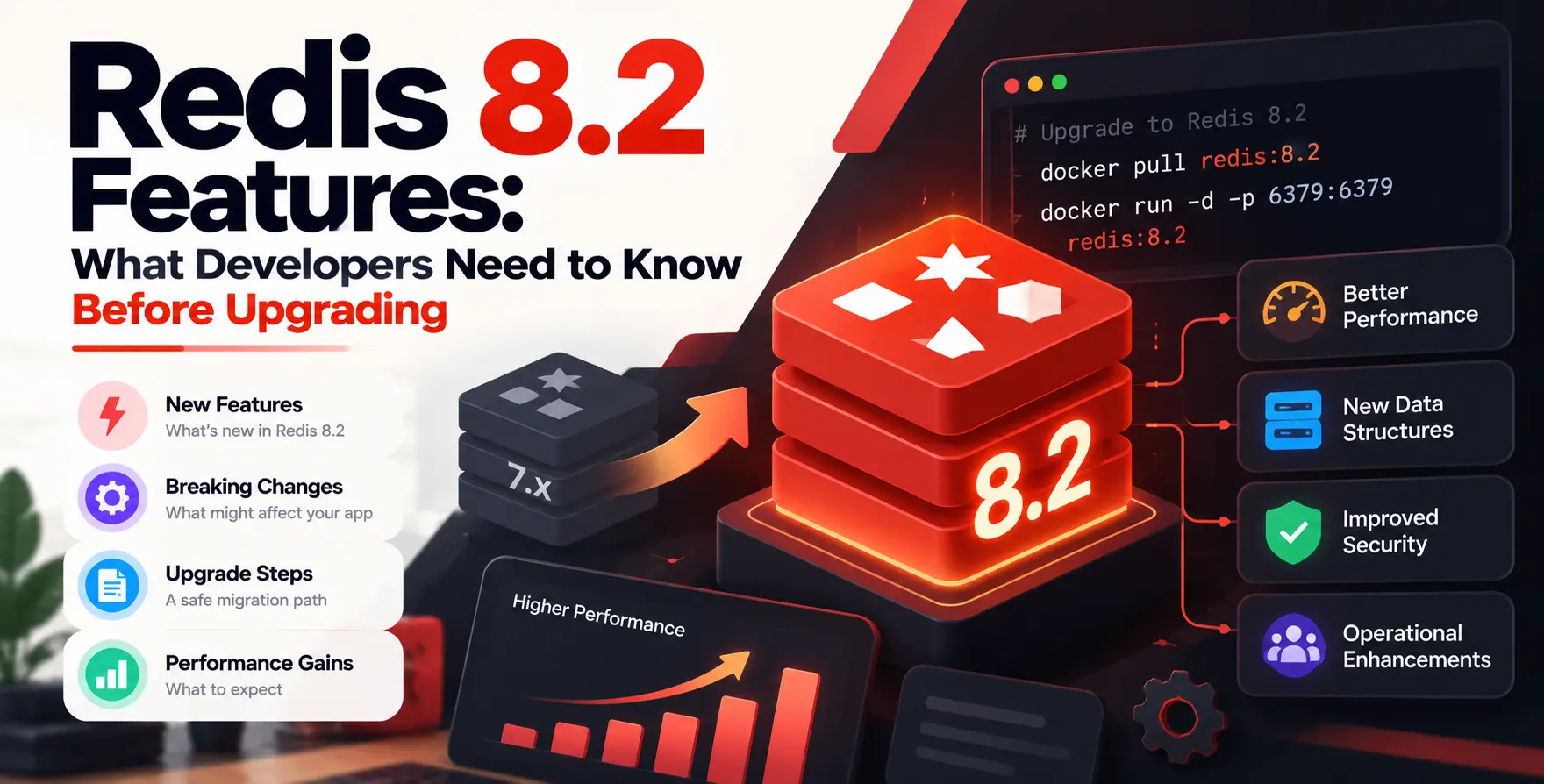
The release of Redis 8.2 marks a significant milestone for distributed data systems. This version brings substantial refinements to how we handle high-throughput workloads and ephemeral data storage.
For many teams, planning a Redis 8 upgrade is now a top priority. Understanding these changes before you commit to a migration is essential for maintaining system stability.
Performance Improvements in Redis 8.2
Engineers often focus on raw throughput when evaluating database updates. Redis 8.2 new features deliver tangible gains in command latency and concurrent connection handling.
Reduced Latency Profiles
The internal event loop has seen a major overhaul to minimize blocking operations. This ensures that even under heavy load, your application experiences predictable response times.
- Lower tail latency for common GET operations
- Improved performance for multi-key commands
- Reduced CPU overhead per operation
These refinements mean your microservices will spend less time waiting on I/O. It directly translates to a snappier experience for end users.
Connection Pooling Efficiency
The way the engine manages client sockets has been optimized for modern multi-core environments. Scaling your infrastructure becomes much easier when the database handles thousands of concurrent connections gracefully.
- Dynamic scaling of connection buffers
- Better resource reuse across threads
This allows your backend services to maintain higher concurrent request levels without hitting artificial bottlenecks. It is a welcome change for high-traffic environments.
Enhanced Memory Management
Memory is the lifeblood of any in-memory data store. Redis 8.2 features developers need to know before upgrading include smarter eviction policies and more granular memory tracking tools.
You can now define memory thresholds with higher precision, preventing OOM kills in production. These updates allow for more aggressive data density without compromising stability.
The underlying memory allocator has been tuned to work better with modern Linux kernels. This reduces fragmentation over long periods, meaning you spend less time restarting instances to reclaim space.
New Data Structure Capabilities
The core data structures you rely on have received functional upgrades. These additions allow you to offload more complex logic from your application code directly into the database engine.
- Support for advanced range queries
- Expanded metadata storage for sorted sets
- New atomic operations for stream processing
By shifting this logic, you reduce the network round-trip time between your application and the cache layer. This is particularly useful for real-time analytics platforms.
Security Hardening and Authentication
Security is no longer an afterthought in distributed systems. This release introduces stronger default settings and refined access control lists for better multi-tenant isolation.
You should audit your current ACL configurations before moving to the new version. The updated syntax allows for more precise control over which commands specific users can execute.
Encryption-in-transit has also been improved for easier configuration. You no longer need complex sidecar proxies just to secure internal traffic between nodes.
Streamlined Configuration Management
Managing large-scale deployments requires consistent configuration. The new version simplifies the configuration file structure and offers better defaults for most production scenarios.
- Simplified auto-tuning parameters
- Dynamic configuration reloading for more flags
- Standardized logging formats for easier ingestion
This reduces the manual effort required during routine infrastructure maintenance. Your DevOps team will appreciate the reduced surface area for configuration drift.
Developer Experience Enhancements
The command interface has been cleaned up to be more intuitive. Error messages are now more descriptive, providing clear paths to resolution when a command fails or hits a constraint.
New client library features make it easier to handle retries and connection failures automatically. These improvements help build more resilient applications without adding boilerplate code.
Integrated tools for debugging slow commands are now built into the base distribution. You can diagnose performance issues in real-time without external monitoring agents.
Upgrading Strategy and Best Practices
| Phase |
Action |
Goal |
| Planning |
Review release notes |
Identify breaking changes |
| Testing |
Deploy to staging |
Validate application logic |
| Deployment |
Use blue-green |
Zero downtime migration |
| Monitoring |
Watch error rates |
Ensure stability |
Always perform a full backup before initiating any migration process. Use a canary deployment to ensure that your specific caching patterns behave as expected in the new version.
Common Pitfalls During Migration
One common mistake is failing to update client libraries to versions that support the latest protocol changes. This often leads to subtle connectivity issues that only appear under load.
Another issue is ignoring deprecated configuration keys that were removed in the latest version. These will cause the service to fail at startup, creating unnecessary downtime.
- Mismatched client library versions
- Deprecated configuration keys
- Incorrect permission settings for ACLs
- Lack of adequate testing coverage
Ensure your CI/CD pipeline includes integration tests against the new version. This catches configuration errors long before they hit production environments.
Optimizing Redis Caching Strategies
Leverage the new features to refine your Redis caching strategies to speed up web applications. By utilizing the updated data structures, you can cache more complex objects with less serialization overhead.
Focus on efficient cache invalidation techniques to ensure data consistency across your distributed nodes. The improved expiration handling in this version makes this easier to manage reliably.
Monitoring and Observability Updates
The telemetry data exported by the engine is now more granular. You can track specific command latency, memory fragmentation, and network throughput with higher resolution than before.
Integrating this data into your observability stack provides deep insights into your system health. Use these metrics to alert on potential bottlenecks before they impact your users.
Breaking Changes to Watch For
While most updates are backward compatible, there are specific changes to command signatures that may break existing code. Review the migration guide to identify any commands that were renamed or removed.
Pay attention to the default settings for client timeouts and connection limits. These might differ from previous versions and could require tuning based on your specific traffic patterns.
Compatibility with Existing Tooling
Most major ecosystem tools already support the new version. However, verify that your specific orchestration platforms and management dashboards are fully compatible before upgrading.
If you use custom scripts for management, test them against a development cluster. Small changes in output formats can cause brittle automation scripts to fail.
Conclusion
Upgrading to the latest release is a strategic move that brings performance and security benefits to your infrastructure. By carefully planning your migration and testing your application logic, you can leverage these improvements to build a more robust system.
Stay proactive with your maintenance and keep your dependencies current. This approach ensures your platform remains performant and secure in the long run.


 In collaboration with