Table of Contents
- Introduction
- Preparing Your Application
- Core Framework Changes
- Database and Eloquent Updates
- Routing and Middleware Refinements
- Validation and Form Request Updates
- Authentication and Security Enhancements
- Testing and Quality Assurance
- Dependency Management
- Handling Breaking Changes
- Best Practices for Laravel Upgrades
- Tools to Simplify the Migration
- Post-Migration Verification
- Conclusion
Introduction
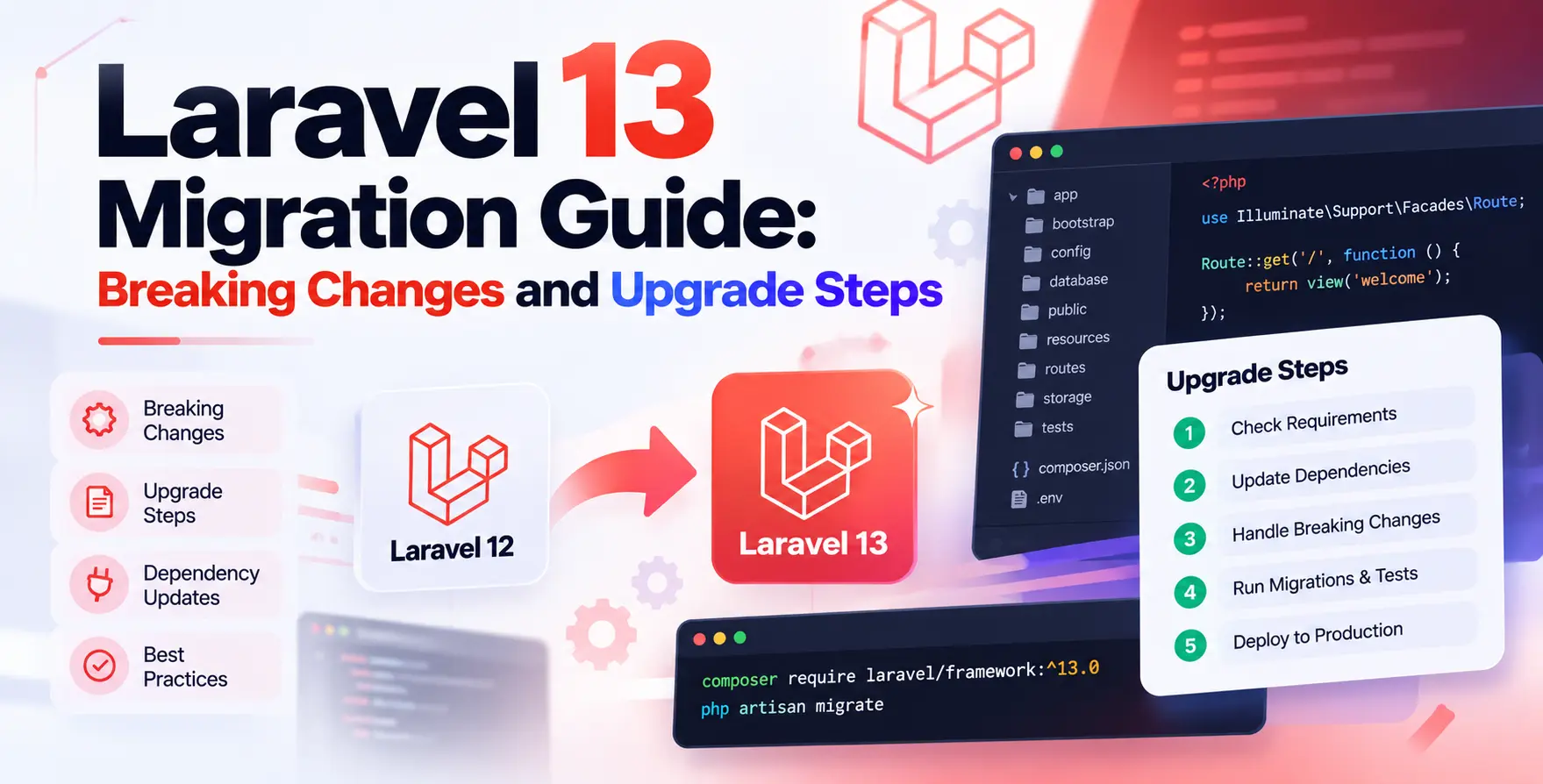
Upgrading a mission-critical web application requires careful planning and execution. The Laravel 13 migration guide provides the necessary roadmap for developers aiming to leverage new framework capabilities while maintaining system stability.
As with any major release, a successful Laravel 13 upgrade involves navigating shifts in core architecture. Proper preparation ensures that your transition is efficient and free of unexpected downtime.
Preparing Your Application
Before modifying any code, you must ensure your current environment is ready for the transition. This phase is critical for minimizing risks during the actual Laravel 13 migration process.
Review your current dependencies and ensure they are compatible with the latest PHP version requirements. A clean state makes identifying issues significantly easier.
- Update all third-party packages
- Run existing test suites
- Check PHP version compatibility
- Review custom configuration files
Core Framework Changes
Laravel 13 introduces several structural refinements that optimize performance and developer experience. These core changes often require adjustments to your service providers and boot processes.
You should prioritize reviewing the updated service provider registration methods. Many legacy patterns are now officially deprecated in favor of more streamlined dependency injection approaches.
Database and Eloquent Updates
The database layer has seen significant improvements, particularly regarding how Eloquent handles collection casting and query builder constraints. These modifications ensure better performance when dealing with large datasets.
Developers should inspect their model definitions for deprecated query scopes. The migration path encourages more explicit type-hinting across all Eloquent relationships.
- Refactor custom collection casts
- Update legacy query scopes
- Review model boot methods
- Audit index naming conventions
- Test complex relationship queries
Routing and Middleware Refinements
Routing structures in this release offer more granular control over request lifecycle handling. You may need to update your route definitions if they rely on older, less secure parameter binding techniques.
Middleware handling has been modernized to support asynchronous processing more natively. This improvement allows for better handling of high-traffic endpoints without blocking the main event loop.
Validation and Form Request Updates
The validation engine now provides more descriptive error messages and improved rule sets for modern data structures. These changes make form request validation cleaner and more readable for your team.
Ensure your custom validation rules align with the new interface requirements. Some rules might require a minor signature update to maintain compatibility with the core engine.
- Adopt new validation rules
- Refactor legacy form requests
- Update custom validation logic
Authentication and Security Enhancements
Security remains a cornerstone of the framework, and this version introduces hardened defaults for session management. You should audit your authentication guards to ensure they meet modern security standards.
The updated security layer simplifies complex multi-factor authentication implementations. These tools help maintain robust user identity management across your enterprise software development projects.
Testing and Quality Assurance
A successful upgrade relies heavily on your ability to verify functionality through automated tests. Never attempt an upgrade without a comprehensive test suite covering your critical business logic.
If you find gaps in your coverage, address them before touching the framework core. Reliable tests are your primary defense against regressions during the migration.
| Test Type |
Focus Area |
Goal |
| Unit Tests |
Isolated Logic |
Verify small components |
| Feature Tests |
Request/Response |
Validate full flows |
| Browser Tests |
UI Interaction |
Ensure frontend stability |
| Database Tests |
Data Integrity |
Check schema migrations |
| API Tests |
Integration Points |
Validate external connections |
Dependency Management
Managing your composer.json file correctly is essential for preventing conflict during the upgrade. Ensure that all peripheral packages are pinned to versions that support the new framework release.
Conflict resolution often involves updating your environment configuration to match the new standards. Take the time to clear your cache and run dependency audits regularly.
- Audit composer dependencies
- Update environment variables
- Clear application caches
Handling Breaking Changes
Breaking changes are inevitable in major framework releases. The key is to address them systematically rather than all at once.
Start by identifying deprecated methods that trigger warnings in your logs. Replacing these early prevents them from becoming critical blockers later in the process.
Best Practices for Laravel Upgrades
Effective maintenance and support for your applications require a disciplined approach to versioning. Always document your upgrade steps to assist your team in future maintenance cycles.
Keep your codebase clean by removing dead code before starting the migration. Smaller, focused pull requests are much easier to review than massive, system-wide changes.
- Perform incremental updates
- Use version control branches
- Document all breaking changes
- Communicate with stakeholders
- Schedule maintenance windows
Tools to Simplify the Migration
Several community-driven tools exist to automate parts of the upgrade. These tools can scan your codebase for common syntax issues and suggest fixes, saving you significant manual effort.
While these tools are helpful, they do not replace human review. Always verify automated suggestions against your specific business logic and requirements.
Post-Migration Verification
Once the code is updated, perform a final audit of your production-like environment. Check logs for any hidden errors that might not have appeared during unit testing.
Performance monitoring is crucial during the first few days post-migration. If you notice unexpected latency, use profiling tools to isolate the exact cause of the regression.
Conclusion
The Laravel 13 upgrade represents a significant step forward in framework capability and security. By following this structured approach, you can manage the migration effectively and leverage new features to improve your application.
Focus on testing, incremental changes, and thorough verification to ensure success. With careful planning, your development team will benefit from the improved performance and refined developer experience inherent in this release.


 In collaboration with