Table of Contents
- Introduction to FHIR Standards
- What is a FHIR API?
- The Importance of Standardized Data
- Architecting Healthcare API Integration
- Security Considerations for Health Data
- Handling Data Serialization and Resources
- Managing FHIR API Performance
- Testing Your Healthcare Integrations
- Optimizing Workflow Automation
- Common Challenges in FHIR Adoption
- Future Trends in Healthcare Interoperability
- Versioning and API Lifecycle Management
- Selecting the Right Integration Tools
- Conclusion
Introduction to FHIR Standards
Healthcare interoperability remains one of the most significant challenges in modern software development. As medical systems become more complex, the need for a unified language to share patient records has never been higher.
Fast Healthcare Interoperability Resources, or FHIR, provides the framework to solve these silos. By using modern web standards, developers can build systems that communicate seamlessly across different platforms and providers.
What is a FHIR API?
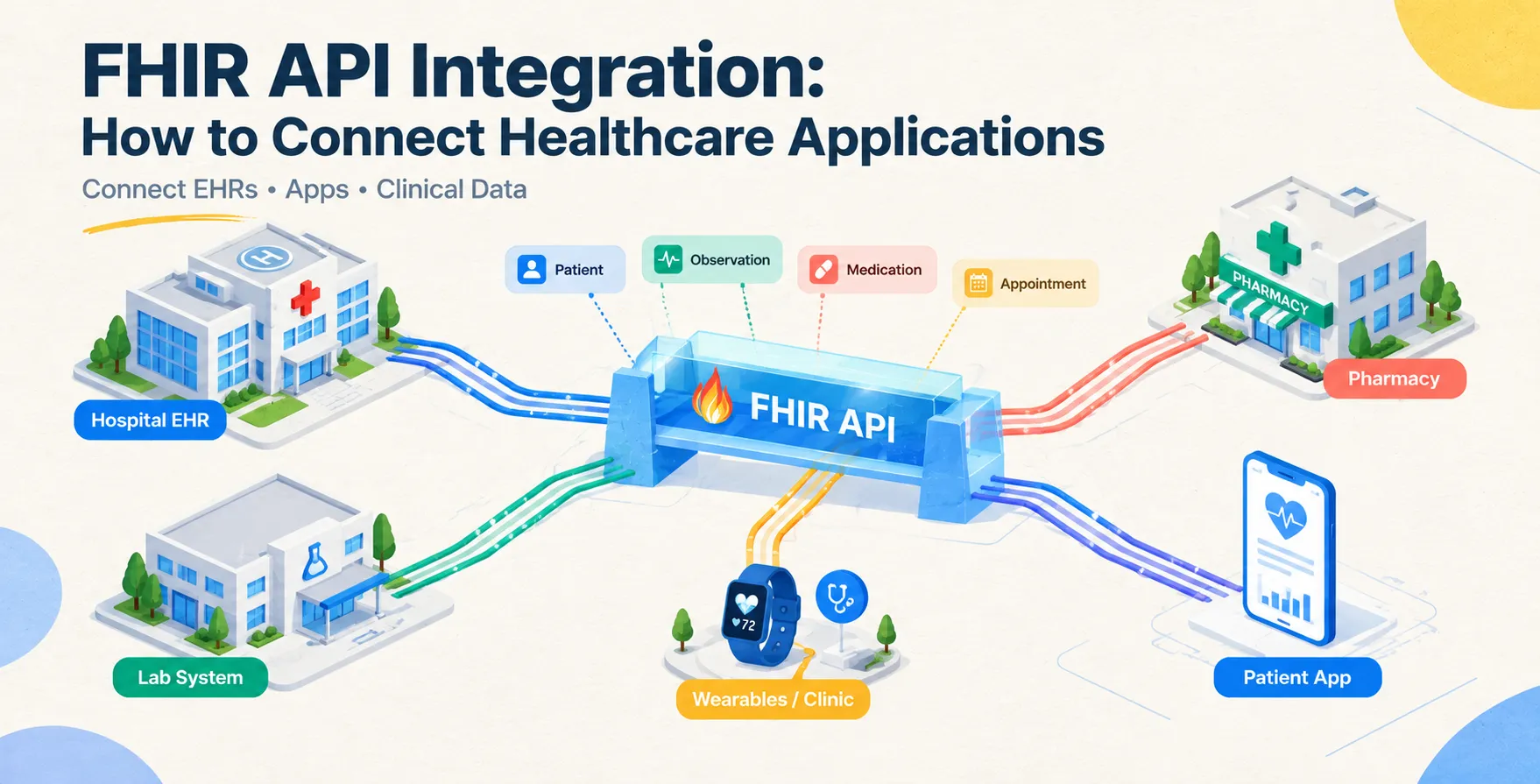
A FHIR API is a RESTful interface designed specifically for clinical data exchange. It leverages standard HTTP methods like GET, POST, PUT, and DELETE to manage resources such as patients, encounters, and medications.
Unlike older legacy standards that were difficult to implement, FHIR utilizes common web technologies like JSON and OAuth2. This makes it much easier for developers to build responsive applications in the healthcare space.
- Uses standard web protocols
- Supports JSON and XML formats
- Enables granular resource access
- Aligns with modern development workflows
The Importance of Standardized Data
Without a common standard, every hospital or clinic would store data in proprietary, incompatible formats. Healthcare API integration relies on FHIR to ensure that a lab result generated in one system is readable by another system instantly.
This standardization reduces the burden on development teams who no longer need to write custom parsers for every vendor. When everyone speaks the same language, patient care improves significantly due to faster access to historical records.
Architecting Healthcare API Integration
Effective integration requires a well-thought-out architecture that respects existing clinical workflows. Many organizations choose to implement a middleware layer that acts as a bridge between legacy EMR systems and modern client-facing applications.
This approach allows for data transformation and mapping before the information reaches the end-user. It also provides a central point to manage logging and monitoring for all incoming and outgoing traffic.
Data Mapping Strategies
Mapping legacy data to FHIR requires careful planning to ensure no clinical context is lost during the conversion process.
- Analyze source database schemas
- Define resource mapping rules
- Validate against FHIR profiles
- Perform incremental data migration
Once the mapping is validated, you can ensure high-fidelity data exchange across your entire application ecosystem.
Security Considerations for Health Data
When you learn how to integrate healthcare applications with FHIR APIs, security must be your primary focus. Handling Protected Health Information (PHI) requires strict adherence to compliance standards like HIPAA.
You should implement robust authentication and authorization mechanisms to ensure only verified users access sensitive data. Never rely on basic credentials; use modern identity providers and token-based systems for all interactions.
- Implement OAuth2 for authorization
- Encrypt data in transit
- Use secure API gateways
- Conduct regular security audits
Handling Data Serialization and Resources
FHIR is built around the concept of resources, which are the fundamental building blocks of medical data. Each resource has a unique URL and follows a strict schema definition that ensures consistency across different implementations.
Developers must be proficient in serializing these resources into JSON for consumption by web or mobile applications. Proper serialization ensures that complex clinical data remains structured and easy to query by your front-end components.
Managing FHIR API Performance
Healthcare systems often deal with massive volumes of data, making performance optimization a critical task. You should implement caching strategies to reduce the load on your core database when retrieving frequently accessed records.
Additionally, use pagination to handle large datasets effectively. Fetching thousands of patient records at once will crash your client application and degrade the performance of the entire server.
| Strategy |
Benefit |
Use Case |
| Caching |
Reduces latency |
Static clinical definitions |
| Pagination |
Prevents timeouts |
Large patient lists |
| Filtering |
Minimizes payload |
Specific search queries |
| Indexing |
Speeds up lookups |
Resource ID searches |
| Webhooks |
Saves bandwidth |
Real-time event updates |
Testing Your Healthcare Integrations
Automated testing is mandatory when working with clinical data to prevent dangerous bugs from reaching production. You need a suite of tests that verifies both the structural integrity of your JSON payloads and the accuracy of your clinical data mapping.
Ensure your testing environment mimics the production setup as closely as possible. This includes using synthetic patient data that reflects the complexity of real-world clinical records without violating patient privacy.
Optimizing Workflow Automation
Integrating FHIR data into your applications allows you to automate repetitive clinical tasks. By triggering events based on incoming data, you can streamline administrative processes that previously required manual intervention.
This level of automation helps clinicians focus on patient care rather than data entry. It reduces the risk of human error and ensures that critical alerts are delivered to the right person at the right time.
- Automated lab result notifications
- Real-time appointment scheduling
- Dynamic patient record updates
- Proactive care plan adjustments
- Automated insurance claims processing
Common Challenges in FHIR Adoption
Adopting FHIR is not without its hurdles, particularly when dealing with legacy vendors who have not fully embraced modern standards. You will often encounter systems that provide incomplete or non-standard FHIR implementations.
Developers must be prepared to write defensive code that handles unexpected data gaps gracefully. Building a resilient integration layer is key to overcoming these inconsistencies in the healthcare landscape.
Future Trends in Healthcare Interoperability
The landscape of healthcare technology is evolving rapidly as more providers move to cloud-native architectures. We are seeing a shift toward real-time data streaming and more sophisticated decision-support systems that run directly on top of FHIR APIs.
These innovations will make it easier to deliver personalized medicine at scale. As artificial intelligence becomes more integrated into clinical workflows, the demand for high-quality, standardized data will continue to grow.
Versioning and API Lifecycle Management
Managing changes to your API is vital to prevent breaking existing integrations that depend on your services. Always use clear versioning strategies to communicate updates to your partners and clients.
Keep your documentation updated to reflect the latest changes in your resource definitions. Clear documentation helps other developers understand how to use your API effectively, reducing the support burden on your engineering team.
Selecting the Right Integration Tools
Choosing the right stack can significantly accelerate your development timeline. Look for platforms that offer built-in support for FHIR validation and security features out of the box.
- Managed FHIR servers
- Validation engines
- Integration platforms
Investing in high-quality tools early will save you countless hours of debugging in the long run. Focus on solutions that prioritize developer experience and robust community support.
Conclusion
FHIR integration is the backbone of the modern healthcare ecosystem. By mastering these standards, you can build applications that truly impact patient outcomes and streamline clinical operations.
Continue to monitor the evolution of the standard and always prioritize security in your architectural decisions. With the right approach, you can bridge the gap between legacy systems and the future of digital health.


 In collaboration with