Table of Contents
- Introduction
- Understanding Legacy HL7 Standards
- The Rise of FHIR
- Key Architectural Differences
- Data Exchange Models Explained
- Why Modern Interoperability Matters
- Impact on API Development
- Transitioning from V2 to FHIR
- Security and Compliance Considerations
- Benefits for Healthcare Automation
- Challenges in Standard Adoption
- Future Outlook for Healthcare Data
- Comparing Standards in Practice
- Conclusion
Introduction
Healthcare software development relies heavily on standardized data exchange to ensure patient records move seamlessly between systems. Without these protocols, hospitals would be locked into proprietary silos that prevent critical information from reaching providers.
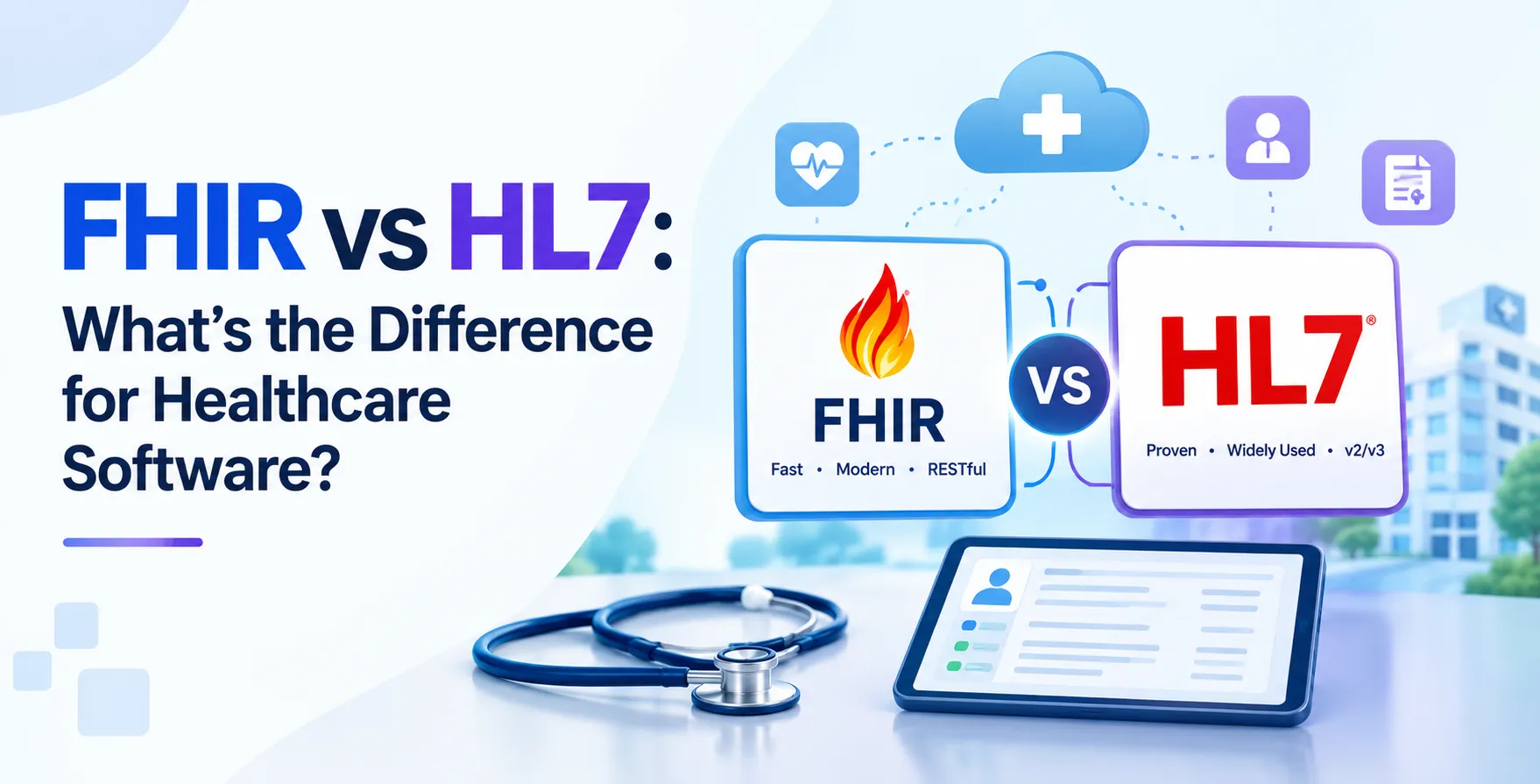
Understanding the FHIR vs HL7 difference for healthcare software is vital for any architect or developer building modern solutions. While both protocols aim to solve interoperability, they represent two very different eras of technology.
Understanding Legacy HL7 Standards
The HL7 healthcare standard, specifically version 2, has served as the backbone of hospital data exchange for decades. It uses a pipe-delimited message structure that is highly efficient for internal hospital communication but struggles in web-based environments.
Developers often find these messages difficult to parse due to their strict, non-human-readable format. While incredibly stable, this older standard lacks the flexibility needed for modern mobile applications or cloud-based health platforms.
- Pipe-delimited message structure
- Optimized for internal hospital systems
- Rigid data formatting requirements
- Limited support for modern web protocols
The Rise of FHIR
Fast Healthcare Interoperability Resources, or FHIR, represents a paradigm shift toward web-native data exchange. It is designed to be developer-friendly, utilizing common formats like JSON and XML alongside RESTful API development patterns.
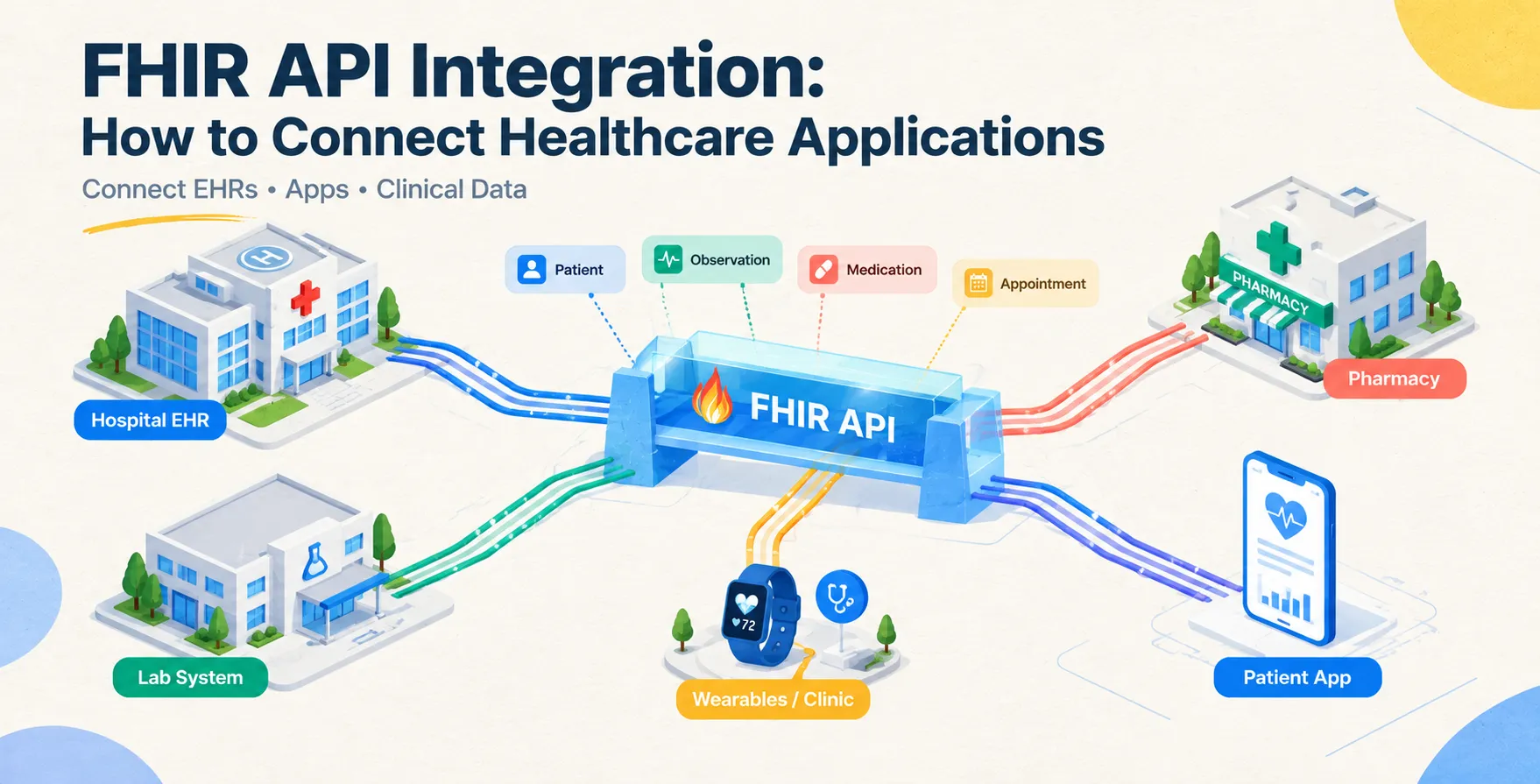
By treating healthcare data as discrete resources, it allows systems to query only the information they need. This makes it significantly easier to integrate healthcare applications with FHIR APIs compared to legacy methods.
- Uses modern JSON and XML formats
- Leverages RESTful architectures
- Modular resource-based design
- High developer accessibility
Key Architectural Differences
The fundamental divide lies in how the data is packaged and transported across the network. Legacy systems transmit large, monolithic messages that contain vast amounts of patient data at once.
Conversely, modern standards focus on granular resources. This approach reduces payload size and bandwidth requirements for mobile devices or remote patient monitoring systems.
Legacy Message Orientation
Older protocols send complete updates even for minor changes. This results in heavy processing loads for receiving systems.
- Monolithic data packets
- High resource consumption
- Requires custom parsing logic
Resource-Based Approach
Newer standards allow for specific retrieval of data points. This is essential for building responsive healthcare platforms.
- Granular data access
- Supports partial updates
- Lower bandwidth usage
These architectural choices define how effectively a team can implement healthcare interoperability in modern clinical environments.
Data Exchange Models Explained
Legacy systems typically rely on point-to-point connections, which are notoriously difficult to maintain as a hospital's tech stack grows. Every integration requires a custom build that connects one source to one destination.
Modern systems prioritize an ecosystem where data is exposed via well-documented endpoints. This shift allows for faster third-party API integration without rebuilding the entire connection architecture from scratch.
Why Modern Interoperability Matters
Effective data exchange is the cornerstone of patient-centered care. When doctors can view longitudinal records from disparate specialists, the risk of diagnostic error drops significantly.
Interoperability also powers advanced analytics and machine learning. Reliable data flows enable AI in healthcare solutions to provide actionable insights directly at the point of care, rather than relying on stale or fragmented information.
Impact on API Development
Adopting modern standards forces developers to change their approach to backend engineering. Instead of writing custom parsers for proprietary message formats, engineers can utilize standard libraries to handle common resource schemas.
This reduces development time and minimizes the risk of bugs during data mapping. It also simplifies the process of connecting with external services like insurance gateways or laboratory interfaces.
| Feature |
Legacy HL7 |
Modern FHIR |
| Data Format |
Pipe-delimited |
JSON/XML |
| Architecture |
Point-to-point |
RESTful API |
| Flexibility |
Low |
High |
| Developer Ease |
Complex |
Intuitive |
| Scalability |
Moderate |
High |
Transitioning from V2 to FHIR
Moving from an older standard to a modern one is rarely an overnight process. Many hospitals operate in a hybrid environment where they maintain legacy systems while building new features on top of modern APIs.
Strategies for this transition involve creating middleware layers that act as translators. These layers ingest legacy data and output it as modern resources, allowing older hardware to stay relevant in a modern software landscape.
Security and Compliance Considerations
Security remains the highest priority regardless of the standard used. Legacy messages often move through internal networks, while newer APIs are frequently exposed to the web, necessitating robust authentication and authorization.
Modern standards are built with security in mind, supporting OAuth2 and OpenID Connect protocols. This makes it easier to implement granular access controls and audit logs required by HIPAA and other global regulations.
Benefits for Healthcare Automation
Automation relies on the ability to trigger actions based on real-time data. Modern standards make it simple to monitor patient status and trigger automated workflows for care coordinators.
This level of automation drives efficiency in routine tasks like appointment scheduling or prescription refills. It creates a smoother experience for patients and frees up clinical staff to focus on high-value interactions.
- Real-time data triggers
- Automated care coordination
- Reduced manual data entry
- Streamlined administrative tasks
- Improved patient engagement
Challenges in Standard Adoption
Adoption is not without its hurdles. Many legacy systems are deeply embedded in institutional workflows, making them resistant to change.
Furthermore, while the standard itself is open, the implementation guides can vary significantly between vendors. Achieving true interoperability often requires careful testing and validation to ensure data integrity across different platforms.
- High migration costs
- Legacy vendor lock-in
- Implementation variations
- Complex data mapping requirements
- Training and upskilling staff
Future Outlook for Healthcare Data
The industry is moving toward a future where patient data is accessible, secure, and portable. As more developers embrace open standards, the barrier to entry for innovative software will continue to drop.
We expect to see more platforms leverage these standards to bridge the gap between home-based care and clinical settings. This evolution will further empower patients to take control of their health journey.
Comparing Standards in Practice
The choice between these standards often comes down to the specific environment. If you are integrating with a legacy hospital main frame, you may still need to support older protocols.
If you are building a greenfield application, starting with a modern, resource-based framework is the industry standard. It ensures your software remains maintainable and compatible with the broader health IT ecosystem.
Conclusion
The difference between these two standards is not just technical; it is the difference between a closed system and an open, interconnected future. By embracing modern, resource-based standards, developers can build more robust and scalable healthcare software.
As the industry continues to prioritize interoperability, understanding both the legacy foundations and the modern capabilities will be critical for success. Stay focused on building solutions that prioritize data fluidity to ultimately improve patient outcomes.


 In collaboration with