Table of Contents
- Introduction
- Decoding Technical Acronyms
- Understanding the Scope of Work
- Evaluating the Proposed Architecture
- Vendor Comparison Matrix
- Assessing the Team Structure
- Evaluating Project Timelines
- Analyzing the Pricing Model
- Risk Management Strategy
- Intellectual Property Rights
- Communication and Governance
- Software Project Proposal Checklist
- Conclusion
Introduction
Non-technical business leaders often feel intimidated when reviewing technical documents from agency partners. Complex technical language can easily mask poor project planning or inflated estimates.
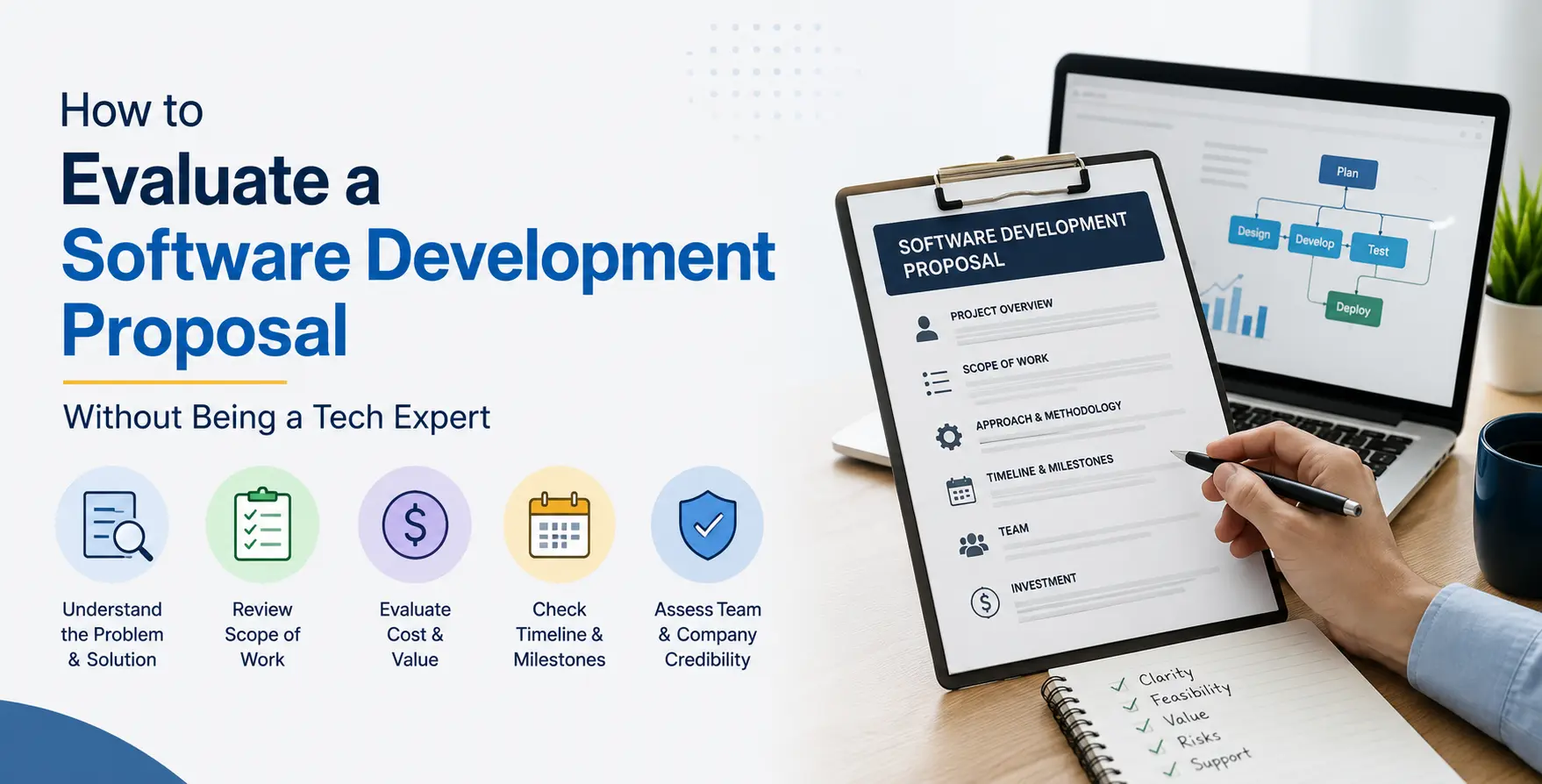
Learning how to evaluate a software development proposal does not require a computer science degree. You simply need a clear framework to assess risk, business value, and strategic alignment.
Decoding Technical Acronyms
Technical proposals are frequently packed with industry jargon like API, CI/CD, and microservices. Software engineering teams sometimes use heavy terminology to sound authoritative or justify higher rates.
You must look past the jargon and focus on what these choices mean for your business outcomes. A competent engineering team can explain their choices in plain language.
If a bidder cannot explain their technology stack clearly, that is a major red flag. Always insist on plain English explanations for every core decision.
Understanding the Scope of Work
A clear scope prevents sudden delays and budget overruns during execution. You must know exactly what feature set is included in the initial release.
Make sure the proposal defines boundaries and explicitly excludes out-of-scope features.
Look for these core elements in the scope definition.
- Detailed user story summaries
- Explicit list of excluded features
- Third-party system integration details
- Supported platforms and web browsers
- Defined deliverables for each milestone
If any core requirement feels vague, request clarification before signing.
Evaluating the Proposed Architecture
Software architecture determines how well your product scales as your business grows. You do not need to review code to evaluate architectural decisions.
Ask the agency why they selected a specific technical stack over industry standard options. Ensure they choose mainstream frameworks that are easy to support over time.
Relying on obscure tools creates severe long-term maintenance liabilities. Standard software stacks protect your investment and simplify future hiring.
Vendor Comparison Matrix
Comparing bids from multiple software agencies requires a structured approach. Knowing how to choose a software development company depends on evaluating value over base price.
| Evaluation Criteria |
Traditional Agency |
Strategic Tech Partner |
| Technology Stack |
Outdated legacy frameworks |
Modern scalable architecture |
| Scope Definition |
Vague feature lists |
Detailed functional stories |
| Risk Management |
Generic promises |
Explicit mitigation steps |
| Estimation Quality |
Single fixed guess |
Realistic range with assumptions |
| Communication |
Occasional email updates |
Real-time tools and regular demos |
| Post-Launch Plan |
Hourly ad-hoc support |
Structured maintenance agreement |
Use these comparison criteria to score competing bids objectively.
Assessing the Team Structure
The success of your product depends directly on the engineers building it. Vendors often feature senior executives during sales calls but assign junior staff later.
Review the bid to verify clear team allocation details.
- Named senior engineering leads
- Dedicated quality assurance staff
Confirm that dedicated specialists will remain assigned throughout the project lifecycle.
Evaluating Project Timelines
Unrealistic project schedules are a common source of software failure. Every custom feature requires time for design, development, and testing.
Milestone Definition
Break the schedule down into manageable execution periods.
- Clear milestone target dates
- Specific phase deliverables
- Scheduled client review windows
Buffer and Testing
Quality assurance must happen continuously throughout the development process.
- Dedicated testing schedules
- Staging environment deployment dates
- User acceptance testing phases
Ensure the timeline includes time for unexpected revisions and bug fixes.
Analyzing the Pricing Model
Low initial estimates often hide extra fees that appear later. You must choose a pricing model that fits your tolerance for budget changes.
Fixed-price bids suit well-defined projects, while time-and-materials fits evolving products.
Identify these standard financial components in the offer.
- Hourly billing rates by role
- Cloud hosting infrastructure estimates
- Third-party software license costs
- Post-launch support service fees
- Change request billing procedures
- Milestone payment release triggers
Transparent vendors list every potential cost upfront in their document.
Risk Management Strategy
Software engineering projects regularly encounter unexpected technical obstacles. A mature engineering proposal identifies risks before development starts.
Check for proactive risk management measures in the proposal text.
- Data privacy compliance policies
- Key developer replacement protocols
- Automated system backup routines
- Scalability constraint mitigations
Intellectual Property Rights
You must maintain full ownership of all custom code and assets created for your application. Some vendors include terms that limit your control over the source code.
Verify that the contract transfers intellectual property rights automatically upon payment. Never agree to clauses where the vendor owns your core business logic.
Ensure you receive administrative control of all code repositories upon launch.
Communication and Governance
Communication breakdowns ruin more technical projects than poor code quality. You need to evaluate software development vendor offers based on operational management habits.
Establish explicit expectations for progress updates and decision management.
Look for these established governance practices in the bid.
- Weekly product demonstration meetings
- Dedicated project management leadership
- Shared messaging channel access
- Transparent task board visibility
Clear communication habits prevent minor misunderstandings from escalating into major issues.
Software Project Proposal Checklist
Run through a structured review list before signing any contract. A complete software project proposal checklist gives you confidence in your vendor selection.
Verify these essential items before granting final approval.
- Fully defined scope boundaries
- Transparent pricing model breakdown
- Verified team experience levels
- Guaranteed source code ownership
- Defined warranty support coverage
Conclusion
Evaluating technical offers does not require engineering expertise. Focus on clarity, scope definitions, team experience, and operational structure to choose the right partner.
Ask tough questions and demand plain answers before making your decision. A reliable vendor welcomes your questions and explains every detail clearly.


 In collaboration with