Table of Contents
- The Burden of Security Questionnaires
- Why Your Current Process is Broken
- Understanding the B2B SaaS Security Questionnaire
- Structuring Your Knowledge Base
- Categorizing Common Security Controls
- Drafting Standardized Responses
- Maintaining Version Control
- Automating the Response Workflow
- Involving Cross-Functional Teams
- Handling Non-Standard Questions
- Integrating Compliance Requirements
- Tools to Manage Your Library
- The Strategic Value of Speed
- Conclusion
The Burden of Security Questionnaires
For many B2B SaaS companies, the sales process hits a wall during the security review phase. Enterprise prospects often require exhaustive documentation to verify your platform's integrity.
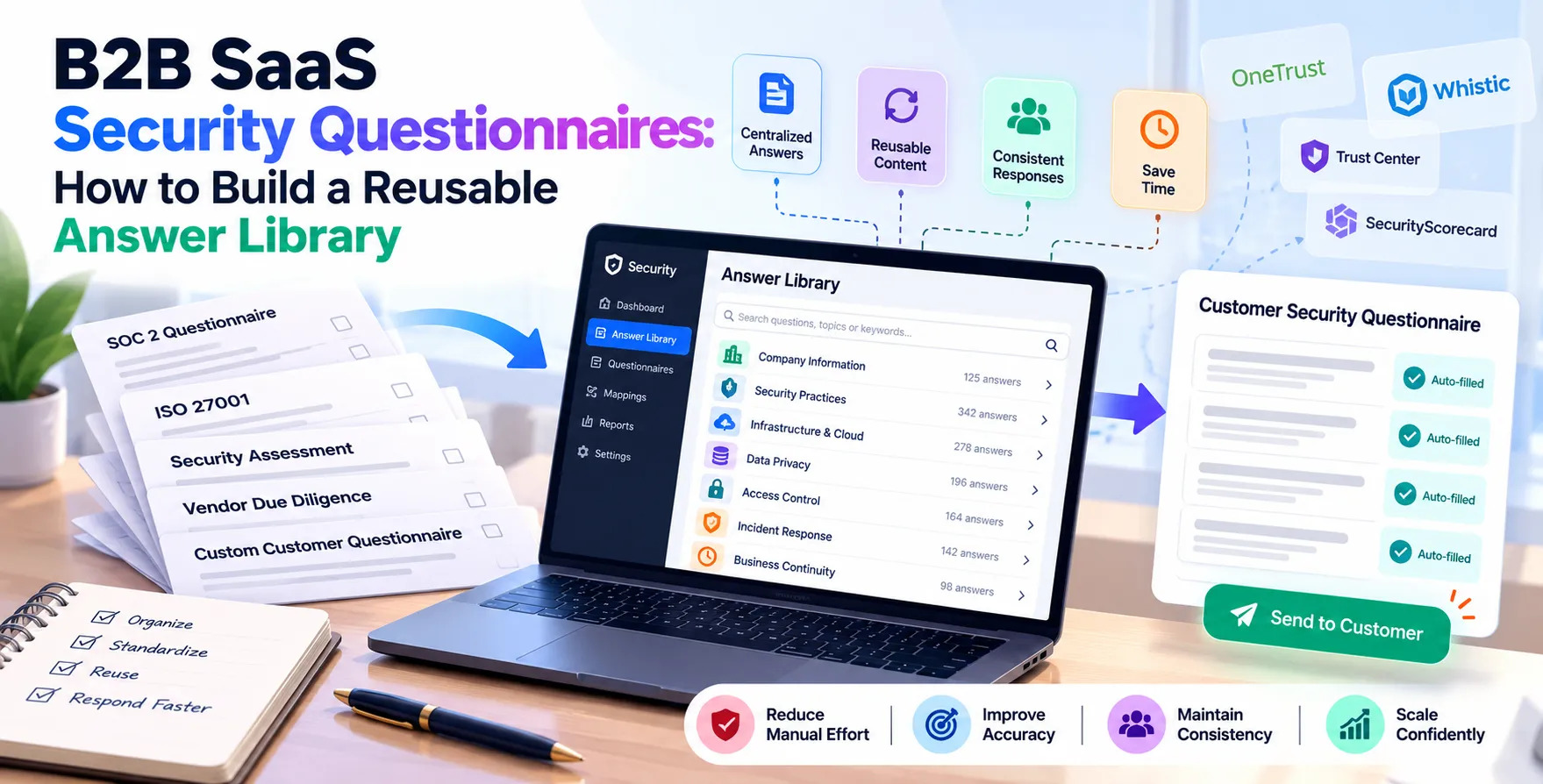
This is where B2B SaaS security questionnaires how to build a reusable answer library becomes a critical business imperative. Without a centralized system, teams end up digging through emails, Slack messages, and old spreadsheets to find answers they have already written dozens of times.
Why Your Current Process is Broken
The traditional ad-hoc approach is inefficient and prone to errors. Developers are often pulled away from core product work to answer the same questions about encryption, data retention, or logging.
This context switching hurts productivity and delays sales. Furthermore, inconsistency between responses can raise red flags for the prospect's security team, leading to unnecessary follow-up cycles.
- Repeated manual data entry
- Developer burnout from repetitive tasks
- Inconsistent information across documents
- Extended sales cycles
Understanding the B2B SaaS Security Questionnaire
A typical SaaS security questionnaire covers everything from cloud infrastructure to HR policies. Prospects use these to assess their risk exposure before signing a contract.
Understanding what they really want is the key to faster responses. They are looking for evidence of maturity, accountability, and technical rigor in your software.
You must shift from reactive answering to proactive knowledge management. Treat these documents as product documentation rather than administrative chores.
Structuring Your Knowledge Base
Start by organizing your information based on common security domains. A flat list of questions is impossible to maintain as your product grows.
Group your answers by internal technical systems or compliance domains. This structure makes it easier for non-security staff to locate accurate information quickly.
- Cloud architecture and hosting
- Data encryption and management
- Identity and access control
- Incident response procedures
- Software development lifecycle
- Third-party sub-processor lists
Categorizing Common Security Controls
Every organization has core controls that appear in nearly every assessment. These include physical security, password policies, and vulnerability management.
By standardizing these, you ensure that every sales lead receives the same high-quality information. This consistency builds trust with enterprise buyers who value precision.
Infrastructure Security
Focus on your cloud provider and network security. Keep these answers updated with your latest architecture diagrams.
- Network segmentation strategy
- Firewall configurations
- Intrusion detection systems
- Load balancer security
Ensure these descriptions match your actual production environment exactly.
Application Security
This covers your coding practices and release cycle. It is often the most scrutinized section for any modern platform.
- Secure coding standards
- Automated testing processes
- Dependency management
- Code review workflows
Clearly state how security is integrated into your deployment pipeline.
Drafting Standardized Responses
When drafting answers, keep them concise but comprehensive. Avoid jargon that might confuse a non-technical procurement officer.
Focus on the 'how' and 'why' of your security posture. Reference existing policies or certifications where possible to provide concrete evidence of your claims.
Always verify these answers with your technical leads. A wrong answer here can cause significant legal issues during contract finalization.
Maintaining Version Control
Your security posture evolves as you update your infrastructure. A library that was accurate six months ago might be dangerous today.
Implement a quarterly review process for your library content. This ensures you are not quoting outdated technologies or legacy compliance frameworks.
- Quarterly content audit
- Stakeholder approval workflow
- Change log tracking
- Archive of old versions
Automating the Response Workflow
The ultimate goal for an efficient security questionnaire response workflow is to minimize manual effort. Use specialized tools to map your library answers to incoming questions.
Automation tools can suggest answers based on keyword matching. This turns a multi-day manual task into a quick verification process.
Involving Cross-Functional Teams
Security is not just a job for the engineering team. Legal, HR, and Operations teams often hold pieces of the puzzle.
Create a workflow where HR owns the background check questions and Legal owns the data privacy sections. This shared ownership reduces the burden on your technical leads.
- Designated subject matter experts
- Clear approval pathways
- Shared documentation repository
- Centralized feedback loop
Handling Non-Standard Questions
Sometimes you will encounter unique questions that are not in your library. These require careful handling to avoid setting a bad precedent.
Treat these as new entries for your library. Once you answer a unique question, add it to your repository so it never requires custom research again.
Integrating Compliance Requirements
Your library should reflect your actual compliance status. If you are preparing for audits, ensure your answers align with those standards.
This is where you might reference specific framework requirements if you are aligning with local data privacy laws. Having pre-written answers for these standards saves massive amounts of time during audits.
Tools to Manage Your Library
Do not rely on static Word documents for your library. Use platforms specifically designed for managing vendor security assessment answers effectively.
These tools often provide collaborative environments for multiple team members to edit and review content. They also handle the export process to match the prospect's requested format.
- Centralized knowledge base software
- Version tracking and history
- Collaboration and commenting features
- Automated document export
- Integration with CRM platforms
The Strategic Value of Speed
The speed at which you respond to security assessments is a competitive advantage. It signals professionalism and organizational maturity to your prospects.
Enterprise buyers often evaluate vendors on how quickly they clear the security review hurdle. A well-managed library helps you close deals faster and gain the trust of larger organizations.
Conclusion
Building a reusable answer library is a foundational task for scaling a B2B SaaS company. It transforms a chaotic, manual process into a streamlined operation that supports growth.
Invest the time now to organize your technical documentation and security policies. Your future self, and your sales team, will thank you for the extra effort.


 In collaboration with