Table of Contents
- Introduction
- Understanding Software Talent Models
- What is Staff Augmentation?
- Benefits of IT Staff Augmentation
- Key Challenges of Staff Augmentation
- What are Managed Teams?
- Benefits of Managed Teams
- Key Challenges of Managed Teams
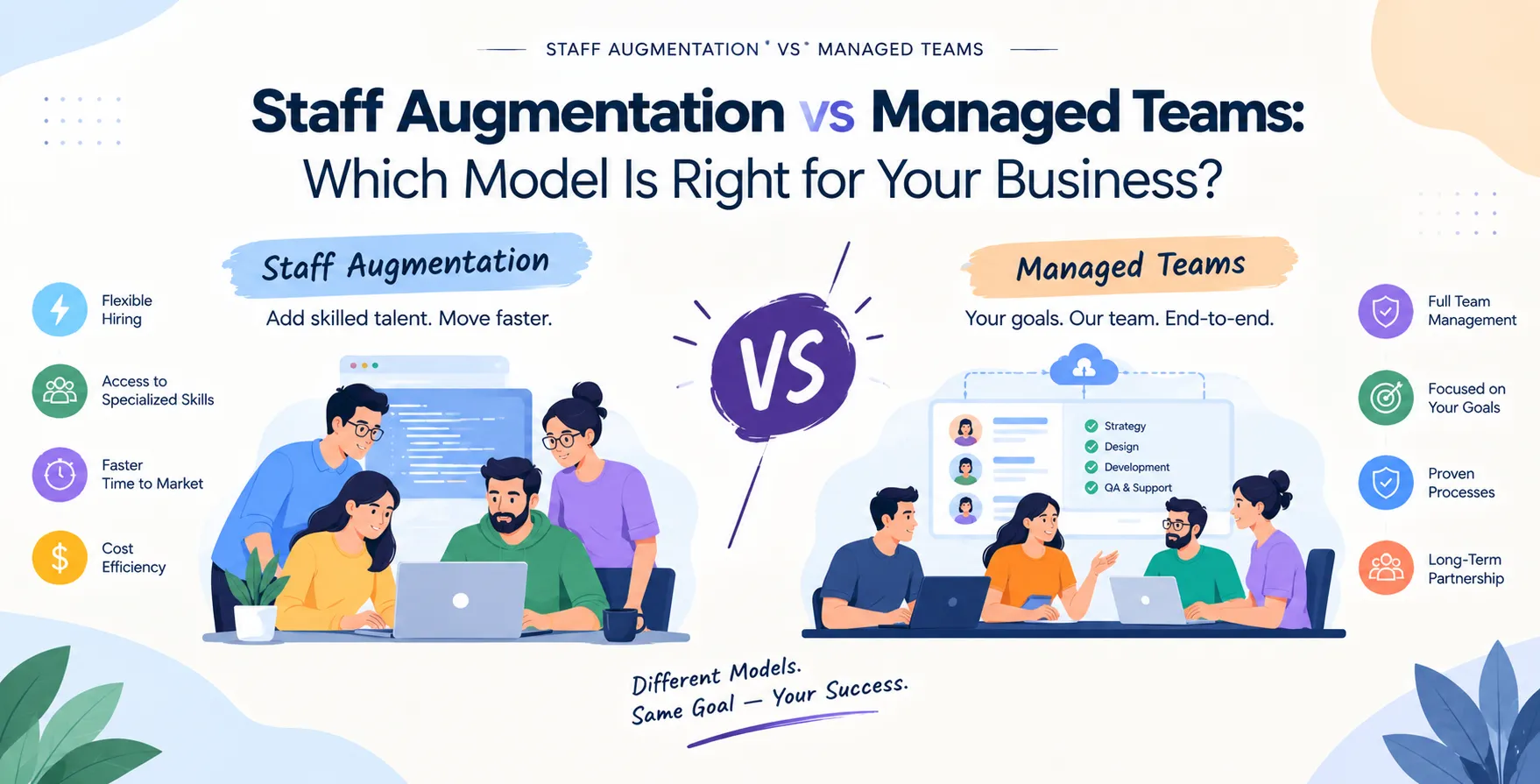
- Staff Augmentation vs Managed Services: Direct Comparison
- Key Factors to Consider When Choosing
- Cost Implications and Financial Flexibility
- When to Choose Staff Augmentation
- When to Choose Managed Teams
- Conclusion
Introduction
Scaling a technology organization requires making crucial structural decisions. Leaders must choose how to expand engineering capacity without expanding overhead costs indefinitely.
Selecting between individual talent additions and end-to-end team deliverables directly shapes project speed. Every delivery strategy brings specific advantages regarding control and flexibility.
This guide compares both staffing frameworks to help you determine the optimal operational approach.
Understanding Software Talent Models
Modern technology delivery relies heavily on flexible modern resourcing strategies. Companies often combine internal hires with external expertise to meet aggressive product timelines.
Deciding between external support options depends on your internal technical leadership strength. Evaluating how much hands-on oversight your existing managers can maintain remains essential before hiring.
- Assesses existing core team capacity
- Identifies critical technical skill shortages
What is Staff Augmentation?
Staff augmentation is an outsourcing strategy used to staff a project and respond to business objectives. The approach consists of evaluating existing staff and then adding targeted talent.
Through IT Staff Augmentation Services, companies hire external developers who integrate directly into existing engineering workflows. These specialists work alongside full-time staff under your internal managers.
This model fills immediate skill gaps while keeping project governance entirely inside your company.
Benefits of IT Staff Augmentation
Deploying targeted talent allows organizations to react swiftly to changing technical priorities. Engaging external developers eliminates long recruitment cycles for niche skill sets.
Utilizing flexible Staff Augmentation Services ensures engineering groups scale up or down based on actual workload demands. This helps businesses remain nimble in fast-changing software markets.
- Accelerates engineer onboarding and sprint starts
- Reduces long-term payroll and benefit costs
- Offers full control over daily output
- Provides access to specialized global talent
- Scales team size rapidly as needed
Key Challenges of Staff Augmentation
While adding individual developers offers speed, it also introduces specific operational friction points. Internal managers must handle all daily allocations and task reviews.
Management Overhead
Adding external talent directly increases the workload of internal engineering managers. Managers must continuously assign tasks, review code, and maintain team cohesion.
- Increases manager task allocation burden
- Requires daily hands-on technical supervision
Integration Friction
External developers must adapt to internal coding standards, security policies, and communication tools. Without structured onboarding, integration friction can slow down initial team velocity.
- Requires alignment with internal standards
- Demands clear internal documentation practices
- Can lead to temporary team misalignment
- May create culture gaps across teams
What are Managed Teams?
The managed team model delegates full end-to-end delivery of a product or module to an external team. The external vendor provides developers, project managers, and quality assurance engineers.
Instead of managing individual engineers daily, your organization manages target outcomes and service level agreements. The vendor assumes full responsibility for operational execution and team performance.
This approach allows internal leaders to focus on core strategic goals rather than daily tactical execution.
Benefits of Managed Teams
Managed delivery units bring structured processes and dedicated governance to project execution. Partnering with a reliable custom software development company ensures complete operational accountability.
By delegating technical management, internal leadership spends less time on sprint planning and daily standups. The external provider guarantees team capacity, performance metrics, and deliverable quality.
- Shifts delivery risks to external providers
- Includes dedicated project management and quality assurance
- Reduces daily administrative overhead for executives
- Ensures consistent software development process standards
- Provides end-to-end accountability for milestones
- Allows internal teams to focus on strategy
Key Challenges of Managed Teams
Delegating complete deliverables requires trusting external managers with architectural and operational details. Companies must adjust to higher upfront planning requirements before kick-off.
Initial Scoping Demands
Working with a software development vendor requires clear initial scope definitions to avoid misalignment. Defining exact requirements before starting development demands significant upfront effort.
- Requires comprehensive initial project scoping
- Involves higher initial setup investment
Management Shift
Relinquishing daily oversight can feel challenging for hands-on technical leaders. Adjusting to outcome-based reporting requires trust in external governance structures.
- Reduces granular control over daily tasks
- Requires formal change management for scope shifts
Staff Augmentation vs Managed Services: Direct Comparison
Evaluating Staff Augmentation vs Managed Services requires examining key delivery parameters. The table below outlines how these operational models compare across critical business dimensions.
| Dimension |
Staff Augmentation |
Managed Teams |
| Management Control |
Internal team manages daily tasks |
Vendor manages process and delivery |
| Primary Responsibility |
Client owns project deliverables |
Vendor owns project deliverables |
| Pricing Structure |
Time and materials hourly rates |
Fixed monthly or milestone pricing |
| Onboarding Time |
Rapid individual developer integration |
Structured team setup and kick-off |
| Management Burden |
High internal management effort |
Low internal management effort |
| Scope Flexibility |
High flexibility to change tasks |
Structured scope change control |
Key Factors to Consider When Choosing
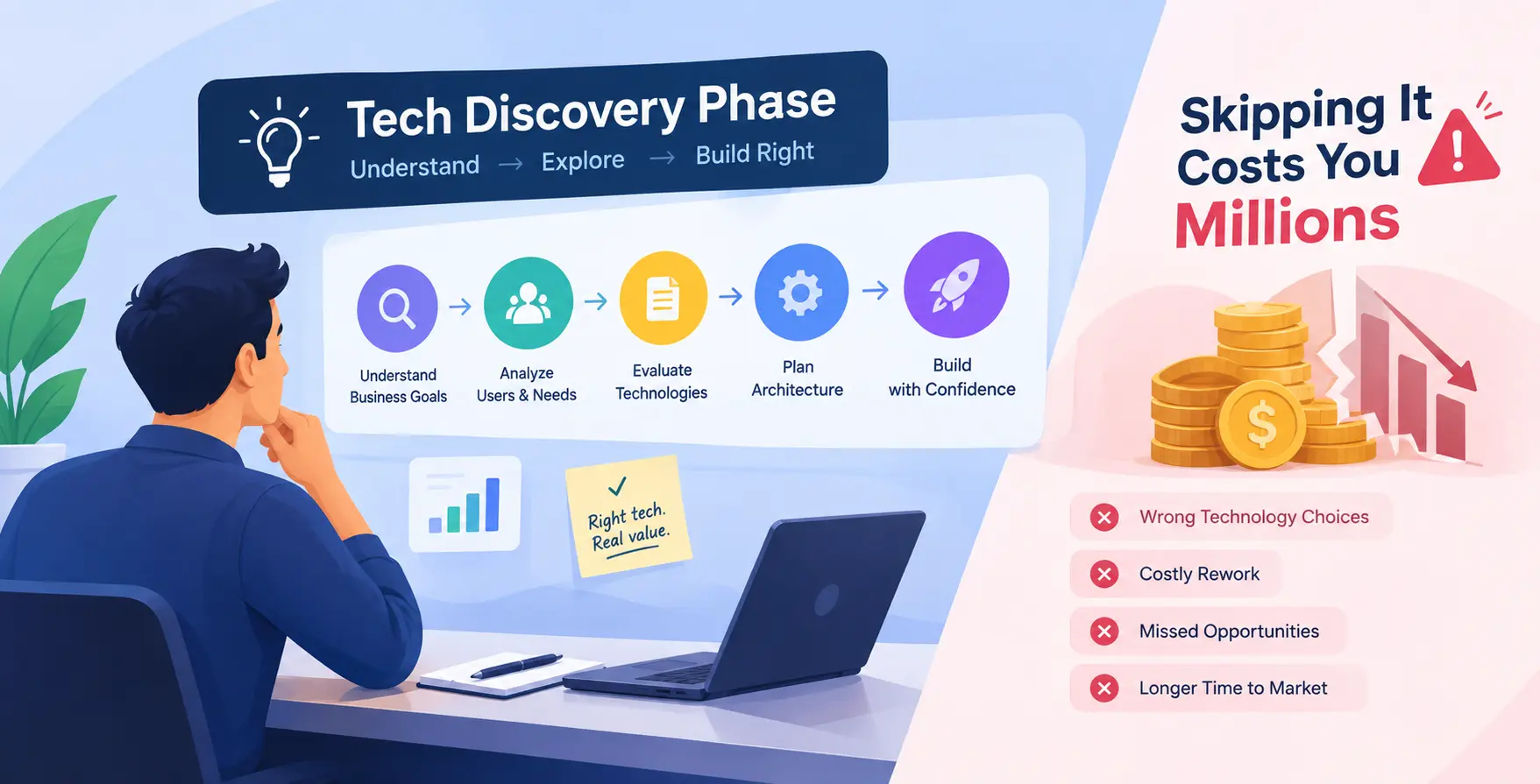
Selecting the right engagement model depends heavily on internal engineering maturity and project scope clarity. Before deciding, conduct a thorough software project discovery phase to outline precise scope needs.
When organizations evaluate software development outsourcing strategies, leadership must measure internal management bandwidth. Clear technical leadership allows you to utilize augmented talent effectively without causing bottlenecks.
- Internal engineering and management capacity
- Clarity and stability of project requirements
- Level of control desired over daily execution
- Target timeline for product rollout
- Long-term software maintenance and ownership plans
Cost Implications and Financial Flexibility
Financial structures differ significantly between individual developer additions and fully managed outcomes. Understanding these economic models protects your development budget from unexpected overruns.
With IT Staff Augmentation, you pay hourly rates for individual skill sets, offering flexible operational spending. This model lets you scale down individual seats immediately when sprint workloads decrease.
Managed teams usually operate under fixed monthly retainers or outcome-based milestones. While the total rate includes management fees, it prevents budget surprises caused by unexpected development delays.
When to Choose Staff Augmentation
Adding individual developers works best when you already possess strong internal technical leadership. It fits projects where team structures exist, but specific expertise is temporarily missing.
- You have active internal engineering managers
- You need specialized skills for specific features
This model keeps your existing team at the center of development while filling temporary velocity gaps.
When to Choose Managed Teams
Managed delivery units are ideal when building complex standalone products or complete functional modules. This approach relieves your team of management burdens while ensuring timely delivery.
- You lack internal project management capacity
- You are launching a complex standalone solution
- You want clear milestone-based accountability
- You need complete turn-key engineering teams
- You prefer outcome-based billing models
Conclusion
Both technical resourcing models deliver distinct operational advantages depending on your company structure. Staff augmentation excels when you require immediate talent integration under internal management oversight.
Managed teams provide end-to-end accountability and execution, freeing your leadership to focus on strategic business growth. Evaluate your management bandwidth, project scope clarity, and delivery goals to choose the optimal path forward.


 In collaboration with