Table of Contents
- Introduction
- Understanding the Model Context Protocol
- The Anatomy of MCP Server Security
- Threat Vectors in Context-Aware AI
- Implementing Least Privilege Access
- Validating Tool Inputs and Outputs
- Network Security for MCP Servers
- Logging and Audit Trails
- Authentication and Authorization Strategies
- Integrating Security into Development Workflows
- Comparing Security Approaches
- Securing Automated AI Toolkits
- Best Practices for Deployment
- Conclusion
Introduction
The rise of standardized interfaces for AI has transformed how we connect large language models to external data. Model Context Protocol security is now a critical concern for engineers building these bridges.
As developers integrate complex toolchains, MCP server security becomes the front line of defense against data leaks. Protecting these interfaces requires a deep understanding of how models interact with your local and remote resources.
Understanding the Model Context Protocol
The Model Context Protocol acts as a universal language for AI models to request context and execute tools. It decouples the AI agent from the specific implementation details of internal services.
By providing a standard way to expose data, it simplifies integration for complex applications. However, this same convenience creates new attack surfaces that demand rigorous attention.
The Anatomy of MCP Server Security
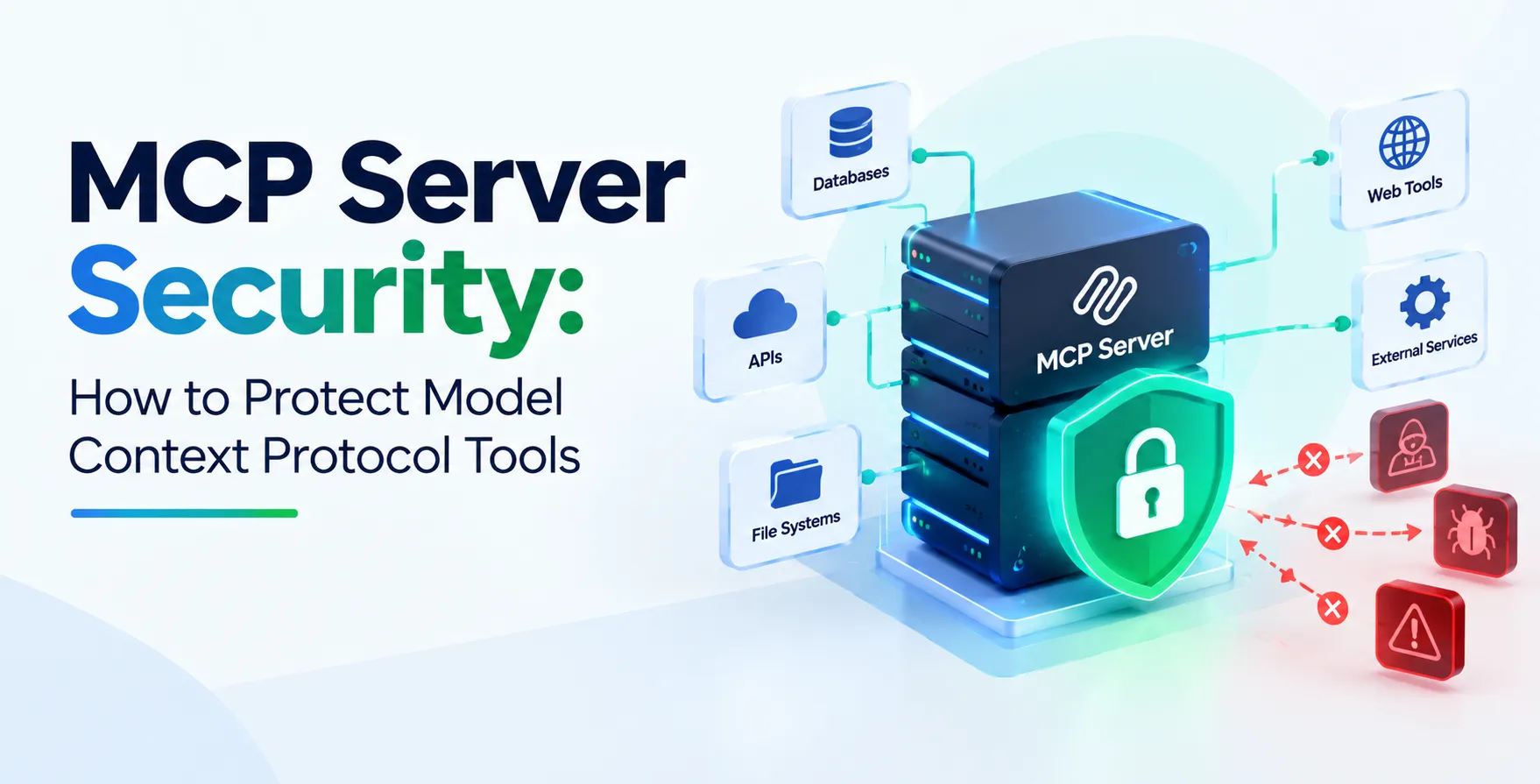
At its core, protecting your infrastructure involves controlling what an AI can see and do. MCP server security rests on the principle that the model is an untrusted entity.
Every request sent to a tool must be validated against a strict schema. You should assume that the model might attempt to access data outside its intended scope.
- Strict schema enforcement
- Input validation layers
- Resource isolation techniques
- Encrypted communication channels
Threat Vectors in Context-Aware AI
When you build AI agents with tools and memory, you inadvertently grant them the ability to perform actions on your behalf. If an attacker compromises the model, they could theoretically gain unauthorized access to your tools.
Prompt Injection Attacks
Prompt injection remains the most significant threat to AI applications today. An attacker might try to trick the model into executing a tool it shouldn't access.
- Malicious context injection
- Unauthorized tool invocation attempts
- Data exfiltration via tool outputs
Always treat the context provided to the model as inherently untrusted data.
Unauthorized Tool Execution
Sometimes, a model might be coerced into performing actions that violate business logic. Protecting your environment requires strong guardrails around every single tool execution point.
- Logic errors in tool definitions
- Excessive tool permissions
- Lack of human-in-the-loop verification
Designing your tools with clear boundaries is the first step toward safety.
Implementing Least Privilege Access
Never give an AI agent more access than it needs to perform its primary function. If a tool only needs to read a file, ensure it lacks write permissions.
This philosophy of least privilege is the cornerstone of robust system design. By restricting access, you minimize the blast radius of any potential security breach.
- Grant read-only access by default
- Limit network reachability
- Restrict access to sensitive internal APIs
Validating Tool Inputs and Outputs
Never trust the raw output of an LLM when it interacts with your internal systems. Every tool input must be sanitized and validated against a predefined format.
Using automated security testing tools helps catch common vulnerabilities before they reach production. Rigorous validation prevents malformed requests from breaking your services.
Network Security for MCP Servers
Your server should exist in a hardened network environment that restricts unauthorized ingress and egress traffic. Using a private network for internal tool communication is a standard security best practice.
Exposing your tools directly to the public internet is a major risk. Always place your services behind a secure proxy or gateway that manages authentication and traffic flow.
Logging and Audit Trails
Comprehensive logging is essential for detecting anomalies in real time. You need to record every request, the model that initiated it, and the resulting tool action.
These audit trails are vital for forensic analysis if a security incident occurs. They also help you identify patterns of misuse that might indicate an active threat.
Authentication and Authorization Strategies
Securing the transport layer is just as important as securing the logic layer. When you connect external services, use modern authentication standards like OAuth 2.1 to ensure that only authorized models can communicate with your servers.
Hardcoded secrets or static API keys are prone to leakage and should be avoided. Use temporary, scoped tokens whenever possible for your AI connections.
| Method |
Security Level |
Maintenance Effort |
| Static API Keys |
Low |
High |
| OAuth 2.1 |
High |
Medium |
| JWT Tokens |
Medium |
Medium |
| Mutual TLS |
Very High |
High |
Integrating Security into Development Workflows
Security should be a part of your automated API testing in CI/CD pipeline processes from day one. By testing for vulnerabilities at every commit, you catch issues long before they hit the production environment.
Automated regression testing ensures that security patches don't break existing functionality. This proactive approach turns security into a feature of your development cycle.
Comparing Security Approaches
Choosing the right security posture depends on your specific use case and risk tolerance. Some teams prioritize speed of integration, while others focus strictly on isolation.
- Sandboxed execution environments
- Server-side request filtering
- Granular user identity propagation
- Network policy enforcement
Each layer adds complexity but significantly lowers the risk of a successful attack.
Securing Automated AI Toolkits
When managing large fleets of autonomous agents, you need centralized control over their permissions. Implementing a unified policy engine helps you enforce rules across all your tools simultaneously.
This consistency prevents "security drift" where some tools are better protected than others. Keep your policies updated as your application evolves.
Best Practices for Deployment
Deploying safely requires a combination of infrastructure-as-code and runtime monitoring. Ensure that your production servers run in isolated containers with minimal privilege levels.
- Use container hardening
- Deploy in read-only filesystems
- Regularly rotate all credentials
- Maintain minimal attack surface
- Enable runtime threat detection
- Perform periodic security audits
Following these steps ensures that your infrastructure remains resilient against evolving threats.
Conclusion
Protecting your AI integrations is an ongoing process of assessment and refinement. By focusing on MCP security best practices, you can build powerful tools that remain safe and reliable in production.
Stay vigilant about how your models interact with the outside world. With a strong defense-in-depth strategy, you can confidently leverage modern AI protocols while keeping your systems secure.


 In collaboration with