Table of Contents
- Introduction to Autonomous Agent Security
- The New Landscape of Agentic AI
- Core Principles of AI Agent Security
- Implementing Strict AI Agent Permissions
- Designing Robust LLM Guardrails
- Threat Modeling for Autonomous Systems
- Securing AI Agent Tools and Memory
- Authentication and Identity for Agents
- Managing AI Agent Supply Chain Risk
- Monitoring and AI Observability
- Human-in-the-Loop Safeguards
- Best Practices for Deployment
- Conclusion
Introduction to Autonomous Agent Security
As organizations integrate complex automation, the demand for robust AI agent security has reached a critical tipping point. Autonomous agents are no longer just chatbots; they now execute workflows and interact with sensitive APIs.
Securing these systems requires a fundamental shift in how we approach software architecture. We must move beyond static perimeter defenses toward dynamic, intent-based controls that govern agent behavior in real-time.
The New Landscape of Agentic AI
The rise of Agentic AI represents a massive leap in how software interacts with the world. Unlike traditional applications, agents possess the autonomy to make decisions and invoke external functions.
This autonomy creates a unique attack surface. If an agent is compromised, it can traverse internal networks or exfiltrate data under the guise of legitimate automation.
- Increased operational autonomy
- Complex multi-step reasoning
- Unpredictable external tool usage
- Dynamic state management
Core Principles of AI Agent Security
To secure autonomous AI agents effectively, developers must adopt a defense-in-depth strategy. This starts with the assumption that every interaction, even internal ones, could be a potential vector for exploitation.
Security must be baked into the development lifecycle, not bolted on afterward. It requires constant verification of agent intent versus actual action.
Implementing Strict AI Agent Permissions
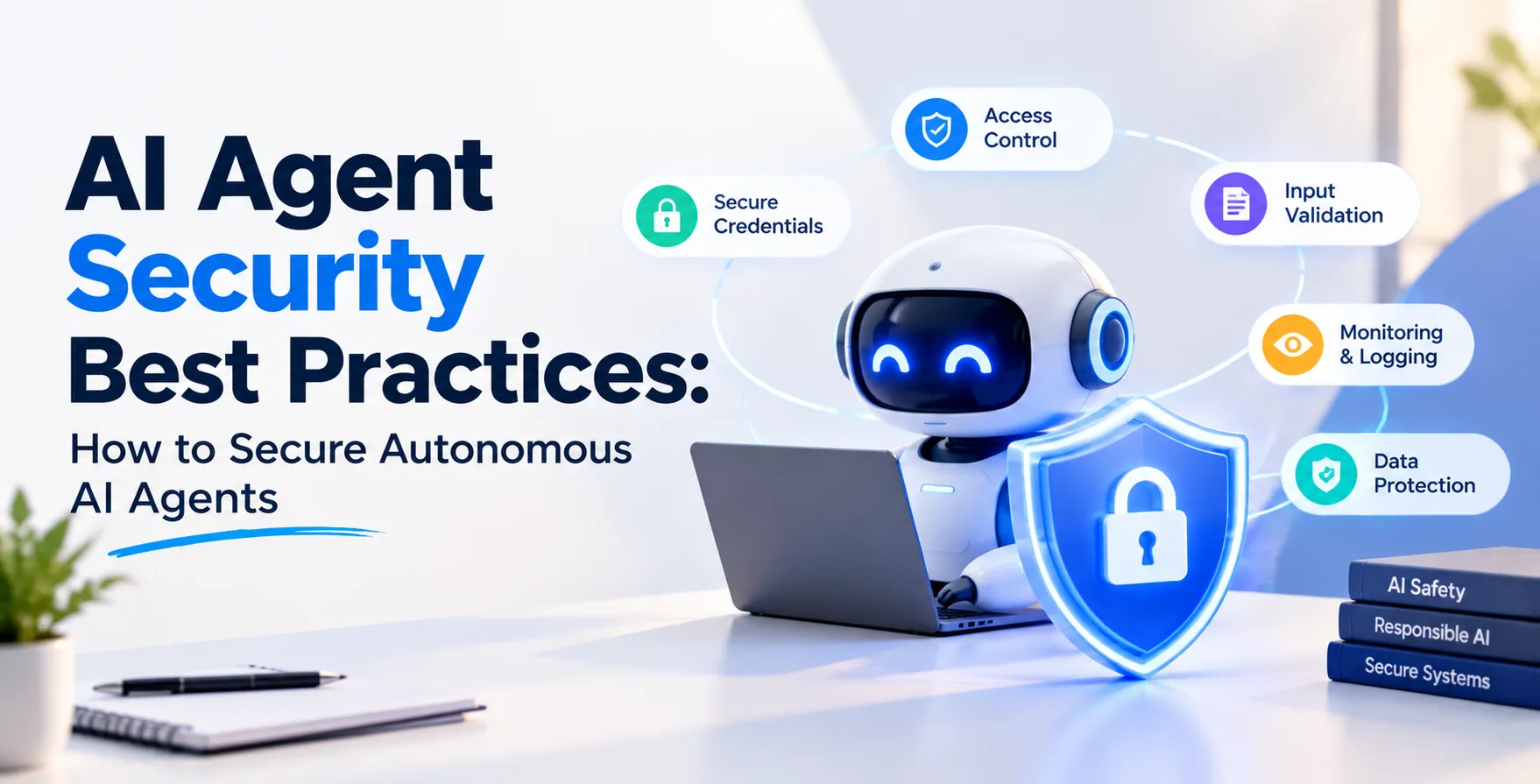
Managing AI agent permissions is the most critical hurdle for any security-conscious team. You should never grant an agent broad access to your entire infrastructure or user base.
Instead, follow the principle of least privilege by scoping access to only what is strictly necessary for a specific task. If an agent only needs read access to a database, do not provide write capabilities.
- Granular scope definitions
- Short-lived access tokens
- Tool-specific authorization layers
- Strictly defined execution contexts
- Regular permission audits
By enforcing these constraints, you limit the blast radius if an agent ever experiences a prompt injection or model hallucination that leads to unwanted behavior.
Designing Robust LLM Guardrails
Effective LLM Guardrails serve as the final line of defense against malicious inputs or harmful outputs. These systems monitor the stream of data between the model and the environment to ensure compliance with safety policies.
They validate that the agent's actions remain within predefined business logic. Without these guardrails, your agents might inadvertently leak sensitive information or execute unauthorized commands.
Input Validation Strategies
You must sanitize all user prompts before they reach the reasoning engine. This prevents common injection attacks that trick the agent into ignoring its instructions.
- Sanitize user-provided input strings
- Restrict prompt length and complexity
- Filter sensitive PII patterns
These checks ensure that the agent remains focused on its intended tasks rather than responding to adversarial prompts.
Output Filtering Mechanisms
The agent's response must also pass through a validation layer before reaching the user or triggering an action. This prevents the model from generating malicious code or non-compliant content.
- Verify output against policy rules
- Scan for unauthorized API calls
- Check for hallucinations in data
These filters maintain the integrity of your application and prevent reputational damage.
Threat Modeling for Autonomous Systems
Threat modeling for agents differs significantly from traditional web applications. You must anticipate how an attacker might manipulate the agent's reasoning process rather than just looking for code vulnerabilities.
Think about how the agent interprets instructions and how it handles external data inputs. What happens if the agent is fed a malicious instruction set designed to bypass its safety training?
Securing AI Agent Tools and Memory
When you build agents with tools and memory, you create persistent storage areas that can be targeted. An attacker might try to inject false memories or manipulate the tools' return values to influence future decisions.
Ensure that all tool interactions are logged and encrypted. Treat the agent's memory as a sensitive database that requires strict access controls.
Authentication and Identity for Agents
Just like human users, agents need a verified identity. Use strong API authentication methods to ensure that every request an agent makes is signed and traceable.
Avoid shared secrets or hardcoded keys. Instead, leverage identity providers to issue ephemeral credentials that expire automatically after the agent completes its cycle.
Managing AI Agent Supply Chain Risk
The software supply chain for agents includes models, libraries, and third-party integrations. Each component introduces potential vulnerabilities that could compromise your entire system.
Adopt a rigorous process for vetting every dependency. Only use trusted models and libraries that have undergone security auditing and verification.
- Vet all third-party libraries
- Scan models for known vulnerabilities
- Audit external tool integrations
- Maintain a software bill of materials
This systematic approach reduces the likelihood of shipping compromised code to production environments.
Monitoring and AI Observability
Continuous monitoring through AI observability is essential for identifying anomalous behavior. If an agent begins to act outside its normal parameters, you need immediate alerts to intervene.
Track the agent's reasoning steps and API usage patterns closely. This data is invaluable for forensic analysis after an incident.
Human-in-the-Loop Safeguards
For high-stakes decisions, always require human intervention before execution. This prevents the agent from making irreversible changes without oversight.
Design your workflows so that the agent presents its intent to a human for approval. This adds latency but significantly improves security for critical business operations.
Best Practices for Deployment
When deploying to production, start with a phased rollout. Monitor the agent's performance in a sandbox before exposing it to real customer data.
Always maintain an emergency kill switch that can disable the agent instantly. This is vital if you detect unexpected behavior in the field.
- Phased production rollouts
- Implement emergency kill switches
- Conduct regular penetration testing
- Automate security configuration drift detection
- Maintain detailed audit logs
Consistent vigilance and proactive security measures will ensure your agents operate reliably in complex environments.
Conclusion
Securing autonomous agents is an ongoing commitment to vigilance and architectural discipline. By implementing strict AI agent security best practices, you can harness the power of automation while mitigating the inherent risks.
Focus on granular permissions, robust guardrails, and continuous monitoring. With the right security posture, your agents will become reliable, high-performing components of your technical infrastructure.


 In collaboration with