Table of Contents
- Introduction
- Understanding API Authentication Principles
- What are API Keys?
- What is JSON Web Token (JWT)?
- What is OAuth 2.0?
- Detailed Architectural Comparison
- API Key vs JWT Authentication
- When to Use OAuth 2.0
- Security Risks and Mitigations
- Implementation Best Practices for 2026
- Choosing the Right Approach for Your Stack
- Practical Migration Strategies
- Conclusion
Securing modern web services requires choosing the right API authentication methods for your architecture. As systems evolve into decentralized microservices and public gateways, authentication strategy becomes critical.
Developers often struggle when evaluating API key vs JWT authentication alongside full OAuth implementations. This guide breaks down each mechanism to help you secure REST API authentication effectively in 2026.
Introduction
API security has evolved rapidly over recent years. Legacy token systems are no longer sufficient for complex distributed applications modern teams build today.
Engineering teams must evaluate security trade-offs without compromising overall system performance. Adopting a clear identity layer protects core infrastructure while supporting rapid feature delivery.
Whether building mobile applications, partner integrations, or microservice meshes, choosing the correct security protocol is an essential architectural decision.
Understanding API Authentication Principles
Authentication verifies the identity of a client or user contacting your server endpoints. Authorization determines what resources that verified identity can actually access once inside.
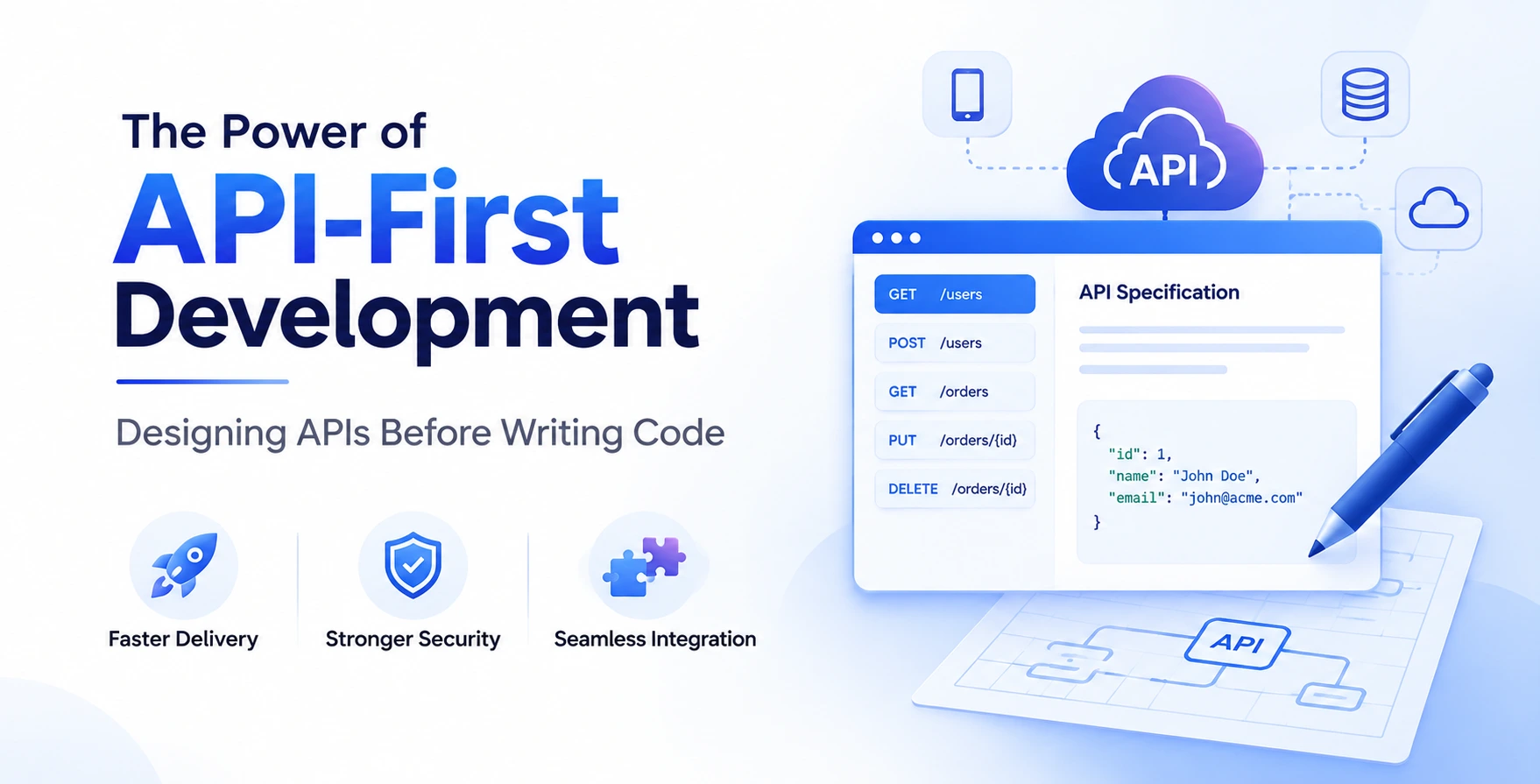
Before picking an identity pattern, development teams should adopt API First Development practices to map out granular access control early.
- Identity verification for client callers
- Resource authorization based on scopes
- Protection against unauthorized endpoint access
- Audit logging for security compliance
- Rate limiting based on caller identity
- Stateless verification across backend nodes
What are API Keys?
API keys are unique string tokens passed by clients to identify their project or application. They act as simple long-lived credentials attached to request headers or query strings.
While simple to implement, API keys lack built-in expiration timestamps and granular resource permissions. They are best suited for server-to-server communication where caller identity remains static.
- Simple string tokens for application identification
- Easy implementation for public developer portals
- Long lifespan unless manually revoked by administrators
- Minimal server computational overhead during verification
What is JSON Web Token (JWT)?
JSON Web Tokens offer a compact, self-contained method for transmitting verified identity claims between parties. The token payload contains claims digitally signed using a shared secret key or public key pair.
Because JWTs contain user state and expiration data, backend services verify tokens without querying a central session database. This stateless design makes them highly scalable across modern cloud environments.
When engineering leads search how to secure REST API authentication, JWTs frequently serve as the standard mechanism for session management.
What is OAuth 2.0?
OAuth 2.0 is an industry-standard authorization framework rather than a simple token format. It allows third-party applications to obtain limited access to user accounts without ever seeing user credentials.
It delegates user authentication to a dedicated identity provider while issuing scoped short-lived access tokens. This approach isolates sensitive user passwords from external software integrations completely.
- Delegated authorization framework for third parties
- Issues short-lived access and refresh tokens
- Supports granular permission scopes for resources
- Decouples identity providers from backend APIs
- Standardized flows for mobile and web applications
Using OAuth reduces password exposure while enabling seamless single sign-on capabilities across enterprise software ecosystems.
Detailed Architectural Comparison
Choosing between modern authentication standards requires understanding key operational differences across patterns. The comparison matrix below highlights critical parameters across all three options.
| Feature |
API Keys |
JWT |
OAuth 2.0 |
| Primary Purpose |
App identification |
Stateless user auth |
Delegated authorization |
| Token State |
Stateful lookups |
Stateless self-contained |
Opaque or JWT tokens |
| Granular Scopes |
Limited support |
Supported via claims |
Native framework support |
| Revocation Speed |
Instant via database |
Requires blocklist cache |
Instant via token store |
| Setup Complexity |
Very Low |
Moderate |
High setup complexity |
Selecting the right pattern depends heavily on system architectural requirements, client trust levels, and expected integration models.
API Key vs JWT Authentication
Evaluating API key vs JWT authentication comes down to state management and architectural performance requirements.
Performance and Scalability
JWT validation relies on fast cryptographic signature verification rather than database lookups. This approach dramatically speeds up request processing in distributed microservice networks.
- Cryptographic signature verification on edge nodes
- Zero database queries needed per incoming request
API keys require database lookups or cache queries for every incoming request, potentially creating central bottlenecks.
State Management and Expiration
JWTs contain embedded expiration claims that enforce short token lifespans automatically across services.
- Automated token expiration handled by client refresh logic
- Embedded claim attributes control detailed access duration
API keys remain active indefinitely until manually revoked or updated by a system administrator.
When to Use OAuth 2.0
OAuth 2.0 excels when external third-party developers require controlled access to private user data. It provides standard security flows for interactive user logins and scope consent screens.
Enterprise platforms handling sensitive user operations rely on OAuth 2.0 to enforce api security best practices across distributed environments.
- Third-party ecosystem developer portal integrations
- Single sign-on deployments across internal enterprise tools
- Mobile application authentication requiring user consent screens
- Microservices requiring scoped temporary access tokens
- Federated identity login scenarios using external providers
Security Risks and Mitigations
Insecure token implementation leads to credential theft, replay attacks, and accidental security vulnerabilities. Developers must enforce strict TLS encryption to safeguard all tokens in transit.
Token storage requires careful handling on client devices to avoid cross-site scripting vulnerabilities. Always store browser tokens in secure HttpOnly cookies rather than local storage spaces.
Continuous automated testing using dedicated API testing tools helps teams catch authentication bugs prior to production releases.
Implementation Best Practices for 2026
Modern architecture demands proactive defense strategies for endpoints regardless of chosen authentication methods. Following established operational standards prevents data leaks and unauthorized system access.
- Enforce short token expiration windows for active sessions
- Use strong asymmetric signing algorithms for tokens
- Implement aggressive rate limiting per caller client
- Store signing keys in dedicated hardware security modules
- Rotate cryptographic signing keys automatically on schedule
- Log failed authentication attempts for security audit monitoring
Regular security reviews ensure legacy services maintain compliant security configurations as threat landscapes evolve.
Choosing the Right Approach for Your Stack
The optimal authentication strategy depends on your backend communication patterns and overall system architecture. Different API communication styles demand tailored access control decisions.
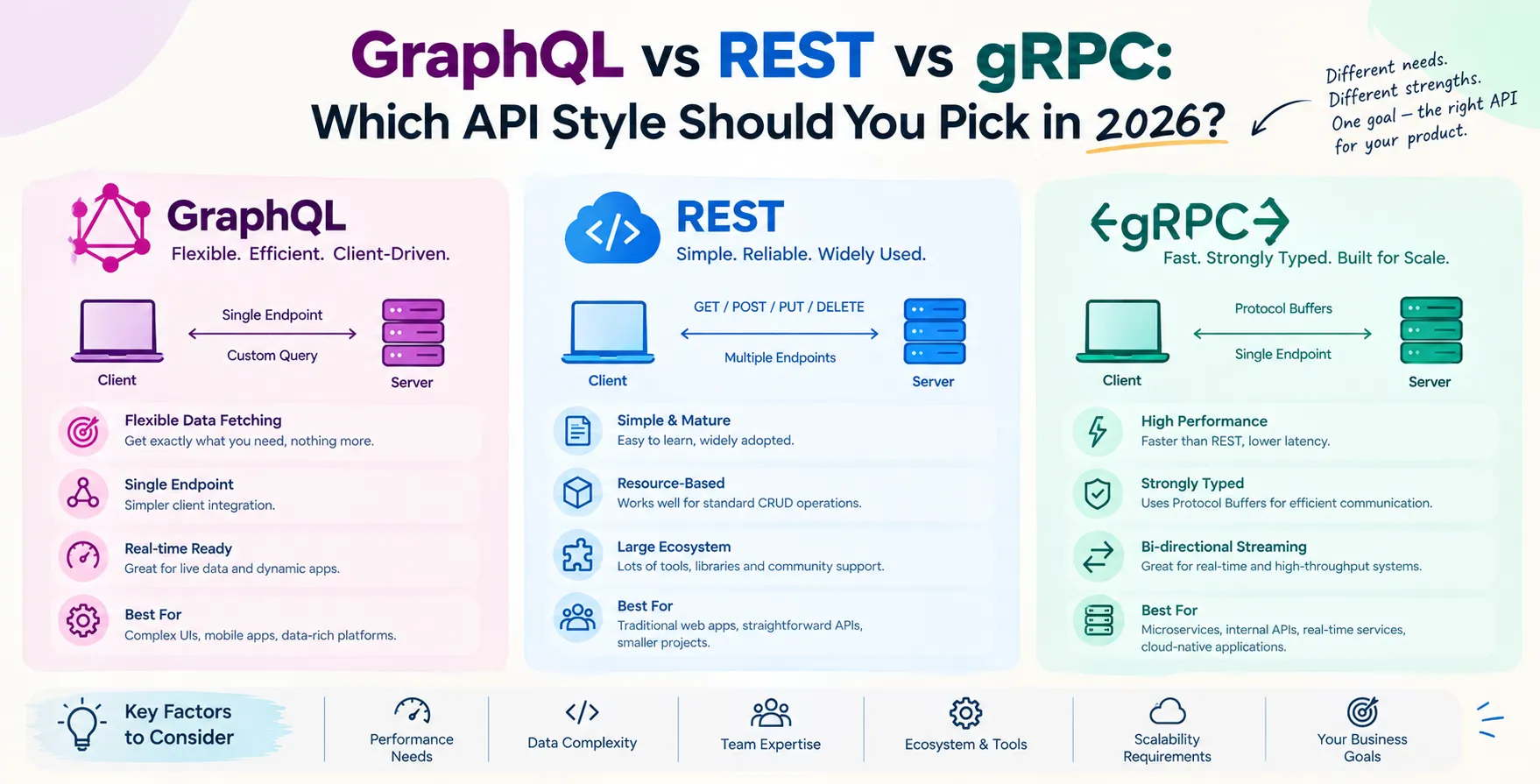
Whether designing GraphQL vs REST vs gRPC service layers, ensure identity propagation flows smoothly through server middleware.
- Use API keys for internal microservice communication scripts
- Use JWT or OAuth for user-facing client web applications
Aligning token choices with network architecture prevents unnecessary integration complexity down the road.
Practical Migration Strategies
Upgrading authentication protocols across production services requires careful planning to maintain continuous client availability.
Leverage systematic API Versioning strategies to expose modern token headers alongside legacy authorization headers seamlessly.
- Support legacy and modern authentication headers simultaneously
- Issue dual tokens during migration transition phases
- Deprecate legacy API keys with clear sunset timelines
- Monitor client migration adoption through backend metrics
Conclusion
Selecting among modern API authentication methods requires balancing operational simplicity, system performance, and security requirements. API keys offer simplicity for simple integrations, JWT provides scalable stateless sessions, and OAuth 2.0 delivers comprehensive delegated authorization.
Carefully evaluating API key vs JWT authentication within your architecture ensures long-term scalability without sacrificing system security. By implementing these security patterns alongside established engineering standards, your web services will remain resilient throughout 2026.


 In collaboration with