In collaboration with

Kaushal Varma
Frontend Developer


Loading calendar...
We're Proud to Announce


Zillion Infotech and Bloxbitz are working together to explore strategic business opportunities, referral initiatives, and future technology collaborations. Our shared focus is on delivering greater value, fostering innovation, and building long-term business relationships.
Have an ambitious idea, technology challenge, or ecosystem to build? Let's talk.

Kaushal Varma
Frontend Developer
Connect with us on social media!


The landscape of software engineering is shifting as we move further into the decentralization era. For developers, the transition from legacy architectures to decentralized systems is more than just a trend.
Understanding the fundamental differences in Web3 app development is critical for staying relevant. By 2026, the lines between traditional services and blockchain-integrated systems are becoming increasingly blurred.
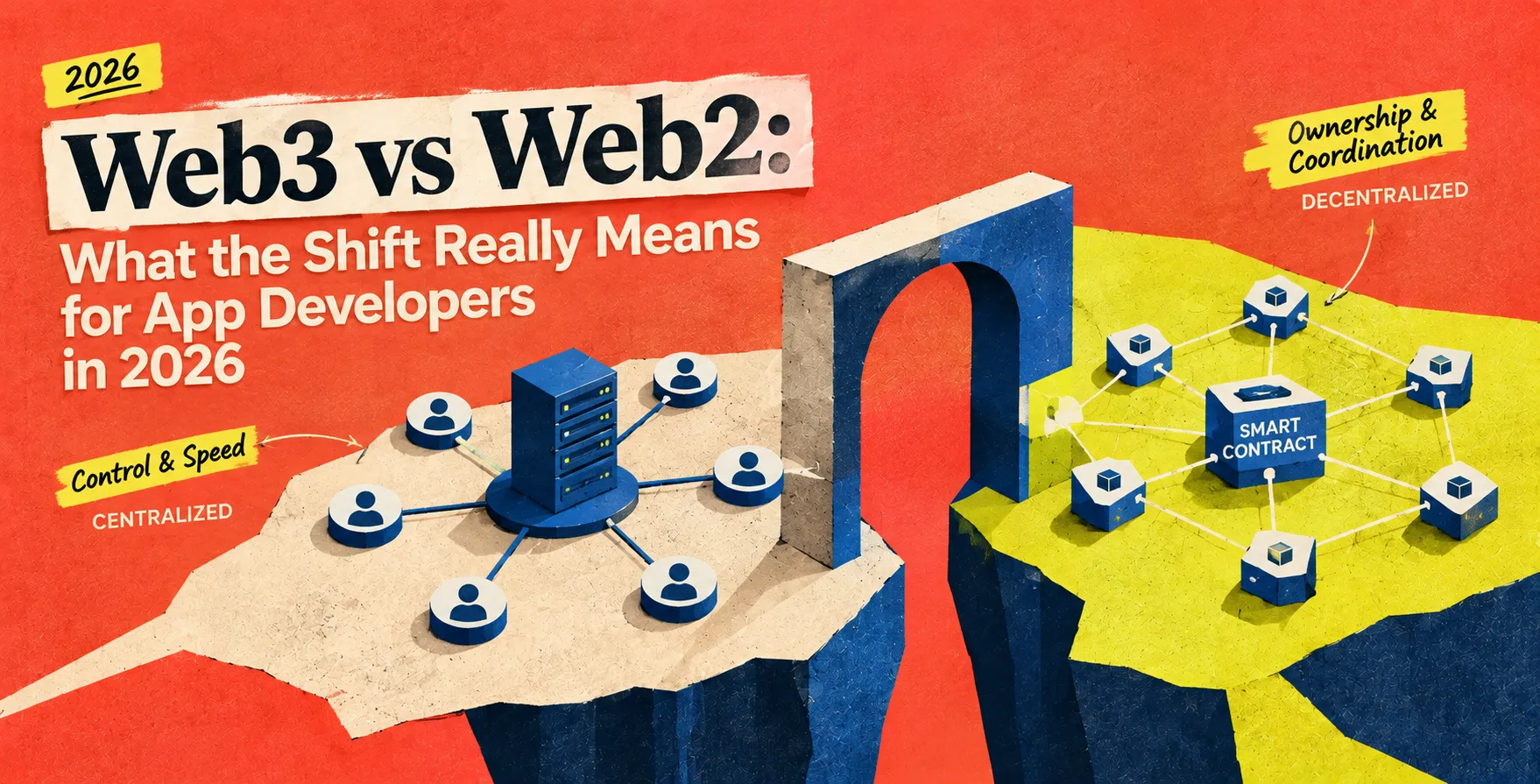
Traditional systems rely on centralized servers to manage data and business logic. This client-server model is the bedrock of most current digital services.
In contrast, Web3 application development introduces a distributed architecture. Logic often resides on immutable ledgers, while storage is frequently handled by decentralized protocols.
Web2 identity is typically managed via centralized OAuth or proprietary databases. Developers build systems that own the user data entirely.
Web3 flips this model by prioritizing user-owned digital identities. Developers must design applications that interact with wallets rather than managing user credentials directly.
When comparing Web2 vs Web3 development, the backend is where the most dramatic changes occur. You are no longer just maintaining a CRUD API connected to a SQL database.
Instead, you are integrating with blockchain nodes and indexers to surface state information. This requires a shift in how you think about asynchronous events and data availability.
Applications must now listen to on-chain events to trigger UI updates. This model is significantly more complex than standard database polling.
Developers need to build robust middleware to bridge the gap between volatile blockchain state and application requirements.
You cannot store large datasets directly on a blockchain due to costs. Developers use decentralized storage protocols for images, video, and large documents.
These solutions provide the transparency of decentralized networks without the heavy constraints of mainnet transaction limits.
The frontend remains the primary touchpoint for users, but the integration layer has become more sophisticated. Web3 app development 2026 standards prioritize seamless wallet interaction.
Users expect the same speed and responsiveness as they find in traditional consumer saas offerings. Achieving this requires careful caching strategies and optimistic UI updates.
Blockchain security is fundamentally different from traditional web security. Once a contract is deployed, it is incredibly difficult to patch vulnerabilities.
Smart contract auditing is mandatory before any public deployment. Developers must adopt a defensive programming mindset that assumes the environment is adversarial by default.
| Security Factor | Web2 Approach | Web3 Approach |
|---|---|---|
| Data Access | Access control lists | Public availability |
| Upgrades | CI/CD hot patches | Proxy pattern migration |
| Authentication | Email and password | Cryptographic signatures |
| Trust Model | Trust the host | Trust the code |
Smart contracts are the backend logic of the future web. They enable trustless transactions and automated business processes that previously required intermediaries.
However, writing these contracts requires extreme precision. Any bug can lead to permanent financial loss for the users.
Proper smart contract development creates the backbone for secure and reliable decentralized applications.
Managing state in a decentralized environment is notoriously difficult. Unlike traditional apps, you do not have a single source of truth that you control.
You must reconcile the state on the blockchain with the local state of your application. This often leads to complex synchronization issues in high-frequency applications.
Performance remains a significant hurdle for decentralized systems. Latency is inherent when waiting for block confirmations or consensus.
Developers use Layer 2 solutions to mitigate these concerns. These networks allow for high-throughput interactions while inheriting security from the main chain.
These technologies are making decentralized apps feel more like traditional software daily.
The tooling ecosystem for Web3 has matured significantly over the last few years. We have moved past the era of manual CLI interactions for every task.
Modern frameworks provide built-in testing environments and deployment pipelines. This makes the barrier to entry lower than it was even just two years ago.
Moving into this field requires a solid grasp of cryptography and distributed systems theory. You cannot simply rely on your knowledge of web frameworks.
Senior engineers find that their experience with architecture is more valuable than their knowledge of specific languages. A good design pattern is universal regardless of the underlying protocol.
The transition is not just about learning a new language but adopting a new philosophy toward software creation.
Maintaining a decentralized application is a continuous process of governance. You often need to involve the community in decisions regarding protocol changes.
This shifts the developer role from an absolute authority to a facilitator. Balancing community needs with technical feasibility is a new skill for many developers.
The convergence of AI and decentralized infrastructure is the next major wave. We are seeing agents that can interact with smart contracts autonomously.
Developers who understand both fields will be the architects of this new digital economy. The focus will be on creating systems that are both user-friendly and cryptographically secure.
The shift to Web3 is not about discarding Web2 entirely. It is about evolving our architectures to be more transparent, secure, and user-centric.
By 2026, developers who can bridge these two worlds will be in high demand. Start by mastering the core principles of decentralization and build your own applications today.


No, Web3 is an evolution that complements Web2. Many applications will eventually use a hybrid approach that leverages the best of both worlds.