Table of Contents
- Introduction to B2B Customer Portals
- Core Objectives for Portal Success
- Essential Features for B2B Users
- Architectural Patterns for SaaS Portals
- Selecting the Right Technology Stack
- Database Design and Multi-Tenancy
- Security and Access Control Strategies
- API-Driven Functionality
- Designing a Scalable UI Component Library
- Optimizing the User Experience
- Managing Data and Syncing
- Performance and Scalability Considerations
- Conclusion
Introduction to B2B Customer Portals
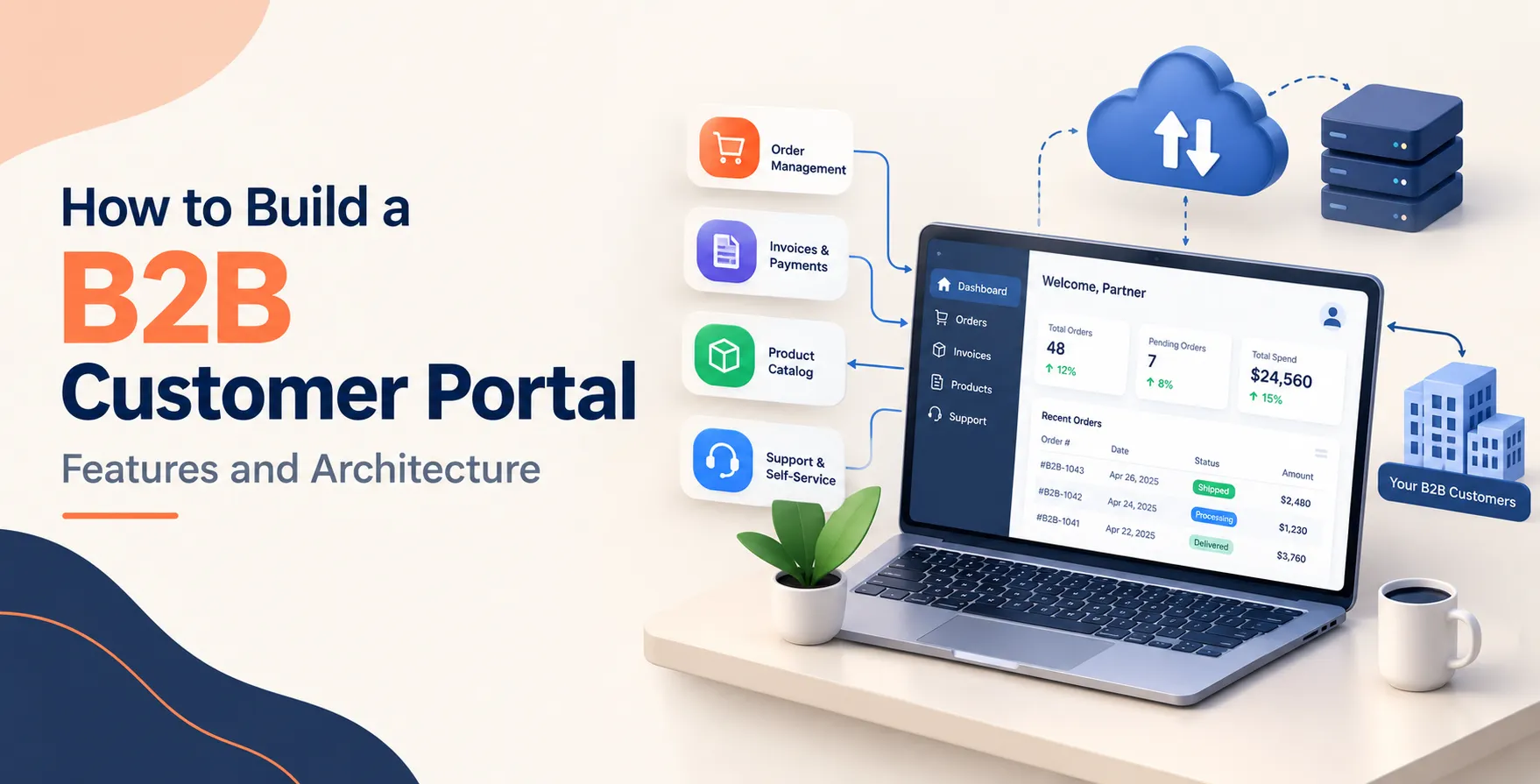
A B2B customer portal acts as the digital storefront for your ongoing client relationships. It moves beyond simple marketing sites to provide deep, functional value to your existing base.
Building a B2B SaaS portal requires a shift in mindset from consumer-facing apps to professional workflow tools. You are solving for efficiency, transparency, and data access.
Core Objectives for Portal Success
The primary goal is to empower your clients to self-serve. When users can find answers or manage their subscriptions without opening a ticket, your operational costs drop significantly.
Another key objective involves data visibility. Business users demand clear, actionable insights into how they use your software.
- Reducing support ticket volume
- Increasing user retention rates
- Providing transparent reporting tools
- Streamlining account management processes
Essential Features for B2B Users
B2B users are not browsing; they are working. They expect tools that integrate into their daily business operations and provide immediate clarity.
Administrative Controls
These features handle the hierarchy of user roles within a single client organization. You must allow for granular permission settings to maintain security.
- Role-based access controls
- User management dashboards
- Single sign-on integrations
- Subscription tier displays
Reporting and Insights
Clients need to know their return on investment. Dashboards should visualize key metrics clearly and allow for data exports.
- Usage analytics reporting
- Downloadable billing statements
- Historical activity logs
Architectural Patterns for SaaS Portals
Your architecture dictates the long-term maintainability of your platform. A well-structured system supports rapid feature deployment without compromising stability.
You should prioritize a modular approach. This ensures that individual services can be updated or replaced without affecting the entire ecosystem.
Microservices vs Monolith
Many teams start with a modular monolith before transitioning. This allows you to define boundaries early without the overhead of distributed systems.
- Event-driven communication patterns
- Independent service deployments
- Centralized authentication gateway
Selecting the Right Technology Stack
The tech stack determines your development velocity and performance ceilings. Choose tools that align with your team's expertise and long-term scalability goals.
Modern B2B SaaS portal development often leverages static site generation for public pages. For the authenticated dashboard, dynamic client-side rendering remains the standard.
| Stack Layer |
Common Selection |
Benefit |
| Frontend |
React/Next.js |
Component reuse |
| Backend |
Node.js/Go |
High concurrency |
| Database |
PostgreSQL |
Relational integrity |
| Auth |
OAuth/OpenID |
Standard compliance |
| Caching |
Redis |
Low latency |
Database Design and Multi-Tenancy
Proper multi-tenant SaaS architecture database design is critical for security and performance. You must decide between isolated databases or shared schemas early on.
Isolation is key to preventing data leakage between clients. Ensure that your queries always include tenant-specific filtering to avoid cross-contamination.
- Row-level security policies
- Tenant-aware data access layers
- Schema-based isolation patterns
Security and Access Control Strategies
Security is the foundation of any professional software tool. Implementing a robust Zero Trust security for SaaS applications approach ensures that every request is verified regardless of its origin.
Beyond authentication, authorization is vital. Always follow the principle of least privilege to restrict access to sensitive business data.
- Multi-factor authentication enforcement
- Regular security audit logs
- Encrypted data at rest
- API key management portals
API-Driven Functionality
An API-first approach allows your portal to grow alongside your core product. By treating your portal as just another consumer of your internal APIs, you ensure consistency.
This strategy also enables future integrations with third-party tools. Your customers will eventually want to pull data directly into their own systems.
- Internal RESTful service layers
- Webhooks for real-time updates
- Standardized response structures
Designing a Scalable UI Component Library
Consistency in design drives user trust and lowers learning curves. Investing in a robust SaaS design system ensures that every button, form, and table behaves identically.
This approach saves hundreds of hours of development time. When you need to add a new feature, you simply compose existing elements rather than writing new CSS from scratch.
- Modular design components
- Accessible color palettes
- Consistent typography rules
- Responsive grid systems
- Shared icon libraries
Optimizing the User Experience
A B2B portal that is hard to use will be ignored by your clients. Focus on reducing clicks for common tasks like billing updates or user invites.
Good UX design ROI is measured by how quickly a user completes their primary goal. If they get lost in navigation, you have failed to provide a professional experience.
- Clear intuitive navigation paths
- Fast loading dashboard views
- Contextual help tooltips
- Mobile-optimized data tables
Managing Data and Syncing
Real-time data synchronization is the biggest challenge in complex portals. You must handle state management carefully to prevent visual flickering or stale information.
Use webhooks and background workers to keep your portal in sync with your primary databases. Avoid direct database queries from the frontend layer whenever possible.
- Background job queues
- Optimistic UI updates
- State synchronization logic
Performance and Scalability Considerations
As your user base grows, so does the load on your portal. Caching strategies are essential for maintaining a snappy experience during peak business hours.
Monitor your performance metrics constantly. Use observability tools to identify slow queries or bottlenecked services before your clients notice issues.
- Edge caching for static assets
- Database query optimization
- Horizontal service scaling
Conclusion
Building a successful B2B customer portal requires balancing technical rigor with user-centric design. You must prioritize secure architecture and consistent feature delivery to drive long-term value.
By following these best practices, you create a platform that not only serves your customers but also reinforces your position as a trusted partner. Start small, focus on the most requested features, and iterate based on real usage data.


 In collaboration with