Table of Contents
- Introduction to E-Invoicing
- The Regulatory Landscape
- Key Technical Requirements
- Authentication and Security
- Handling Payload Construction
- Managing API Responses
- Error Handling Strategies
- Scaling for High Volumes
- Testing Your Integration
- Data Security Considerations
- Maintaining Compliance
- Common Implementation Hurdles
- Strategic Planning for SaaS
- Conclusion
Introduction to E-Invoicing
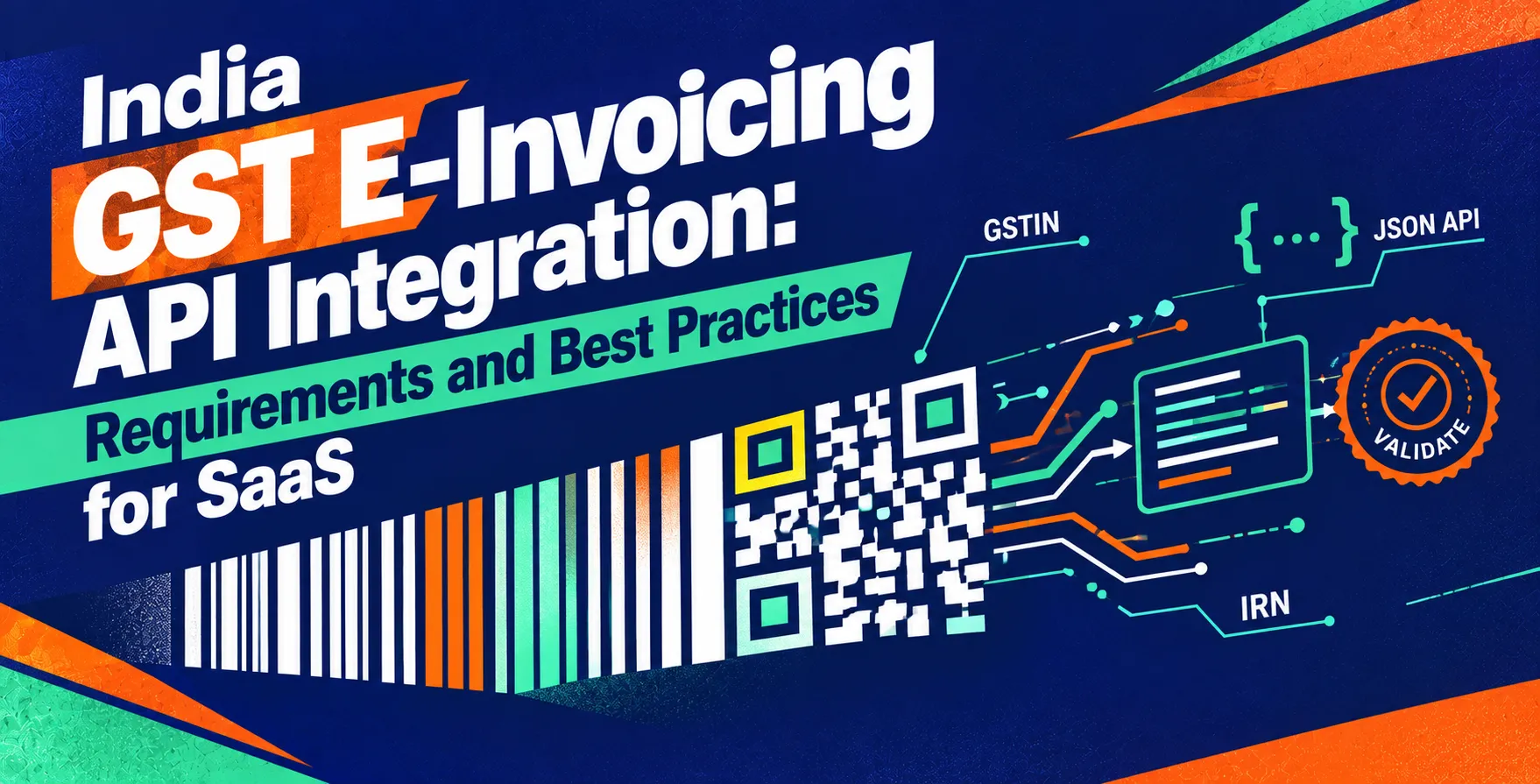
Electronic invoicing in India has fundamentally changed how businesses report transactions. For SaaS providers, building a robust India GST e-invoicing API integration is no longer optional but a core requirement for serving Indian enterprises.
The shift toward digital transparency requires real-time reporting to the Invoice Registration Portal (IRP). A well-architected integration ensures your users can generate legally compliant documents without leaving your platform.
The Regulatory Landscape
The GST Council introduced e-invoicing to curb tax evasion and streamline compliance. This system mandates that businesses report B2B invoices in a standardized format to the government.
As a developer, understanding the regulatory requirements is the first step toward building compliant software. You must ensure your platform generates invoices that meet these strict national standards.
- B2B transaction reporting
- Real-time IRP validation
- Digital signature mandates
- Standardized JSON schemas
Key Technical Requirements
To implement an effective GST e-invoicing API, you need to align your infrastructure with the official IRP specifications. This involves handling JSON data structures that conform exactly to the government's requirements.
Your software must be capable of generating a valid Invoice Reference Number (IRN) for every transaction. If the payload deviates from the schema, the portal will reject the request immediately.
Schema Compliance
The government enforces a strict schema for all invoice data fields. Ensuring your data models map correctly to these fields is critical for success.
- Accurate GSTIN validation
- Standardized unit codes
- Correct tax head mapping
- Precise date formats
Digital Signing
Every invoice payload sent to the API must be cryptographically signed. This ensures the authenticity and integrity of the data being reported.
- Private key management
- Public key infrastructure
- Payload signing algorithms
Authentication and Security
Securely interacting with government endpoints requires robust authentication mechanisms. A standard India e-invoice API integration typically relies on a token-based system to authorize requests.
You should follow strict security best practices to protect the credentials of your users. Never store raw authentication keys in client-side code or insecure environment variables.
- Token-based authentication
- Encrypted key storage
- Regular credential rotation
- Secure transmission protocols
Handling Payload Construction
Constructing the JSON payload is the most complex part of the development process. You must map your internal database fields to the IRP requirements without losing precision.
Data validation should happen locally before you ever attempt an API call. Catching formatting errors early prevents unnecessary network overhead and reduces the risk of being throttled by the server.
Managing API Responses
Once you send the payload, the IRP returns a response containing the IRN and a QR code. Your application must parse this response immediately to provide a seamless experience to the user.
If the API returns a failure, you need to capture the specific error code to inform the user exactly what went wrong. Do not rely on generic error messages; provide actionable feedback.
Error Handling Strategies
Integration failures are inevitable when dealing with external government systems. Implementing a robust retry mechanism is essential for maintaining data consistency across your platform.
You should differentiate between transient network errors and permanent validation errors. Permanent errors require user intervention, while transient errors can be resolved via automated retries.
- Exponential backoff strategies
- Detailed error logging
- User notification systems
- Manual override workflows
Scaling for High Volumes
As your SaaS platform grows, the volume of invoices will increase significantly. You need an architecture that handles batch processing efficiently without hitting rate limits.
Asynchronous processing is the best way to handle large volumes of invoice submissions. By queueing requests, you ensure your main application remains responsive even during peak hours.
Testing Your Integration
Testing your GST e invoice software India requires more than just functional unit tests. You must perform end-to-end testing against the sandbox environment provided by the government portal.
Automated regression testing is crucial for ensuring that updates to your platform do not break existing tax compliance features. Always validate your integration with various edge cases, such as partial payments or complex multi-tax scenarios.
- Sandbox environment validation
- Automated regression suites
- Negative testing scenarios
- Load testing simulations
- Integration smoke tests
Data Security Considerations
Handling financial data requires the highest level of security. You must ensure that PII and tax information remain encrypted both at rest and in transit.
Audit logs are mandatory for any financial integration. Maintain a clear trail of every API call made and the corresponding response received to assist with troubleshooting and compliance audits.
Maintaining Compliance
The government frequently updates the e-invoicing schema and rules. Your team must stay agile to adapt your software whenever a new notification is issued.
Effective monitoring of the official GST portal is necessary for timely updates. If your software lags behind these changes, your users will face compliance issues, which can damage your brand reputation.
Common Implementation Hurdles
Developers often face challenges with inconsistent data formats or unexpected API downtime. These issues can be mitigated through proactive monitoring and defensive programming techniques.
Never assume the external API will always be available or responsive. Build your system to handle scenarios where the IRP is unreachable for extended periods.
- Unexpected API outages
- Inconsistent data types
- Schema version updates
- Timeout management
Strategic Planning for SaaS
Building a successful integration strategy involves more than just writing code. You must consider the entire lifecycle of an invoice, from creation to final tax reporting.
Offer your users clear documentation and intuitive UI controls for managing their e-invoicing settings. By simplifying the complexity of government compliance, you provide significant value that differentiates your product from competitors.
Conclusion
Developing a robust integration for e-invoicing is a major milestone for any Indian SaaS provider. By focusing on secure authentication, rigorous error handling, and scalable architecture, you can provide a reliable service that users trust.
Stay vigilant regarding regulatory changes and prioritize the security of your users' financial data. A well-executed integration does more than just meet legal requirements; it becomes a core feature that drives customer retention and business growth.


 In collaboration with