Table of Contents
- Introduction to French E-Invoicing
- The Regulatory Landscape
- Understanding France E-Invoicing API Requirements 2026
- The Role of the Chorus Pro Platform
- How France E-Reporting Software Differs
- Technical Architecture for Compliance
- Key Data Transmission Standards
- Handling Invoice Life Cycle Statuses
- Authentication and Security Requirements
- Testing and Validation Workflows
- Challenges in Cross-Border Integration
- Best Practices for API Design
- Final Thoughts
Introduction to French E-Invoicing
The digital transformation of tax compliance is sweeping across Europe, with France leading the charge. For SaaS developers, this shift represents a significant engineering challenge as the government mandates electronic invoicing for all B2B transactions.
Understanding France e-invoicing is no longer optional for software providers serving the French market. You must prepare your infrastructure to handle real-time data transmission and complex tax reporting protocols.
The Regulatory Landscape
The French government aims to reduce tax fraud and streamline VAT collection through centralized digital oversight. This transition moves businesses away from traditional PDF invoices toward structured data formats that the tax authorities can process automatically.
Developers must realize that this is not just a document delivery task. It is a fundamental change in how financial data is structured, stored, and transmitted between private and public entities.
- Mandatory transition to structured formats
- Real-time VAT data reporting
- Integration with the national portal
Understanding France E-Invoicing API Requirements 2026
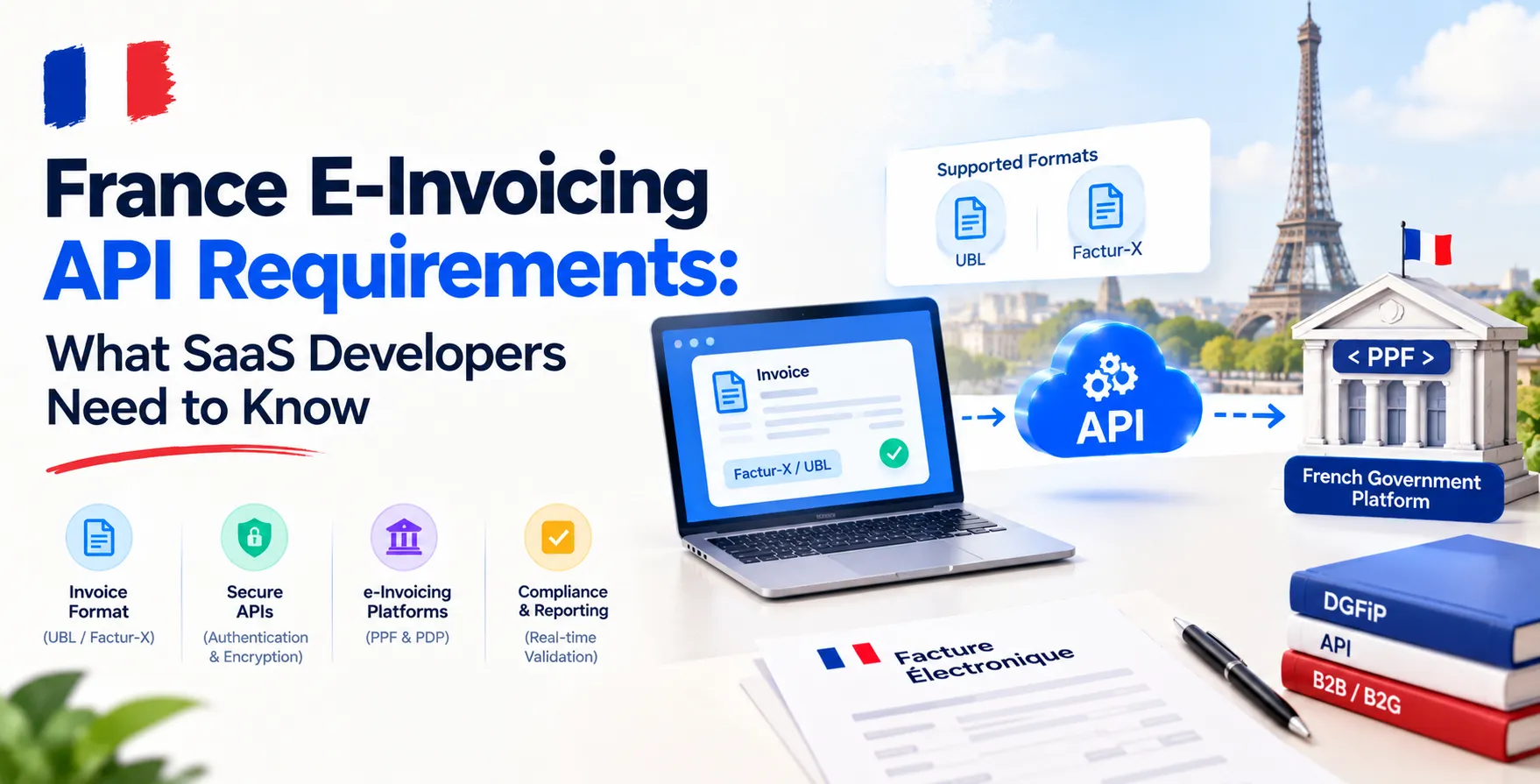
The France e-invoicing API requirements 2026 mandate that all businesses operating within the country adopt specific technical standards. Your application must support these protocols to remain compliant and competitive.
These requirements dictate how your system connects to the central authority, known as the PPF. You are expected to handle authentication, data formatting, and error handling with high precision.
Data Formatting Standards
Your API must output invoices in standardized formats like UBL, CII, or Factur-X. These formats ensure interoperability between different accounting systems.
- Support for UBL 2.1
- Adherence to CII standards
- Compliance with Factur-X specifications
Connectivity Protocols
The integration requires robust connectivity to ensure data is transmitted securely and acknowledged by the receiving party. A failure in communication could lead to significant financial penalties for your users.
- Secure RESTful endpoints
- Asynchronous processing queues
- Automated retry mechanisms
The Role of the Chorus Pro Platform
The Chorus Pro platform remains a cornerstone of the French government's strategy. It serves as the central hub where all invoices must be registered or transmitted for tax audit purposes.
As a developer, you will likely interact with a PDP, which is a private certified platform acting as an intermediary. These platforms handle the heavy lifting of mapping your internal data to the government’s strict requirements.
How France E-Reporting Software Differs
While e-invoicing covers B2B transactions, France e-reporting software addresses transactions where e-invoicing is not applicable. This includes B2C transactions and international sales that still require tax data transmission.
Your software architecture must distinguish between these two flows seamlessly. Failing to report international or B2C data correctly creates gaps in your user’s tax compliance profile.
- Transaction scope differences
- Specific reporting frequency rules
- Data aggregation requirements
Technical Architecture for Compliance
Designing your system for the French e-invoicing API requires a modular approach. You should isolate the tax-compliance layer from your core business logic to simplify future updates.
Implementing an API-first approach will help you manage these changes without rewriting your entire application. Think about how you handle state changes in your invoices as they move through the compliance lifecycle.
Key Data Transmission Standards
Data integrity is paramount when dealing with tax authorities. You must ensure that every invoice sent through your system is validated against the national schemas before transmission.
Validation Layers
Always implement local schema validation before pushing data to the API. This reduces the number of rejected requests and improves your overall throughput.
- XSD schema validation
- Business rule verification
- Structural data integrity checks
Error Handling
When the API rejects a request, your system needs to provide actionable feedback. Log the specific error codes returned by the platform to help users rectify issues quickly.
- Clear error documentation
- Automated status monitoring
- Developer notification alerts
Handling Invoice Life Cycle Statuses
An invoice in the French ecosystem transitions through various statuses, such as received, processed, or rejected. Your application must monitor these states to provide accurate feedback to the business user.
If you ignore these status updates, your users will lose visibility into their payment cycles. Build a robust webhook listener to handle incoming status changes from the government or intermediary platforms.
Authentication and Security Requirements
Security is non-negotiable when handling sensitive financial information. You must implement strong authentication methods to ensure only authorized entities can access the tax-reporting endpoints.
Standard practices for securing your connections include using OAuth 2.0 or mutual TLS. These methods prevent unauthorized access and ensure that your data transmissions remain encrypted in transit.
- Mutual TLS implementation
- OAuth 2.0 authorization flows
- Encryption at rest for stored invoices
Testing and Validation Workflows
Before going live, you must conduct extensive testing in the sandbox environment provided by the French authorities. This ensures that your integration meets every technical requirement without risking production data.
Use automated testing tools to simulate various edge cases, such as network timeouts or malformed invoice data. A well-tested integration is the only way to avoid production outages.
- Sandbox environment testing
- Schema validation testing
- End-to-end flow verification
Challenges in Cross-Border Integration
Operating in France means handling international VAT rules. If your SaaS caters to clients with global operations, you must manage multiple tax jurisdictions concurrently.
This adds complexity to your data modeling. You need to identify which invoices require standard French e-invoicing and which fall under the e-reporting category for international sales.
Best Practices for API Design
Your API should follow established patterns to remain developer-friendly. Avoid custom protocols where standard REST or JSON-based patterns suffice. Document your endpoints clearly to help your users integrate your solution into their existing workflows.
Consider how versioning will impact your clients. Since government requirements evolve, your API must support versioning to prevent breaking existing integrations while you roll out updates for new mandates.
- Clear endpoint documentation
- Consistent naming conventions
- Graceful deprecation of old versions
Final Thoughts
The move toward mandatory e-invoicing in France is a major milestone in fintech evolution. Developers who invest in robust, compliant, and scalable architectures today will gain a significant market advantage.
Stay ahead by monitoring official documentation and participating in developer communities. Compliance is a continuous process, not a one-time project, and your software must reflect that reality.


 In collaboration with