Table of Contents
- Introduction to Edge Computing
- Understanding Traditional Cloud Architecture
- How Edge Computing for Web Applications Works
- Key Benefits of Edge Performance
- Edge Computing vs Cloud Computing
- Architectural Shift to the Edge
- Impact on Website Performance Optimization
- Edge Computing for Websites in Practice
- Handling Dynamic Content at the Edge
- Security Considerations for Edge Networks
- When to Use Edge Architecture
- Future Trends in Edge Computing
- Conclusion
Introduction to Edge Computing
Modern users expect instant interactions from every application they visit. If a page takes more than a few seconds to load, your bounce rate climbs rapidly.
The traditional model of routing every request to a centralized server is often too slow for today's high-performance requirements. This is where edge computing changes the landscape by moving logic to the user.
By shortening the physical distance between the client and the compute resource, developers can eliminate unnecessary delays. This approach is fundamental for building responsive applications that feel instantaneous.
- Reduces network latency significantly
- Improves overall user satisfaction
- Enhances application reliability
- Supports real-time data processing
Understanding Traditional Cloud Architecture
Traditional setups rely on a centralized data center to host backend services and database storage. When a user in Tokyo visits a site hosted in Virginia, the request must travel across the globe.
This "round-trip" time adds hundreds of milliseconds to every interaction. While cloud services for startups have become incredibly accessible, centralized hosting inherently limits speed due to physics.
Even with advanced caching, static assets are often the only things served from local locations. Dynamic application logic typically remains tied to the origin server, creating a bottleneck.
- Centralized server reliance
- Longer round-trip times
- Geographic distance constraints
- Potential single points of failure
How Edge Computing for Web Applications Works
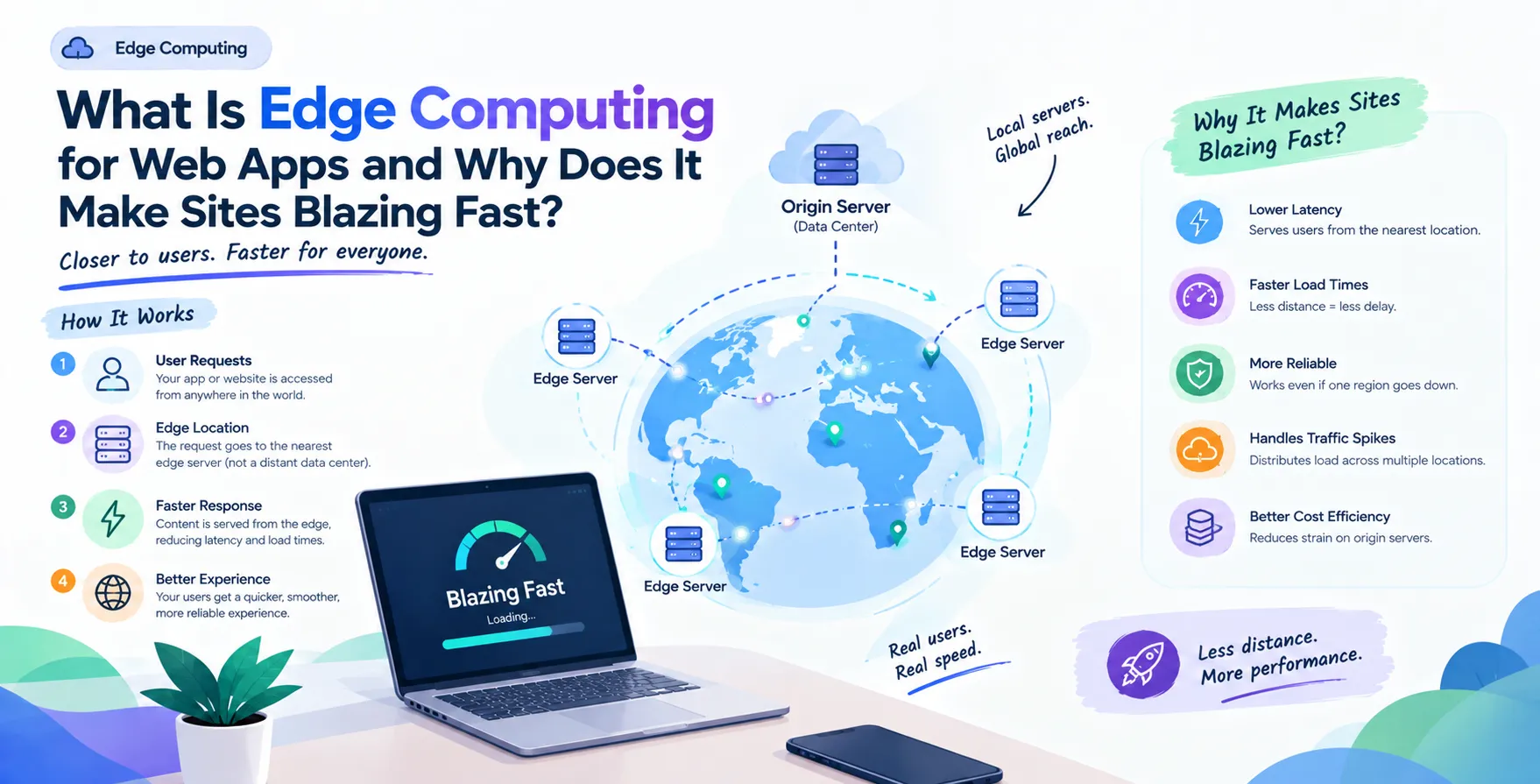
Instead of one massive data center, edge computing utilizes a distributed network of smaller nodes. These nodes are placed in geographic locations close to major population centers.
When a user visits a site, their browser connects to the nearest edge node rather than the distant origin server. The edge node handles the request, executes code, and serves the response immediately.
This shift in deployment services allows complex logic to run at the edge. Developers can now push server-side code closer to the user to minimize transit time.
- Distributed compute nodes
- Proximity-based request routing
- Localized request execution
- Reduced data transit distance
Key Benefits of Edge Performance
The primary advantage of adopting edge technology is the massive reduction in latency. Users perceive a faster experience because the "time to first byte" drops dramatically.
This performance boost directly correlates with better conversion rates and engagement. When your site feels snappy, users stay longer and interact more frequently.
Edge networks also provide inherent protection against traffic spikes. By distributing the load across many nodes, you prevent your main origin server from crashing during high-traffic events.
- Faster page load times
- Better user engagement metrics
- Improved SEO rankings
- Enhanced system scalability
Edge Computing vs Cloud Computing
| Feature |
Cloud Computing |
Edge Computing |
| Processing Location |
Centralized data center |
Distributed network nodes |
| Latency |
Higher due to distance |
Very low near user |
| Bandwidth Usage |
High at core |
Optimized at edge |
| Best Use Case |
Heavy batch processing |
Real-time web interactions |
| Scalability |
Vertical scaling |
Geographic horizontal scaling |
Architectural Shift to the Edge
Adopting an edge-first mindset requires rethinking your deployment pipeline. You are no longer just pushing code to one server, but to a global network of distributed environments.
This necessitates robust CI/CD pipeline strategies to ensure consistency across all nodes. If your edge functions behave differently than your production environment, you will face hard-to-debug issues.
Developers must also manage state carefully across these distributed nodes. While stateless functions work well at the edge, complex application states require clever synchronization patterns.
- Automated deployment synchronization
- Strict environment parity
- Stateless function design
- Global configuration management
Impact on Website Performance Optimization
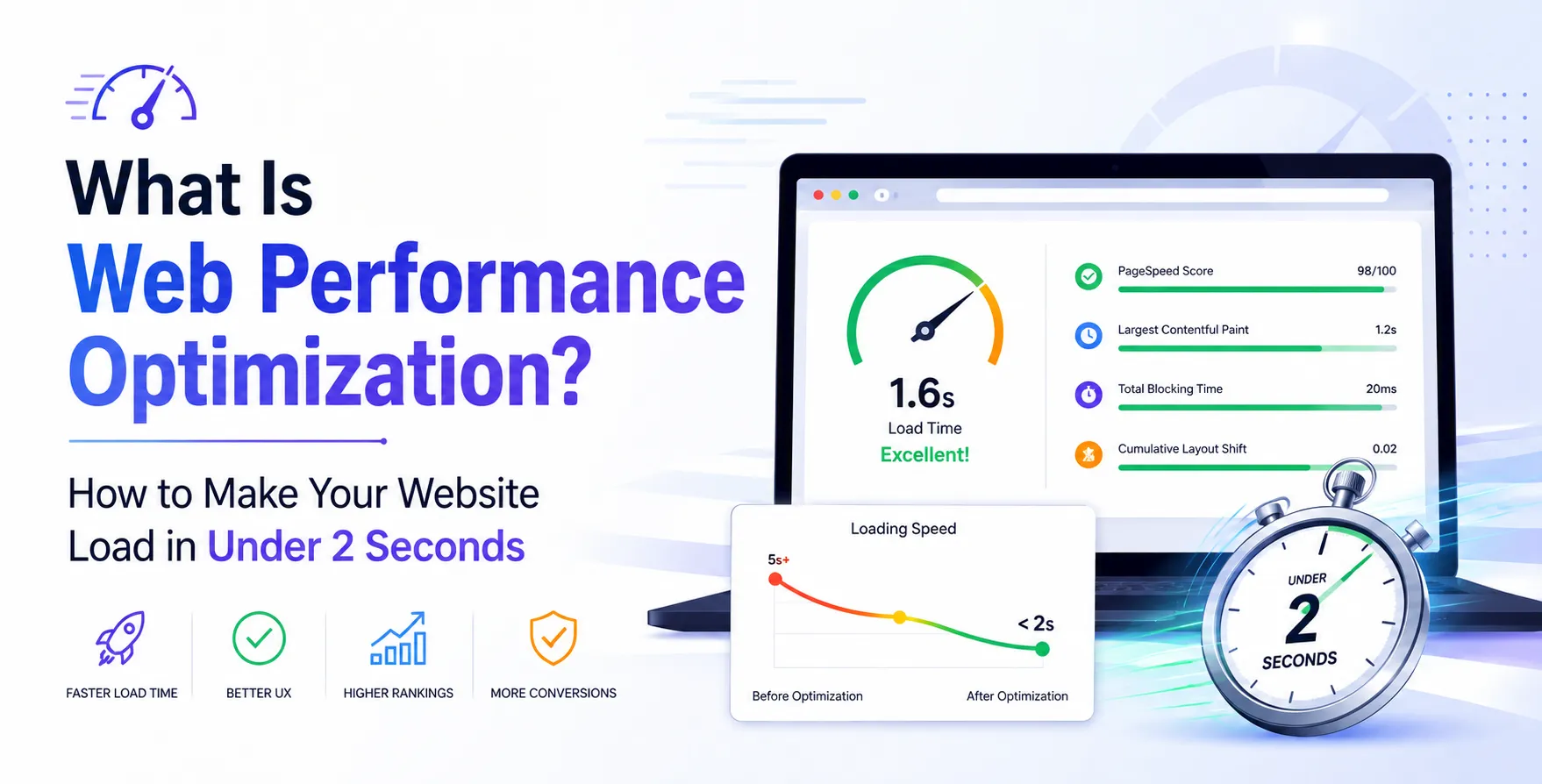
When you implement edge computing for websites, you are essentially solving the network travel problem. Effective website performance optimization is often about reducing the number of requests and the distance they travel.
By offloading tasks like image resizing, personalization, and A/B testing to the edge, you free up your origin server. This allows your main database to focus on complex queries rather than serving generic requests.
The result is a significantly leaner and faster application architecture. Modern teams now view the edge as a critical layer in their performance strategy.
- Dynamic asset manipulation
- Personalized content delivery
- Header modification at the edge
- Intelligent traffic routing
Edge Computing for Websites in Practice
Global Content Personalization
You can use edge nodes to inject user-specific data into cached templates. This allows for personalized experiences without the delay of a full backend call.
- Injecting user session data
- Localizing currency displays
- Adapting language settings
- Customizing UI elements
This method ensures that even personalized pages load nearly as fast as static pages.
Image and Media Optimization
Edge nodes can automatically detect the user's device and deliver appropriately sized images. This saves bandwidth and improves visual stability on mobile devices.
- Automated image format conversion
- Dynamic resolution adjustment
- Lazy loading at the edge
- Caching of processed media
These optimizations drastically reduce the weight of your web pages.
Handling Dynamic Content at the Edge
For a long time, the edge was only for static assets like CSS and JS files. Modern platforms now allow developers to run actual code like Node.js or WebAssembly at the edge.
This means you can perform authentication, database lookups, and API orchestration right at the network boundary. You no longer need to wait for a cross-country network hop to complete simple tasks.
This capability is a game-changer for web development services that require high interactivity. It bridges the gap between static site speed and dynamic application functionality.
- Real-time authentication checks
- Dynamic API response generation
- Server-side rendering at the edge
- Database connection pooling
Security Considerations for Edge Networks
Moving logic to the edge introduces new security vectors that teams must manage. Your edge functions are now the first line of defense against malicious traffic.
Developers should implement strict rate limiting and filtering at the edge nodes. This prevents attackers from flooding your origin with malicious requests or scraping sensitive data.
Maintaining consistent security policies across a global network is challenging but necessary. Centralized monitoring and logging are essential to keep your distributed infrastructure secure.
- Edge-based WAF deployment
- Global rate limiting
- Secure token validation
- Encrypted traffic termination
When to Use Edge Architecture
Not every application requires an edge-heavy architecture. Simple sites with low traffic may find the added complexity unnecessary for their current goals.
However, if your user base is global or your application requires sub-100ms response times, the edge is invaluable. It is particularly effective for e-commerce platforms and interactive dashboards.
Assess your latency requirements and your user demographics before deciding on the complexity. Sometimes, standard content delivery networks are sufficient for simple static sites.
- Global user distribution
- Low-latency requirements
- High-traffic applications
- Dynamic interactive features
Future Trends in Edge Computing
The integration of edge networks with real-time data processing will continue to evolve. We are moving toward a world where the browser and the edge node share the heavy lifting.
This shift supports the rise of decentralized applications that don't need to ping a central server for every action. As developer tools mature, managing these distributed systems will become significantly easier.
Expect to see more specialized edge-native databases and storage solutions emerge in the coming years. This will simplify the storage of stateful data at the edge.
Conclusion
Leveraging edge computing for web applications is one of the most effective ways to boost speed today. By moving your logic closer to the user, you eliminate the latency that kills user retention.
While this architecture requires a shift in how you deploy and manage your code, the performance benefits are undeniable. It represents a mature step forward in delivering professional-grade web experiences.
Start small by offloading non-critical tasks to the edge to see immediate improvements. As you gain confidence, you can move more of your core logic to these powerful distributed nodes.


 In collaboration with