Table of Contents
- Understanding Quebec Law 25
- Key Privacy Obligations for SaaS Providers
- Governance and Privacy Impact Assessments
- Mandatory Breach Notification Protocols
- The Importance of Consent Management
- Data Transfer Requirements Explained
- Privacy by Design in SaaS Architectures
- Role of the Privacy Officer
- Handling Data Portability Requests
- Third-Party Vendor Management
- Technological Measures for Security
- The Business Impact of Compliance
- Conclusion
Understanding Quebec Law 25
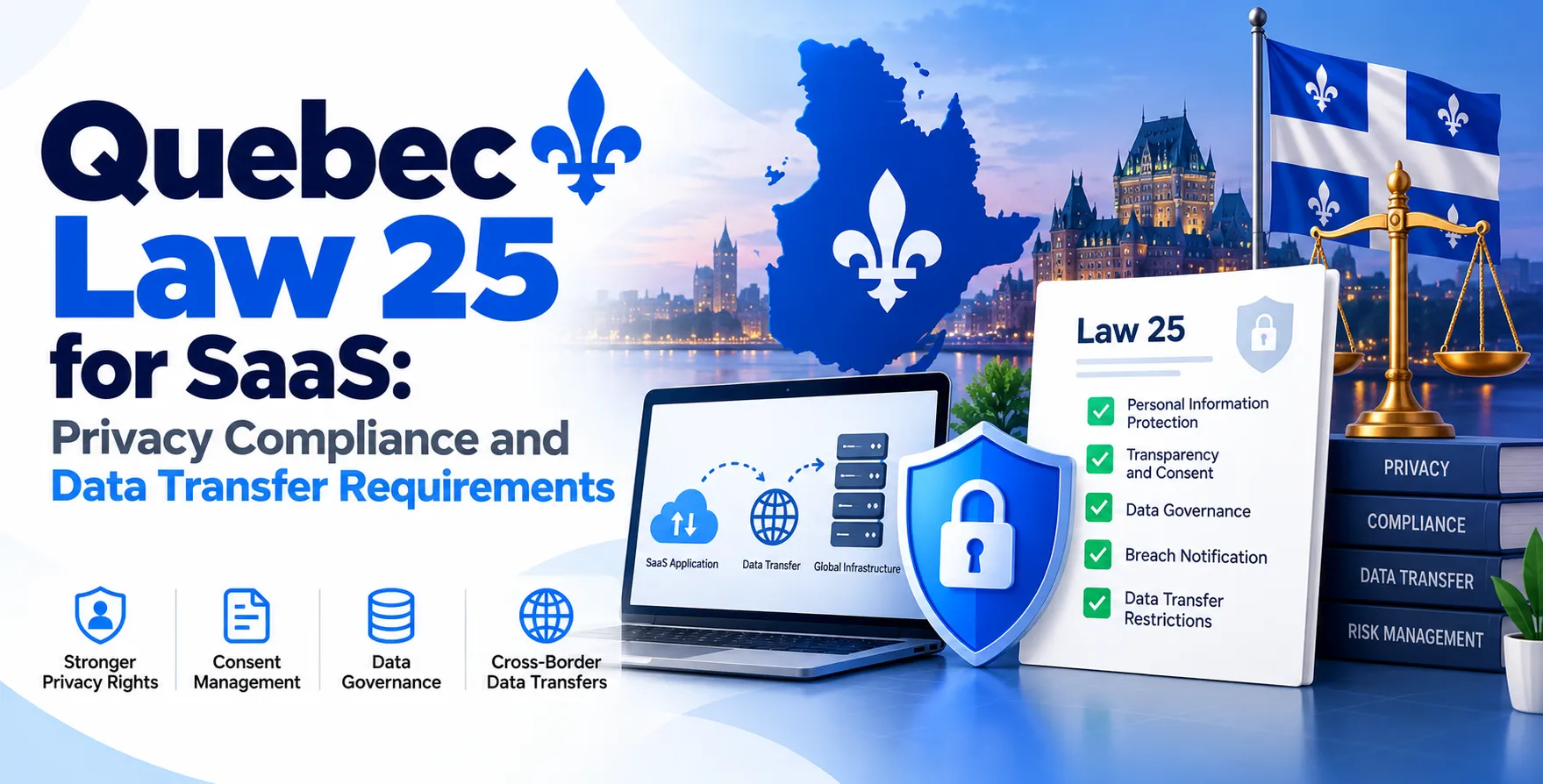
Modern software companies operating in Canada face an evolving regulatory landscape. The implementation of Quebec Law 25 represents a significant shift in how organizations must handle personal information. For businesses involved in Software as a Service Development, this legislation is not optional.
Understanding Quebec Law 25 for SaaS privacy compliance and data transfer requirements is essential for maintaining market access. The law updates existing frameworks to ensure better protection for individuals in the digital age. It imposes strict rules on transparency, security, and accountability for all data controllers.
Failure to comply can result in severe financial penalties and reputational damage. As a senior developer, you must integrate these requirements directly into your product lifecycle.
- Increased control for data subjects
- Strict penalties for non-compliance
- Modernized digital privacy standards
- Enhanced transparency for users
Key Privacy Obligations for SaaS Providers
SaaS platforms often process vast amounts of user information, making them primary targets for regulatory scrutiny. Under the new legislation, your platform must ensure that personal information is collected only for specific, legitimate purposes. You are also required to limit the collection of data to what is strictly necessary.
Transparency is a cornerstone of this regulation. You must inform users clearly about the nature of the data collected and the purposes for which it is processed. This documentation should be easily accessible, avoiding complex legal jargon that confuses the average user.
Furthermore, you must ensure that your data retention policies are clearly defined. You cannot keep user information indefinitely. Once the purpose for collection is fulfilled, the data must be destroyed or anonymized.
- Clear purpose specification
- Mandatory data minimization
- Defined retention periods
- Accessible privacy policies
Governance and Privacy Impact Assessments
Before launching a new feature or integrating a third-party service, you must perform a Privacy Impact Assessment (PIA). This process identifies potential risks to personal information throughout the software development lifecycle. It forces teams to think critically about how data flows through their systems.
A formal assessment provides a structured way to document your compliance efforts. It acts as a defense if regulators ever audit your practices. By maintaining these records, you demonstrate a proactive commitment to user privacy.
These assessments are not just paperwork; they are technical reviews. They ensure that security controls are appropriate for the sensitivity of the information being processed.
- Risk identification in data flows
- Documentation of security controls
- Proactive privacy risk mitigation
- Compliance readiness audits
Mandatory Breach Notification Protocols
Data security incidents are an unfortunate reality of modern tech. Quebec Law 25 requires organizations to report any incident that presents a risk of serious injury. This reporting must be done promptly to both the regulatory authorities and the affected individuals.
Your incident response plan needs to be updated to reflect these new legal timelines. It is not enough to simply patch a vulnerability. You must have a clear process for assessing the severity of a breach and notifying those impacted.
Maintaining an internal register of all privacy incidents is also mandatory. Even minor incidents should be documented to identify patterns or recurring vulnerabilities in your infrastructure.
- Immediate notification to regulator
- Clear communication with users
- Internal incident logging
- Detailed breach analysis
The Importance of Consent Management
Consent under the new law must be manifest, free, enlightened, and given for specific purposes. You cannot rely on pre-checked boxes or vague terms of service. Consent management must be granular, allowing users to opt into different types of data processing separately.
This requires a significant change to many existing user interfaces. You need to build robust mechanisms that track and store user consent preferences. If a user withdraws their consent, your system must propagate that change across all services immediately.
Centralizing your consent management system is the best technical approach. This ensures that every microservice in your architecture respects the current state of user permissions.
- Granular opt-in mechanisms
- Easy withdrawal of consent
- Centralized permission tracking
- Clear, simple language disclosures
Data Transfer Requirements Explained
Managing Quebec data transfer requirements is particularly complex for global SaaS businesses. Before transferring data outside of Quebec, you must conduct an assessment to ensure the recipient provides an adequate level of protection. This assessment considers the legal framework and security standards of the destination jurisdiction.
If you cannot guarantee adequate protection, you must use contractual clauses or other legal safeguards. These agreements must be enforceable and provide users with meaningful rights. It is not enough to rely on standard industry practices.
Your architecture must be capable of restricting data residency if necessary. Many clients may request that their data remain within Canadian borders to simplify their own compliance obligations. Offering this as a feature can be a strong competitive advantage for your platform.
| Requirement |
Action Required |
| Assessment |
Verify destination protection |
| Contracts |
Implement binding agreements |
| Residency |
Consider local data storage |
| Monitoring |
Audit third-party transfers |
Privacy by Design in SaaS Architectures
Privacy by design means embedding data protection into your system from the initial planning phase. Instead of treating security as an afterthought, you build your databases and APIs with privacy as a primary feature. This approach minimizes the risk of accidental exposure.
Techniques like data pseudonymization and encryption at rest are vital. By implementing least privilege access controls, you limit the number of employees who can touch sensitive user information. This is a standard part of maintaining a robust security posture in any modern SaaS application.
Always remember that your system is only as secure as its weakest link. Regular code reviews and automated security testing are critical to maintaining compliance over time.
- Encryption at rest and transit
- Role-based access controls
- Automated security scanning
- Data masking in logs
Role of the Privacy Officer
The law requires the designation of a person responsible for privacy compliance. This individual acts as the primary contact for regulatory authorities and users. They are responsible for implementing the internal policies and procedures mandated by law.
In smaller organizations, this may be a CTO or a senior developer. Regardless of the title, this person must have the authority to influence technical decisions. They need to ensure that the development roadmap aligns with legal obligations.
This role is not just about legal advice. It is about fostering a culture of privacy within the engineering team. Everyone needs to understand that privacy is a shared responsibility.
- Policy implementation and monitoring
- Contact point for regulators
- Internal training and awareness
- Handling privacy inquiries
Handling Data Portability Requests
Users now have the right to request their personal information in a structured, commonly used technological format. This is known as data portability. For a SaaS developer, this means building API endpoints that can export user data efficiently.
The data must be provided in a format that is easily readable by another system. Think about JSON or CSV exports that contain all relevant information associated with a user account. You must also ensure that this process is secure and verifies the requester's identity.
Do not make the export process overly difficult. The goal is to allow users to move their data seamlessly to other platforms if they choose to do so.
- Standardized data export formats
- Secure verification of identity
- Automated request processing
- Comprehensive data collection
Third-Party Vendor Management
Your platform likely relies on various third-party tools, such as cloud storage, analytics, or payment processors. Under the law, you remain responsible for the data you share with these vendors. You must conduct due diligence before onboarding any new service provider.
Review their privacy policies and security documentation carefully. Ensure that your data processing agreements clearly define their obligations. They must be legally bound to protect user data according to your standards.
Periodically audit your vendors to ensure they are still meeting these requirements. If a vendor fails to secure your data, it reflects poorly on your company. You need to keep a list of all data processors and the types of information they handle.
- Due diligence for new vendors
- Binding data processing agreements
- Regular vendor security audits
- Clear documentation of data flows
Technological Measures for Security
Security measures must be proportionate to the sensitivity of the data. Use strong, industry-standard encryption algorithms for all data in transit. Ensure that your authentication mechanisms are secure and support multi-factor authentication for all users.
Logging and monitoring are essential for detecting anomalies. If an unauthorized user attempts to access sensitive data, your systems should trigger an immediate alert. You must monitor your infrastructure for any signs of unauthorized access.
Automate your security updates and dependency management. Using outdated libraries is a major security risk that can lead to vulnerabilities. Keep your stack updated to ensure you have the latest security patches.
- Multi-factor authentication support
- Regular vulnerability scanning
- Secure log management
- Automated dependency updates
The Business Impact of Compliance
Compliance with Quebec Law 25 is not just a legal burden. It is a way to build trust with your customers. In an era where data breaches are common, demonstrating that you take privacy seriously is a significant competitive differentiator.
Many enterprise clients will demand proof of compliance before signing a contract. Being ready with the necessary documentation and technical controls will speed up your sales process. It shows that you are a professional and reliable partner.
Ultimately, investing in privacy is an investment in your company's future. It reduces risk, enhances your reputation, and ensures that you can continue to innovate without legal interference.
Conclusion
Navigating the regulatory environment requires a blend of legal knowledge and technical discipline. Quebec Law 25 sets a high bar for data protection, but it provides a clear framework for building better, more secure software. By prioritizing privacy in your development process, you can meet these requirements effectively.
Focus on transparency, implement robust security controls, and maintain clear documentation for every data process. Your users will appreciate the effort, and your business will be better protected against potential risks. Start by reviewing your current data flows today.


 In collaboration with