Table of Contents
- Introduction
- Understanding the GPT-6.1 Sol API Pricing Model
- Key Factors Influencing Your Costs
- GPT-6.1 Sol vs Previous Generation Models
- Navigating API Usage Limits
- Strategies for Cloud Cost Management
- The Importance of AI Model Evaluation
- Implementing LLM Guardrails for Efficiency
- Comparing API Authentication Methods
- Optimizing AI Inference Performance
- Monitoring AI Models in Production
- Building Scalable AI Systems
- Best Practices for API Integration
- Conclusion
Introduction
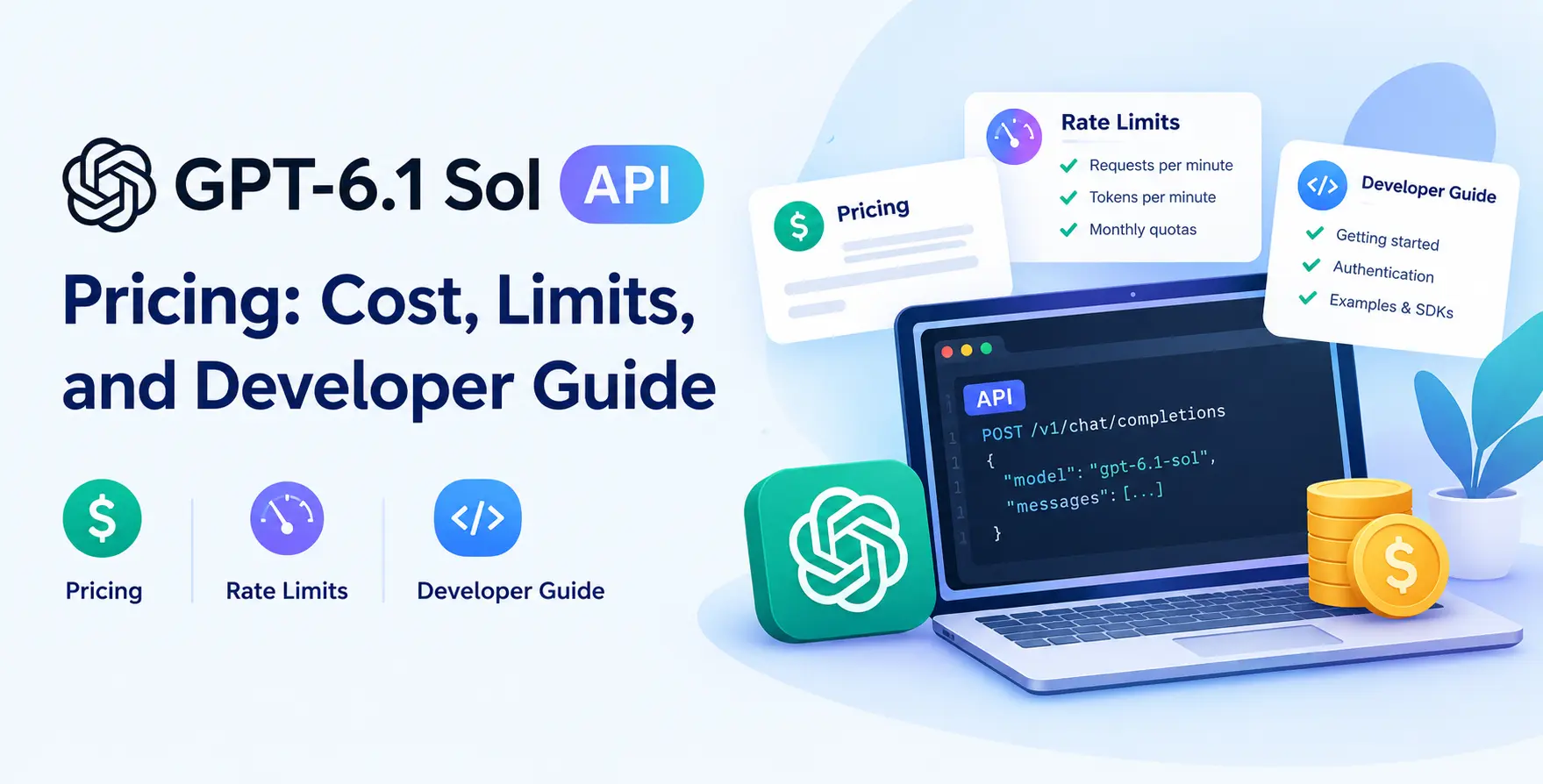
The release of new AI models often brings excitement alongside complex questions about infrastructure and budget. Understanding the nuances of GPT-6.1 Sol API pricing is essential for developers tasked with building reliable, scalable, and cost-effective production applications.
As organizations integrate more advanced intelligence, keeping track of how these services are billed becomes a critical engineering challenge. This guide simplifies the current cost landscape for the latest models while offering actionable advice for your development workflow.
Understanding the GPT-6.1 Sol API Pricing Model
The foundation of GPT-6.1 Sol API pricing is based on a token usage system that accounts for both input and output volume. Unlike legacy models, this tiering system is designed to reward higher consumption while ensuring fair access to high-compute reasoning tasks.
Developers are billed based on the number of tokens processed, which includes the prompt sent to the model and the response generated. By keeping track of your usage through the developer dashboard, you can forecast monthly expenditures more accurately than ever.
- Input token cost per million
- Output token cost per million
- Tiered volume discounts for enterprise
- Minimum usage commitments for dedicated capacity
Key Factors Influencing Your Costs
Several technical variables impact the total invoice at the end of the month. The complexity of your prompts is the primary driver, as longer context windows naturally consume more input tokens.
Caching strategies can help reduce redundant processing, but they require careful implementation within your application architecture. Furthermore, selecting the right model variant for specific tasks—rather than using the most expensive model for simple classification—will significantly optimize your spending.
- Prompt length and complexity
- Context window utilization
- Model selection based on task difficulty
- Frequency of API requests
- Caching of common prompt templates
GPT-6.1 Sol vs Previous Generation Models
When comparing current costs against historical data, it is important to look at performance-per-dollar rather than just raw token pricing. Newer models often provide higher reasoning capabilities, meaning you might achieve better results with fewer total tokens.
| Feature |
Previous Generation |
GPT-6.1 Sol |
| Input Cost |
Baseline |
Optimized |
| Reasoning Speed |
Moderate |
High |
| Context Limit |
Standard |
Extended |
| Latency |
Variable |
Reduced |
| Efficiency |
Baseline |
High |
Navigating API Usage Limits
Rate limits are a reality of high-demand AI services, and they serve to ensure stability across the entire platform. Understanding your specific tier, whether it is a trial account or an enterprise agreement, helps you plan for traffic spikes.
If you encounter 429 errors, it is usually a sign that your application needs a more robust queuing mechanism. Implementing intelligent retry logic with exponential backoff is a standard practice to handle these transient limits gracefully.
- Tier-based request per minute limits
- Total tokens per day caps
- Concurrent request constraints
- Handling rate limit headers
Strategies for Cloud Cost Management
Effective GPT-6.1 Sol cost management requires a proactive approach to engineering. Teams should treat AI inference as a variable cost that requires constant oversight, much like traditional cloud infrastructure.
Implementing observability tools allows you to trace which specific features or components of your product are driving the highest API consumption. By identifying inefficient patterns early, you can refactor your code before costs spiral out of control.
- Automated cost reporting
- Usage alerts for specific endpoints
- Budgeting by project or service
- Regular auditing of API calls
The Importance of AI Model Evaluation
Before scaling any AI-driven feature, you must perform rigorous AI model evaluation. This ensures that you are not paying for model calls that do not provide sufficient business value or accuracy.
Validating performance metrics against a golden dataset is the only way to confirm that your chosen model is the right fit. If a smaller, cheaper model meets your accuracy requirements, there is no reason to pay the premium for the larger version.
Implementing LLM Guardrails for Efficiency
Beyond security, LLM Guardrails serve an operational purpose by preventing the model from processing irrelevant or non-compliant queries. By catching bad input before it reaches the API, you avoid unnecessary costs associated with wasted inference cycles.
These safeguards help you maintain a cleaner and more predictable interaction flow. They also allow you to reject malicious prompts that could otherwise exhaust your token budget or trigger expensive, incorrect model responses.
Comparing API Authentication Methods
Securing your access is a non-negotiable step in the development process. Choosing the right API authentication methods ensures that your keys are not compromised, which could lead to unauthorized usage and unexpected billing spikes.
Using rotating secrets and scoped permissions will mitigate the impact if a key is leaked. Always store your credentials in secure, encrypted environment variables rather than hardcoding them into your source control.
Optimizing AI Inference Performance
Reducing the time-to-first-token and overall response latency is vital for user experience. AI inference optimization techniques like prompt compression can help you send smaller payloads, directly impacting your bottom line.
When you build real-time systems, every millisecond counts. By keeping your instructions concise and focused, you minimize the overhead for every single API request.
Monitoring AI Models in Production
Once your application is live, AI observability becomes the backbone of your operational strategy. You need deep visibility into how your models are behaving in the wild to catch anomalies in usage patterns.
If you notice a sudden jump in token consumption, observability tools will help you pinpoint the exact user session or code path responsible. This level of transparency is essential for maintaining a healthy budget.
Building Scalable AI Systems
Designing a system that handles varying loads requires an API-first approach. By decoupling your AI service layer from your business logic, you can easily swap models or adjust your integration strategy as pricing changes.
Consider how your application handles long-running processes versus immediate responses. Using asynchronous workflows for heavy tasks can help you manage your API throughput more effectively during peak hours.
Best Practices for API Integration
When working with the OpenAI API pricing structure, consistency is key. Documenting your integration patterns allows your team to troubleshoot issues faster and maintain a clean codebase.
Always maintain a clear separation between your API client code and your application logic. This makes it easier to test, mock responses during development, and deploy updates without breaking your core infrastructure.
- Use modular client libraries
- Implement robust error handling
- Centralize API key management
- Maintain detailed logging
- Perform load testing regularly
Conclusion
Mastering the economics of AI requires more than just understanding the sticker price of a model. You must combine strategic model selection, rigorous observability, and disciplined cost management to ensure your projects remain viable.
By following these guidelines and treating your integration as a core component of your technical infrastructure, you can confidently build powerful AI applications. Stay informed about updates to pricing and performance to keep your systems competitive in the fast-moving landscape of 2026.


 In collaboration with