Table of Contents
- Introduction
- The Importance of Dependency Management
- What is Dependabot?
- What is Renovate?
- Key Differences at a Glance
- Configuration and Flexibility
- Multi-Platform Support
- Security and Vulnerability Management
- Performance in Large Monorepos
- Integration with CI/CD Pipelines
- How to Choose the Right Tool
- Operational Maintenance Considerations
- Conclusion
Introduction
Managing third-party libraries is one of the most tedious parts of software development. If you fail to stay current, you inevitably accumulate technical debt and expose your application to known security vulnerabilities.
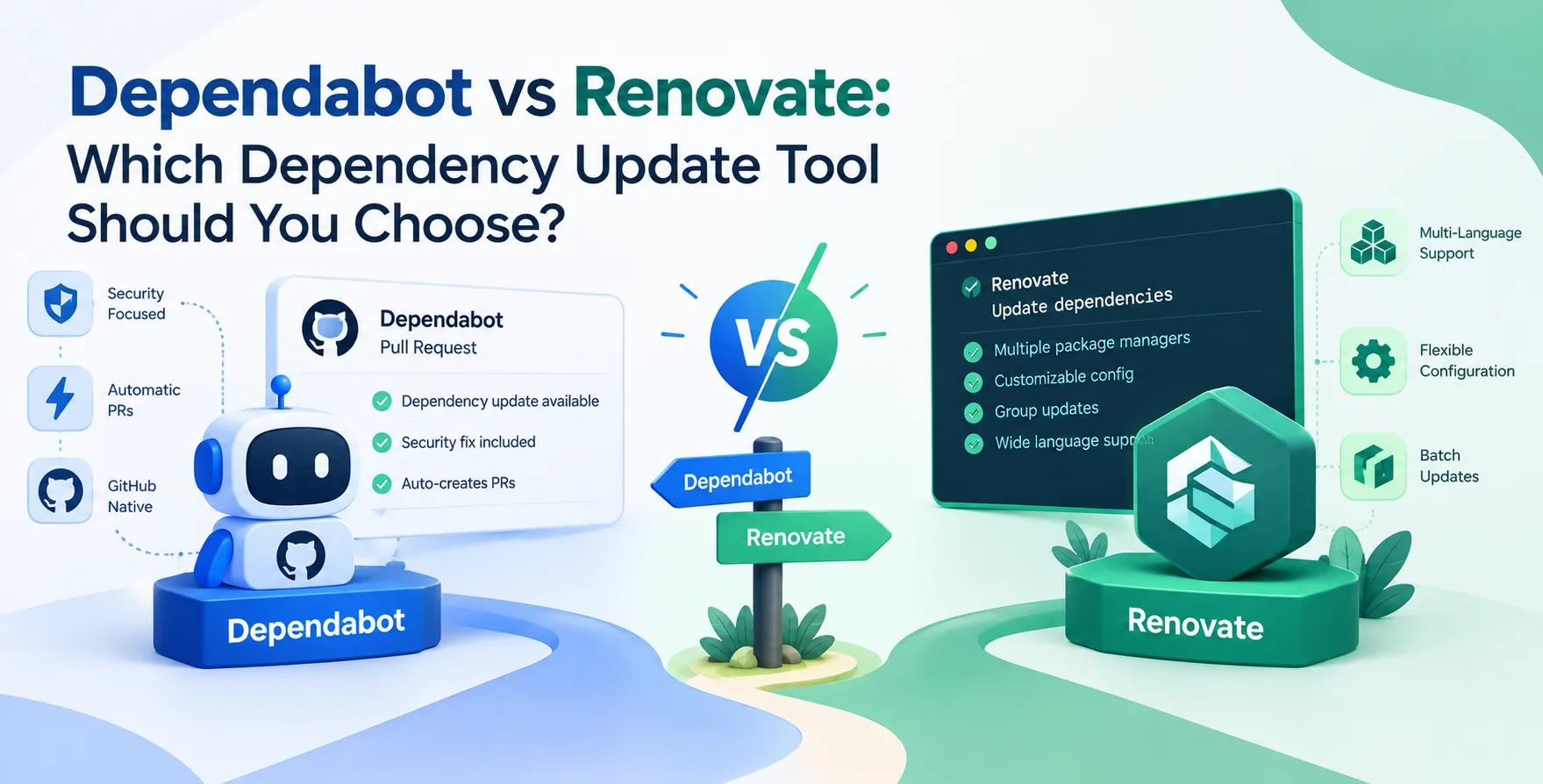
Using an automated dependency update system is the standard solution for modern engineering teams. When evaluating the Dependabot vs Renovate which dependency update tool should you choose debate, you must look beyond surface-level features.
The Importance of Dependency Management
Outdated dependencies are a leading cause of security breaches in modern web applications. Malicious actors often scan for projects using libraries with known CVEs to exploit them.
Beyond security, staying updated ensures you have access to the latest performance improvements and language features. It prevents the dreaded multi-day upgrade marathon that happens when you wait too long.
- Prevents security vulnerabilities
- Ensures compatibility with latest frameworks
- Reduces technical debt
- Improves overall system performance
What is Dependabot?
Dependabot is a native GitHub product designed to scan your project for outdated dependencies and open pull requests for upgrades. It is deeply integrated into the GitHub ecosystem, making it incredibly easy to set up for teams already using the platform.
It shines in its simplicity and zero-configuration approach. Most developers can enable it with a single click and begin receiving updates immediately.
What is Renovate?
Renovate is a highly customizable dependency update bot that works across multiple platforms beyond just GitHub. It provides a level of granular control that power users often demand, especially in complex enterprise environments.
The tool excels at handling intricate monorepo structures and custom workflows. It treats dependency management as a programmable process rather than a static task.
Key Differences at a Glance
| Feature |
Dependabot |
Renovate |
| Primary Focus |
GitHub Native |
Multi-Platform |
| Configuration |
Simple YAML |
Advanced JSON/JS |
| Customization |
Basic |
Extensive |
| Platform Support |
GitHub |
GitHub, GitLab, Bitbucket |
Configuration and Flexibility
Dependabot keeps things simple with a straightforward configuration file. While this is great for small to medium projects, it can feel restrictive when you have complex requirements like grouping multiple minor updates together.
Renovate, on the other hand, allows for sophisticated rules regarding how, when, and what updates get generated. You can define custom schedules, grouping strategies, and even automated merging rules for minor patches.
- Custom grouping of dependencies
- Detailed scheduling options
- Automated rebase triggers
- Customizable PR titles
- Advanced branch naming conventions
Multi-Platform Support
If your organization uses self-hosted GitLab instances or Bitbucket, Dependabot is not a viable option as it is tied to the GitHub ecosystem. This is a critical factor for teams maintaining infrastructure outside of public cloud providers.
Renovate acts as a platform-agnostic solution. You can run it as a standalone container or as a service, allowing you to enforce the same dependency policy across different code hosting providers.
Security and Vulnerability Management
Both tools are excellent at notifying you about security vulnerabilities. Dependabot has a slight edge in speed regarding GitHub Advisory Database alerts, as it is a first-party service.
However, Renovate allows for more complex policies regarding security patches. For example, you can set it to auto-merge security patches for minor versions while requiring manual review for breaking changes.
Security Workflow Integration
Managing your software supply chain requires more than just alerts. You must ensure that every pull request passes your quality gates.
- Automated security vulnerability alerts
- Customizable merge policies
- Integration with testing suites
By enforcing strict testing policies, you reduce the risk of introducing regressions during automated updates.
Performance in Large Monorepos
Monorepos often contain hundreds of packages, which can overwhelm basic update bots. If a bot tries to open a PR for every single outdated library simultaneously, your CI/CD pipeline will grind to a halt.
Renovate is built to handle these scenarios gracefully. It allows you to group updates by package manager, folder, or even dependency type, significantly reducing PR noise.
Managing Complexity
Large projects require intelligent throttling to maintain velocity. Renovate excels at keeping the noise floor low while ensuring nothing is missed.
- Batching updates per release
- Smart dependency grouping
- Efficient caching mechanisms
This level of control is essential for teams prioritizing high-quality maintenance & support.
Integration with CI/CD Pipelines
Your update bot must play nicely with your automated deployment pipeline to be truly effective. If you are using a robust GitHub Actions CI/CD flow, both tools integrate seamlessly by triggering your test suites automatically.
The goal is to move towards a state where minor and patch updates are tested and merged automatically. This requires a mature suite of tests and a reliable automated deployment pipeline that can handle frequent small changes.
How to Choose the Right Tool
If your team is exclusively on GitHub and prefers a low-maintenance solution, Dependabot is the clear winner. It is designed for simplicity and works perfectly for 90% of standard web applications.
If you need cross-platform support, handle complex monorepos, or require highly specific merge logic, Renovate is the better choice. It is a powerful tool that rewards the initial time investment required for configuration.
Operational Maintenance Considerations
Choosing a tool is only the first step. You must also consider the ongoing operational maintenance required to keep these bots performing well.
If you don't configure your bot to respect your development cycles, you will end up with a backlog of stale pull requests. Ensure your team has a clear process for reviewing and merging these updates regularly.
- Regular PR review cadence
- Automated testing strategy
- Monitoring bot performance
Conclusion
Both tools represent a massive step forward in professional software engineering. By automating dependency updates, you remove the manual burden from your developers and improve your security posture.
Whether you choose the simplicity of Dependabot or the flexibility of Renovate, the most important decision is to start automating today. Your future self will thank you for the reduced technical debt and improved project stability.


 In collaboration with