Table of Contents
- Introduction to Privacy Reform
- The Evolution of Australian Privacy Act 2026
- Key Changes for SaaS Providers
- Handling Sensitive Personal Data
- Strengthening Data Breach Notification Protocols
- Impact on Multi-tenant Architecture
- Privacy by Design for SaaS Development
- Data Processing Agreements and Third Parties
- Australia Privacy Requirements for Software Companies
- Implementing Robust Access Controls
- The Role of Data Minimization
- Cross-border Data Transfers
- Conclusion
Introduction to Privacy Reform
The digital landscape is shifting rapidly as global regulations catch up to modern technological capabilities. For software organizations, keeping pace is no longer optional but a core component of sustainable growth.
The upcoming legislative changes represent a significant milestone for any SaaS platform. Understanding these updates early ensures your team avoids costly rework and potential regulatory penalties later.
The Evolution of Australian Privacy Act 2026
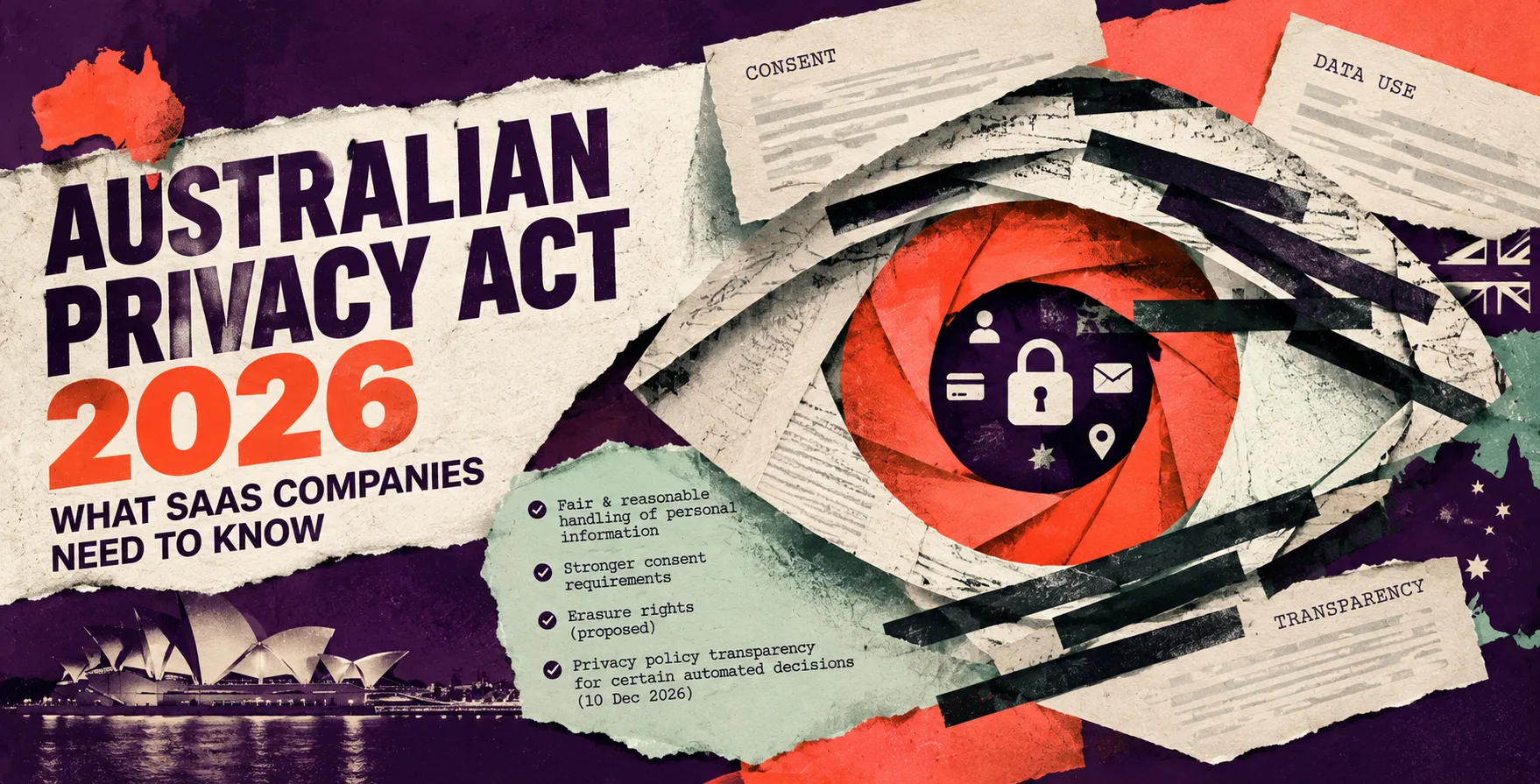
The legislative framework is undergoing a comprehensive modernization to address current digital threats. This update is not merely an incremental change but a fundamental shift in how personal data must be managed.
The Australian Privacy Act 2026 for SaaS companies introduces stricter accountability measures. Organizations must now demonstrate proactive compliance rather than just reactive patching.
This means your internal processes need to be transparent and auditable by design. It is the new baseline for trust in the Australian market.
- Greater transparency for data subjects
- Enhanced accountability for data processors
- Stricter penalties for non-compliance
- Expanded definition of protected information
Key Changes for SaaS Providers
SaaS vendors often handle vast amounts of user information across distributed systems. The new requirements demand a deeper look at how data flows through your application architecture.
Compliance is now tied to the entire lifecycle of the data. This includes ingestion, storage, processing, and even eventual archival or deletion.
Your team must map these flows accurately. Without clear visibility, you cannot effectively manage your obligations under the updated framework.
- Mandatory data protection impact assessments
- Right to erasure requests
- Enhanced consent management workflows
- Clearer data ownership definitions
Handling Sensitive Personal Data
Classification of Data
Not all data is created equal under the eyes of the law. You must classify information based on its sensitivity to apply the correct security controls.
- Personally Identifiable Information
- Financial transaction records
- User behavioral analytics
- Authentication and access logs
Proper classification is the first step toward effective risk management. If you cannot identify your sensitive assets, you cannot protect them.
Encryption Standards
Robust encryption is no longer a best practice but a legal necessity. Your systems must implement industry-standard encryption for data both at rest and in transit.
- AES-256 for database storage
- TLS 1.3 for network communication
- Secure key management services
Relying on outdated cryptographic protocols will leave you exposed during a compliance audit. Ensure your infrastructure team prioritizes these security upgrades.
Strengthening Data Breach Notification Protocols
When an incident occurs, time is of the essence. The updated regulations impose tighter windows for reporting potential compromises to the relevant authorities.
You need automated monitoring systems that flag anomalies in real-time. Manual logs are simply too slow for modern incident response requirements.
Your incident response plan should be tested regularly. Practice scenarios help your team act decisively during a high-pressure security event.
- Automated incident detection systems
- Defined communication channels for regulators
- Clear internal escalation paths
- Detailed documentation of all remediation steps
Impact on Multi-tenant Architecture
Most modern platforms use multi-tenant SaaS development models to maximize efficiency. However, this architecture requires strict logical separation to prevent cross-tenant data leakage.
Under the new rules, you must prove that data in one tenant is invisible to another. Any shared database resources must have robust row-level security controls.
If your platform lacks this isolation, you might face significant compliance hurdles. Review your database schemas and application logic to ensure total tenant isolation.
| Security Control |
Traditional Approach |
Modern Compliant Approach |
| Data Isolation |
Application-level filtering |
Database row-level security |
| Access Management |
Shared admin credentials |
Granular role-based access |
| Audit Trails |
Centralized logs only |
Tenant-specific audit trails |
| Encryption |
Disk-level encryption |
Field-level per-tenant keys |
Privacy by Design for SaaS Development
Building privacy into the code is far cheaper than retrofitting it later. SaaS development teams should integrate compliance checks directly into their CI/CD pipelines.
This approach treats privacy documentation and data protection as first-class citizens. When developers prioritize these aspects, the final product is inherently more secure and compliant.
It also simplifies the path to certification. By keeping logs and architecture diagrams current, you are always audit-ready.
- Automated compliance testing
- Privacy-first feature design
- Regular security code reviews
- Automated data deletion scripts
Data Processing Agreements and Third Parties
Your compliance posture is only as strong as your weakest vendor. If you rely on third-party APIs or cloud infrastructure, you share the responsibility for data security.
Review every vendor contract to ensure they meet the latest standards. You must be able to audit their practices or receive sufficient proof of their compliance.
If a vendor cannot provide this evidence, it is time to look for alternatives. Your reputation depends on the integrity of your entire software supply chain.
- Detailed data processing agreements
- Regular vendor security audits
- Defined data handling responsibilities
- Clear termination clauses for non-compliance
Australia Privacy Requirements for Software Companies
Navigating the Australia privacy requirements for software companies requires a proactive mindset. It is not just about checking boxes, but about fostering a culture of data stewardship.
Your product managers, designers, and engineers all play a part. Privacy needs to be part of the product roadmap, not an afterthought in the legal department.
Engage with legal counsel to interpret the specific impacts on your business model. Each product has unique data needs, and generic solutions rarely suffice.
- Continuous staff training
- Annual compliance audits
- Transparent privacy policies
- Clear user-facing controls
Implementing Robust Access Controls
Unauthorized access is a leading cause of data breaches. Implementing a least-privilege model is essential for maintaining strict compliance with the new regulations.
Ensure that every employee has only the access they need for their specific job role. Use automated provisioning tools to revoke access immediately when a role changes or an employee leaves.
Multi-factor authentication should be mandatory for every internal system. It is the most effective deterrent against credential-based attacks.
The Role of Data Minimization
Collecting excessive data is a liability. Only store the information strictly necessary for the operation of your service.
If you don't have the data, you cannot lose it in a breach. This simple philosophy reduces your attack surface and simplifies your compliance burden.
Review your data collection forms and API payloads regularly. If a field is not being used, stop collecting it.
Cross-border Data Transfers
Many organizations rely on global infrastructure for their operations. However, moving data across borders introduces complex legal requirements.
Ensure your storage locations align with local laws. If data must leave the jurisdiction, verify that the destination country maintains equivalent levels of protection.
Your legal team must review your data transfer impact assessments. Documenting these decisions provides a necessary audit trail for regulators.
Conclusion
Preparing for the Australian Privacy Act 2026 is an ongoing journey of improvement. By focusing on privacy-first design, robust access controls, and transparent data management, your organization will stay ahead of the curve.
SaaS privacy compliance Australia is not just a regulatory hurdle. It is a competitive advantage that builds lasting trust with your users.
Start reviewing your current architecture today. The sooner you align your systems with the new requirements, the more secure your platform will be.


 In collaboration with