Table of Contents
- Introduction to Cyber Essentials
- Why Certification Matters for SaaS
- The Five Pillars of Security
- Boundary Firewalls and Gateways
- Secure Configuration Management
- User Access Control Protocols
- Malware Protection Strategies
- Patch Management Procedures
- The Assessment Process
- Preparing Your SaaS Infrastructure
- Common Implementation Challenges
- Maintaining Continuous Compliance
- The Role of Documentation
- Conclusion
Introduction to Cyber Essentials
Securing a cloud-native environment requires more than just good intentions. For organizations operating in the United Kingdom, the government-backed scheme provides a clear baseline for digital hygiene.
Understanding Cyber Essentials is critical for any team building modern software. It provides a structured framework to defend against common internet-based threats.
Why Certification Matters for SaaS
When you provide software as a service, your clients trust you with their data. Demonstrating that you follow strict security standards builds immediate credibility with enterprise prospects.
Many government contracts and high-value corporate tenders now mandate this certification as a prerequisite for bidding. It proves you have a handle on basic technical risks.
- Increases customer trust
- Opens new market opportunities
- Reduces insurance premiums
- Demonstrates due diligence
The Five Pillars of Security
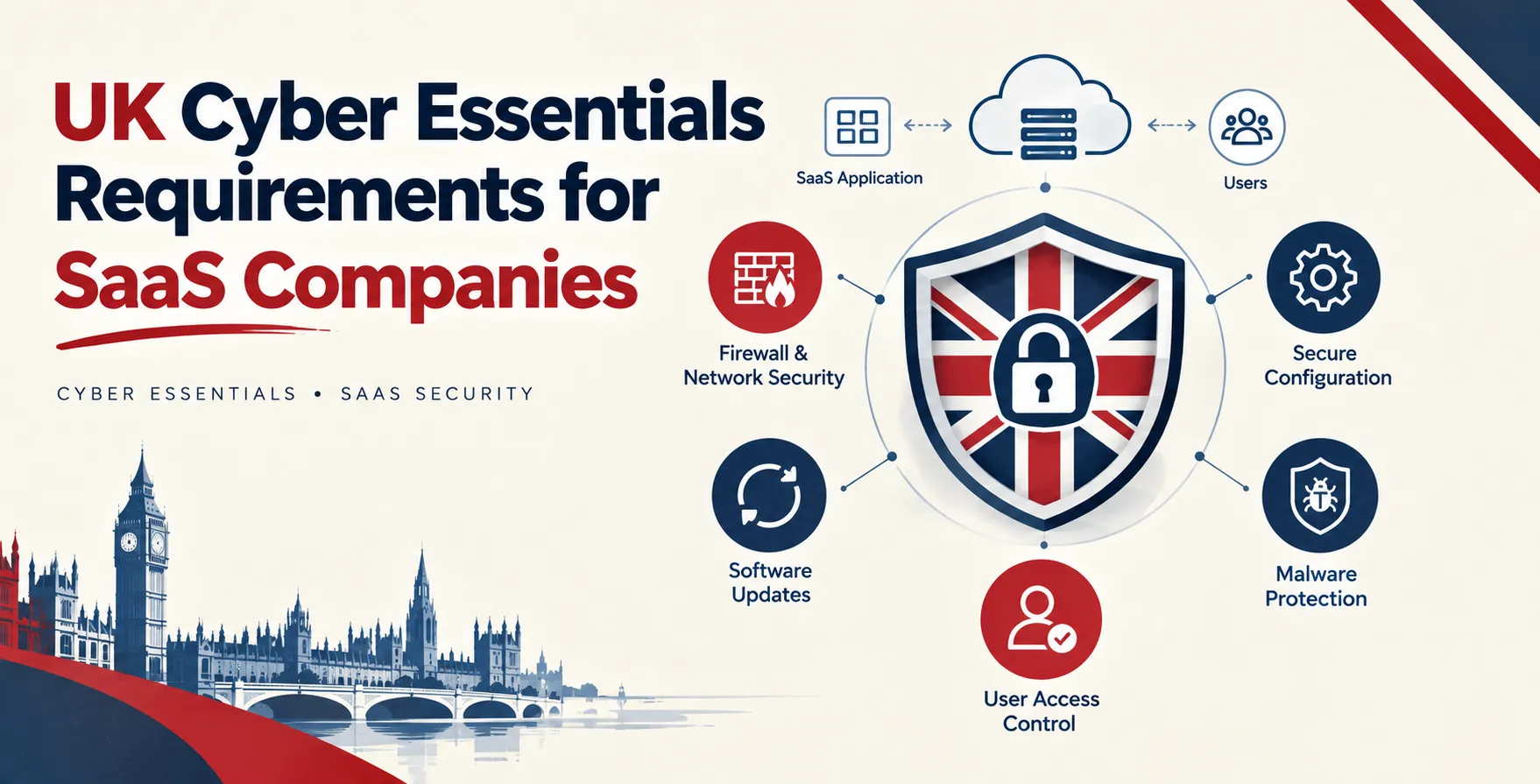
The core of the program rests on five specific technical controls. These requirements aim to mitigate the vast majority of common cyber attacks that target software providers.
Each pillar addresses a specific vulnerability found in modern development environments. Implementing these systematically will significantly lower your overall risk profile.
- Boundary firewalls
- Secure configuration
- Access control
- Malware protection
- Patch management
Boundary Firewalls and Gateways
Network Perimeter Security
Your SaaS platform likely runs in the cloud, but the boundary concept still applies. You must ensure that only necessary traffic reaches your services.
- Restricting inbound ports
- Using cloud security groups
- Disabling unnecessary services
Properly configured firewalls act as the first line of defense for your infrastructure.
Gateway Configuration
Gateways should filter traffic effectively to prevent unauthorized access. Always default to denying all traffic unless specifically permitted.
- Enforcing strict rules
- Regularly auditing access lists
This approach minimizes the attack surface available to potential intruders.
Secure Configuration Management
Default settings on software and hardware are rarely secure enough for production. You must harden every component of your stack to meet the requirements.
This includes changing default passwords, disabling unused features, and removing unnecessary software. A secure configuration is the foundation of a resilient system.
- Changing default credentials
- Removing unnecessary applications
- Enforcing password policies
- Disabling guest accounts
User Access Control Protocols
Managing who can access your production environments is a massive part of maintaining security. Strict identity management prevents lateral movement by attackers.
Implement the principle of least privilege across all development and operational teams. Every user should only have access to what they need for their specific role.
- Multi-factor authentication
- Privileged account management
- Regular user reviews
- Prompt account deactivation
Malware Protection Strategies
Even in a cloud-first world, malware remains a persistent threat. You need active software to detect, prevent, and remove malicious code.
Ensure that all endpoints, including developer workstations and server instances, have up-to-date protection. Automated scanning is essential to catch threats before they spread.
- Antivirus software deployment
- Application whitelisting
- Automated threat scanning
- Regular incident reporting
Patch Management Procedures
Running outdated software is one of the easiest ways for attackers to gain a foothold. You must have a robust process for keeping all components updated.
This applies to your operating systems, applications, and third-party libraries. Consistent maintenance is required to pass the assessment successfully.
- Automated update cycles
- Testing patches before deployment
- Tracking vulnerability reports
- Prompt critical security updates
The Assessment Process
| Phase |
Focus |
Outcome |
| Self-Assessment |
Internal Audit |
Gap Analysis |
| Evidence Gathering |
Documenting Controls |
Proof of Compliance |
| External Audit |
Verification |
Certification |
Preparing Your SaaS Infrastructure
When you approach Cyber Essentials requirements UK implementation, look at your CI/CD pipelines first. Ensure that your automated builds do not introduce insecure configurations into production.
Documenting your architecture and security policies is just as important as the technical implementation. Auditors need to see clear evidence of your procedures.
Common Implementation Challenges
Many teams struggle with the sheer volume of documentation required for the certification. It is not enough to be secure; you must prove your security posture through records.
Another common hurdle is managing legacy components that are difficult to patch. You may need to isolate these systems to keep the rest of your environment compliant.
- Incomplete documentation records
- Lack of asset inventory
- Difficulty updating legacy code
- Complex multi-cloud environments
Maintaining Continuous Compliance
Certification is not a one-time event but an ongoing responsibility. You must treat security as a continuous process rather than a project with an end date.
Schedule regular internal reviews to ensure that new deployments do not violate your security baseline. Stay updated on new threats and adjust your controls accordingly.
The Role of Documentation
Good documentation makes the audit process much smoother. Keep your network diagrams and configuration policies updated at all times.
If a question arises during the assessment, clear documentation provides the necessary answers. It serves as the paper trail for your security strategy.
Conclusion
Meeting Cyber Essentials for SaaS standards is a foundational step for any growing technology business. By focusing on the five core controls, you protect your infrastructure and build trust with your clients.
While the process requires effort and attention to detail, the long-term benefits of a more secure and resilient platform are undeniable. Start your path to certification by auditing your current posture today.


 In collaboration with