Table of Contents
- Introduction to Webhooks and API Polling
- What are Webhooks?
- What is API Polling?
- Key Differences Between Webhooks and API Polling
- Benefits of Using Webhooks
- Benefits of Using API Polling
- Challenges and Limitations of Webhooks
- Challenges and Limitations of API Polling
- Best Practices for Webhook Integration
- Best Practices for API Integration
- Real-World Examples of Webhook and API Polling
- Conclusion
Introduction to Webhooks and API Polling
Webhooks and API polling are two common methods used for data synchronization and integration.
Understanding the differences between them is crucial for choosing the right approach.
Each method has its own set of benefits and challenges.
What are Webhooks?
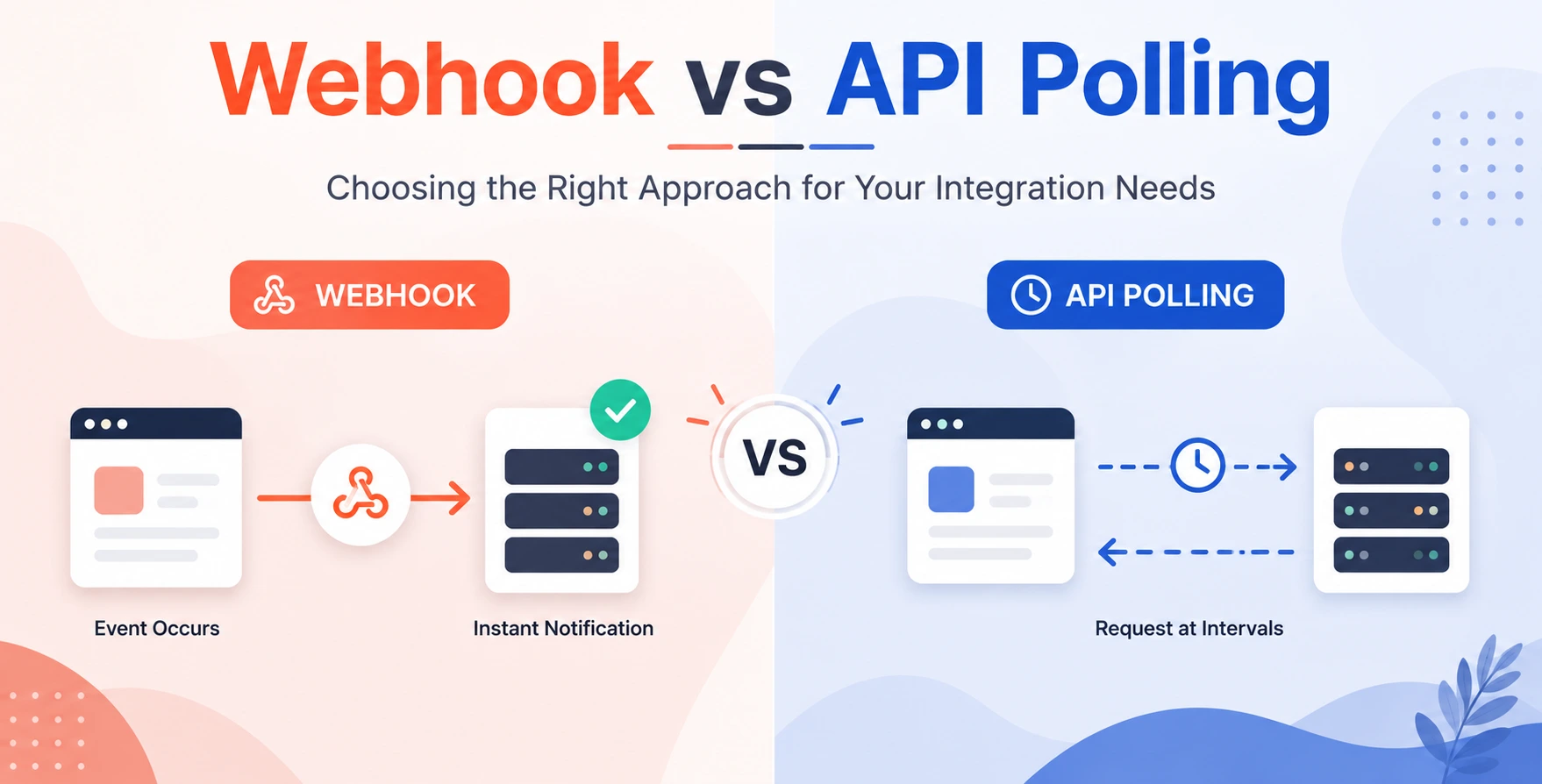
Webhooks are callbacks made by a server to a client after a specific event occurs.
They are useful for real-time notifications and updates.
Webhooks are often used in Webhook Integration scenarios.
- Real-time updates
- Event-driven architecture
- Reduced server load
What is API Polling?
API polling involves regularly sending requests to a server to check for updates or changes.
This method is useful when real-time updates are not necessary.
API polling is a common approach in API Integration scenarios.
- Simple to implement
- Easy to manage
- Less resource-intensive
Key Differences Between Webhooks and API Polling
The main difference between webhooks and API polling lies in their approach to data synchronization.
Webhooks are event-driven, while API polling is request-driven.
This fundamental difference affects their usage and suitability for various applications.
| Webhooks |
API Polling |
| Event-driven |
Request-driven |
| Real-time updates |
Periodic updates |
| Reduced server load |
Increased server load |
Benefits of Using Webhooks
Webhooks offer several benefits, including real-time updates and reduced server load.
They are ideal for applications requiring instant notifications.
- Real-time updates
- Improved user experience
- Enhanced scalability
Benefits of Using API Polling
API polling is beneficial for applications where real-time updates are not necessary.
It is simple to implement and manage.
- Easy implementation
- Low resource requirements
- Simplified management
Challenges and Limitations of Webhooks
Webhooks can be challenging to implement and manage, especially in complex systems.
They require robust error handling and retry mechanisms.
- Complex implementation
- Error handling challenges
- Retry mechanism requirements
Challenges and Limitations of API Polling
API polling can lead to increased server load and slower updates.
It may not be suitable for applications requiring real-time updates.
- Increased server load
- Slower updates
- Less suitable for real-time applications
Best Practices for Webhook Integration
When implementing webhooks, it is essential to follow best practices.
This includes proper error handling, retry mechanisms, and security measures.
- Implement robust error handling
- Use retry mechanisms
- Ensure security measures
Best Practices for API Integration
For API integration, best practices include optimizing API calls, handling errors, and ensuring security.
These practices help ensure efficient and reliable data synchronization.
- Optimize API calls
- Handle errors properly
- Ensure security measures
Real-World Examples of Webhook and API Polling
Both webhooks and API polling are used in various real-world applications.
Examples include payment gateways, social media platforms, and IoT devices.
- Payment gateways
- Social media platforms
- IoT devices
Conclusion
In conclusion, choosing between webhooks and API polling depends on your specific integration needs.
Consider factors such as real-time updates, server load, and implementation complexity.
By following best practices and understanding the benefits and challenges of each approach, you can ensure efficient and reliable Data Synchronization.


 In collaboration with