Table of Contents
- Introduction to Solo Founders
- What is a Solo Entrepreneur?
- Benefits of Being a Solo Founder
- Challenges Faced by Solo Founders
- Role of AI in Solo Founding
- How AI is Replacing Large Teams
- Success Stories of Solo Founders
- Key Characteristics of Successful Solo Founders
- Strategies for Solo Founders to Succeed
- Impact of Solo Founding on the Startup Ecosystem
- Future of Solo Founding and AI
- Conclusion
Introduction to Solo Founders
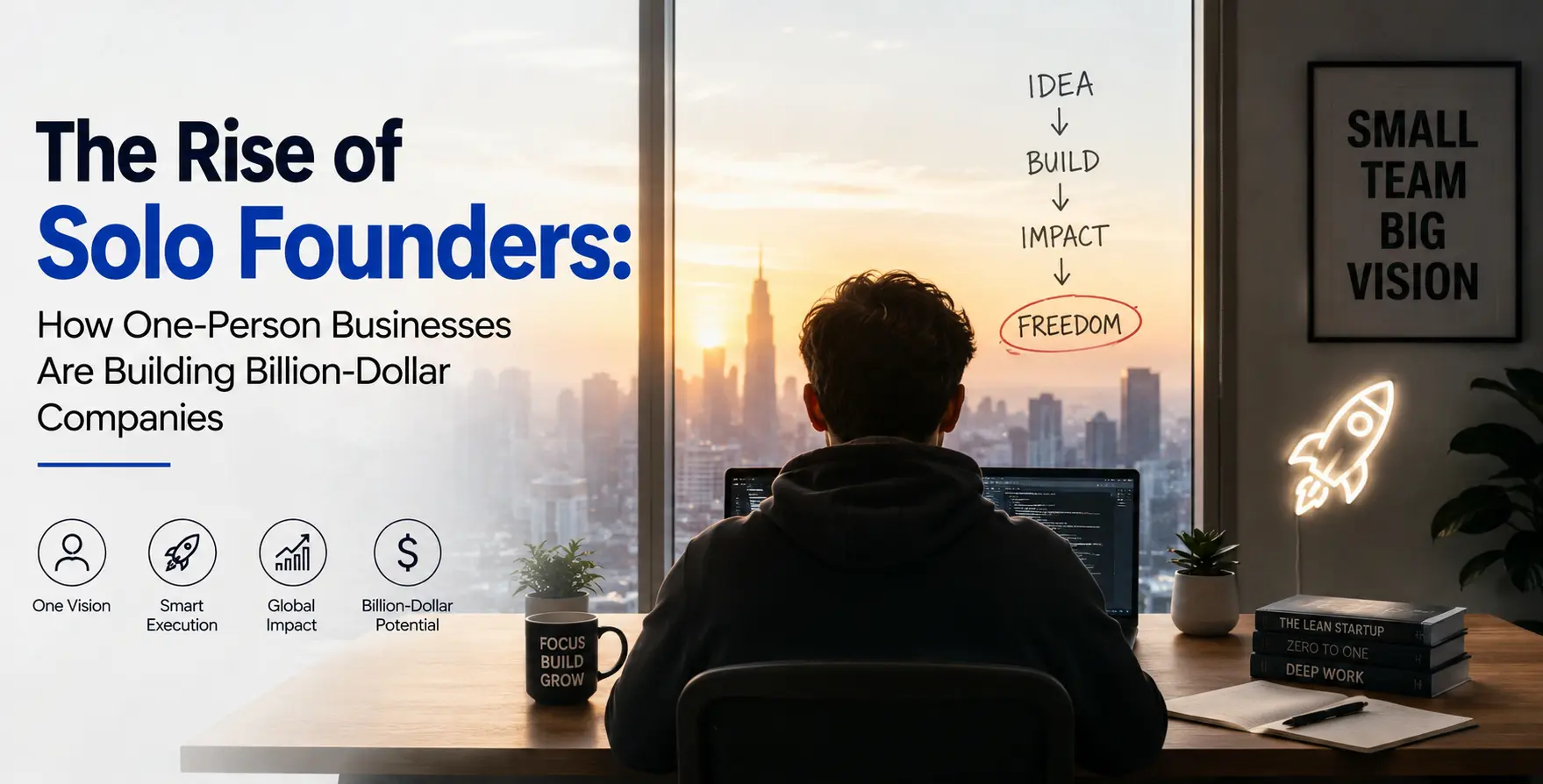
Solo founders are changing the startup landscape. They are single individuals building and running their own companies.
This approach challenges the traditional notion that a team is required to build a successful business.
Solo founders are leveraging technology, especially AI, to manage and grow their businesses.
What is a Solo Entrepreneur?
A solo entrepreneur is an individual who starts and runs a business alone. They handle all aspects of the company, from development to marketing.
This can include using AI tools for tasks such as customer service, data analysis, and content creation.
Solo entrepreneurs must be highly skilled and adaptable to succeed.
- Handle all business aspects
- Utilize AI for various tasks
- Must be skilled and adaptable
Benefits of Being a Solo Founder
Being a solo founder offers several benefits, including complete control over the business and all the profits.
Solo founders can also make decisions quickly without needing to consult a team.
This flexibility can lead to faster innovation and adaptation to market changes.
Challenges Faced by Solo Founders
Solo founders face numerous challenges, including the burden of all responsibilities falling on one person.
Managing workload, finding resources, and dealing with isolation can be particularly difficult.
However, many solo founders find ways to overcome these challenges through careful planning and the use of AI tools.
- Heavy workload and responsibility
- Difficulty in finding resources
- Isolation and lack of support
- Managing finances and funding
Role of AI in Solo Founding
AI plays a crucial role in helping solo founders manage their businesses. AI tools can automate tasks, provide insights, and even assist in decision-making.
For example, AI-powered chatbots can handle customer inquiries, while AI-driven analytics tools can help in understanding market trends.
AI is essentially acting as a virtual team for solo founders, enabling them to compete with larger companies.
How AI is Replacing Large Teams
AI is revolutionizing the way businesses operate by replacing certain functions of large teams. Automated systems can perform tasks more efficiently and accurately than humans.
This shift towards AI-powered operations is particularly beneficial for solo founders, who can now achieve more with less.
As AI technology advances, we can expect to see even more innovative applications in the startup world.
- Automates repetitive tasks
- Enhances efficiency and accuracy
- Supports solo founders in achieving more
Success Stories of Solo Founders
There are many inspiring stories of solo founders who have achieved significant success. These entrepreneurs have leveraged their skills, combined with the power of AI, to build thriving businesses.
Their stories serve as motivation for others considering the solo founding path.
They demonstrate that with the right mindset and tools, anything is possible.
Key Characteristics of Successful Solo Founders
Successful solo founders share certain key characteristics, including resilience, adaptability, and a willingness to learn.
They are also adept at leveraging technology, such as AI tools, to streamline their operations and improve productivity.
Moreover, they understand the importance of self-care and maintaining a healthy work-life balance.
Strategies for Solo Founders to Succeed
To succeed, solo founders should focus on building a strong foundation for their business. This includes developing a clear vision, setting achievable goals, and creating a robust business plan.
They should also stay up-to-date with the latest technologies and trends, particularly in AI, to remain competitive.
Networking and seeking mentorship can also provide valuable support and guidance.
- Develop a clear business vision
- Set achievable goals
- Stay updated with AI and technology trends
- Network and seek mentorship
- Prioritize self-care and work-life balance
Impact of Solo Founding on the Startup Ecosystem
The rise of solo founding is having a significant impact on the startup ecosystem. It is democratizing access to entrepreneurship, allowing more individuals to start businesses.
This shift is also driving innovation, as solo founders are often more agile and open to experimenting with new ideas and technologies.
Moreover, the success of solo founders can inspire others, creating a ripple effect that benefits the entire ecosystem.
Future of Solo Founding and AI
The future of solo founding looks promising, with AI continuing to play a pivotal role. As AI technology evolves, we can expect to see even more sophisticated tools and applications designed to support solo founders.
This could include advanced automation, enhanced analytics, and even AI-driven business advisors.
The potential for solo founders to achieve great things with the help of AI is vast and exciting.
Conclusion
In conclusion, solo founders are redefining the startup landscape by building successful businesses alone. Leveraging AI tools for solo founders is crucial in this journey.
By understanding the benefits, challenges, and role of AI in solo founding, entrepreneurs can better navigate this path and achieve their goals.
As the ecosystem continues to evolve, it will be interesting to see the impact of solo founding and AI on the future of entrepreneurship.


 In collaboration with