Table of Contents
- Introduction
- Defining Always-On AI Agents
- What are OpenAI Dots?
- Understanding Agentic Autonomy
- How Always-On Agents Maintain Persistence
- Key OpenAI Agent Capabilities
- The Shift from Chatbots to Agents
- Technical Architecture of Always-On Systems
- Use Cases for Continuous AI
- Challenges in Persistent Agent Deployment
- The Role of Memory and Context
- Integrating Agents into Business Workflows
- Future Implications for Autonomous Software
- Conclusion
Introduction
The landscape of artificial intelligence is moving beyond simple conversational interfaces. We are entering an era where software no longer waits for a prompt to act.
This shift introduces the concept of autonomous systems that run in the background. These platforms operate continuously to complete tasks, monitor data, and make decisions without constant human intervention.
Defining Always-On AI Agents
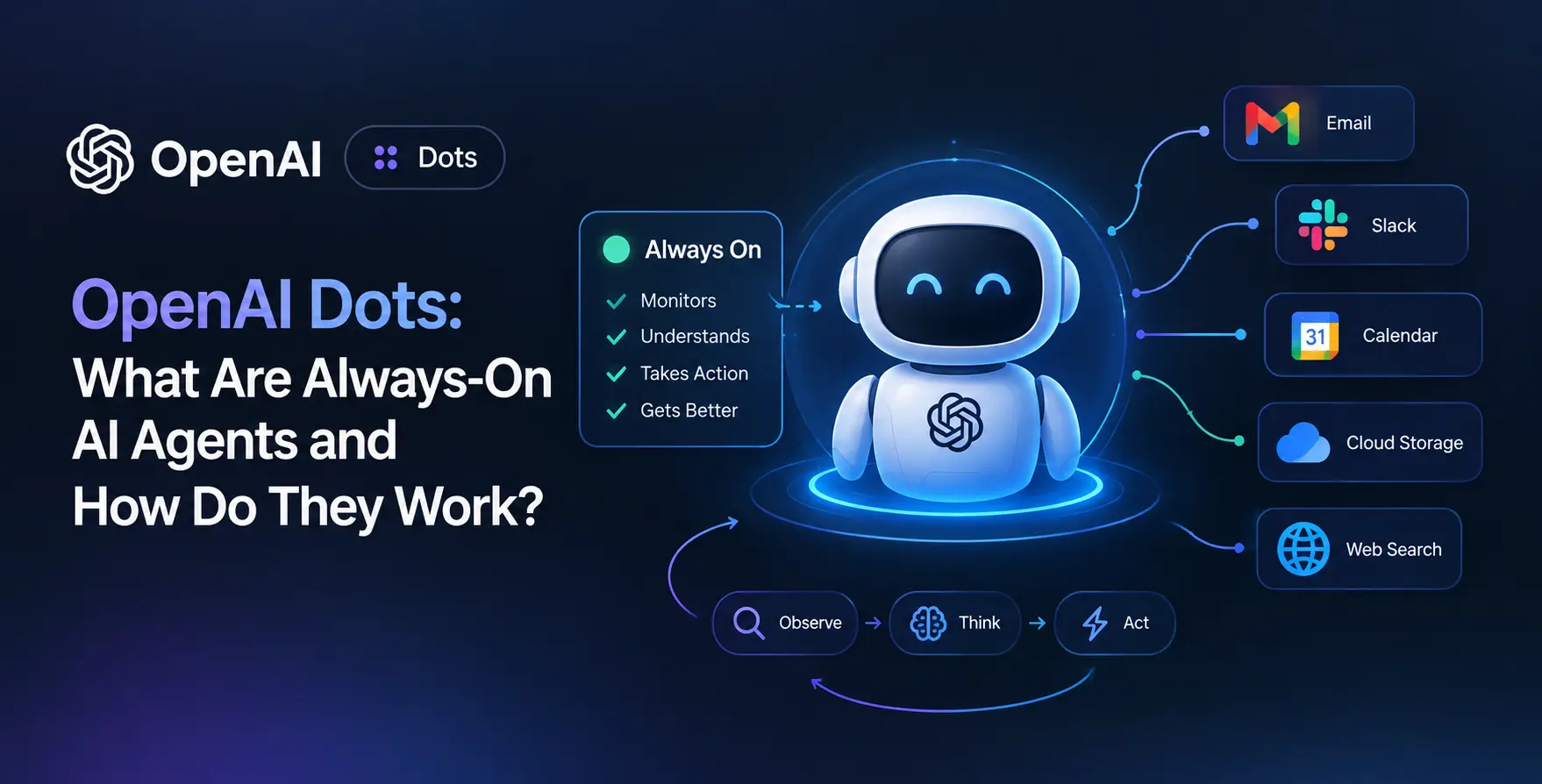
An always-on AI agent is a software entity designed for persistent execution. Unlike a standard chatbot that waits for a user query, these agents remain active and ready to perform background processes.
They maintain a stateful connection to their environment. By monitoring triggers and data streams, they can initiate actions the moment a condition is met.
- Continuous background monitoring
- Autonomous decision-making loops
- Persistent state management
- Proactive task execution
What are OpenAI Dots?
The term OpenAI Dots refers to a specific vision for persistent interaction. These systems act as lightweight, background entities that stay connected to user data and operational workflows.
They represent the next step in how we interact with large language models. Instead of starting a fresh session every time, a user interacts with a persistent digital presence that remembers context across long periods.
This continuity is critical for building complex workflows that span multiple days or weeks. When we discuss what are OpenAI Dots always-on AI agents, we are looking at the evolution of stateful AI interaction.
Understanding Agentic Autonomy
Autonomy in AI is not about total independence from human oversight. It refers to the ability of the system to handle multi-step reasoning and tool execution without manual guidance at every turn.
True agents must be able to plan, observe, and correct their own path. They need access to tools to interact with external APIs or internal databases to achieve their goals.
- Multi-step planning capabilities
- External tool integration
- Error handling and self-correction
- Context-aware decision logic
How Always-On Agents Maintain Persistence
Persistence requires a robust infrastructure that keeps the agent alive even when the user is offline. This usually involves high-availability cloud environments that preserve the agent's memory and current task queue.
The system must manage long-term storage of user preferences and historical data. Without this, the agent would lose its utility the moment a session ended.
Advanced synchronization ensures that the agent is always aware of the latest information. This prevents outdated actions and ensures high accuracy in mission-critical tasks.
Key OpenAI Agent Capabilities
The core set of OpenAI agent capabilities centers on reasoning, tool usage, and temporal management. These systems can orchestrate complex chains of actions across various platforms.
Reasoning and Planning
The agent evaluates the current state and determines the next logical step. It breaks down high-level objectives into actionable sub-tasks.
- Breaking down complex user requests
- Prioritizing immediate versus long-term goals
- Synthesizing data from multiple sources
Contextual Memory
Persistent memory allows the agent to recall previous interactions and organizational constraints. This builds a deeper understanding of the specific environment it serves.
- Long-term narrative retention
- Adaptive learning from feedback
- Cross-session task continuity
The Shift from Chatbots to Agents
The distinction between a static chatbot and a dynamic agent is profound. Chatbots are reactive, while agents are proactive and goal-oriented.
| Feature |
Traditional Chatbot |
Always-On AI Agent |
| Interaction Style |
Request-Response |
Proactive-Persistent |
| Memory |
Session-based |
Long-term stateful |
| Goal Orientation |
Conversational |
Task completion |
| Autonomy |
Low |
High |
Businesses looking to leverage these technologies must understand this fundamental difference. Moving toward agent-based architectures allows for true AI workflow automation rather than just simple query answering.
Technical Architecture of Always-On Systems
Building these systems requires more than just a model API. You need an orchestration layer that handles event-driven triggers and manages agent state.
The architecture often involves a central brain that delegates tasks to specialized tools. This is where developers focus on the underlying logic that prevents the agent from entering infinite loops.
Reliable infrastructure is mandatory for maintaining the always-on status. Any downtime in the orchestration layer results in a loss of agentic capability.
Use Cases for Continuous AI
Continuous AI is perfect for scenarios that require constant vigilance or long-running computations. These agents thrive in environments where data changes rapidly and humans cannot monitor every update.
- Automated market surveillance
- Continuous software testing
- Supply chain logistics monitoring
- Personalized digital assistant management
Challenges in Persistent Agent Deployment
Deploying persistent agents is not without significant hurdles. Security and cost are the most prominent concerns for enterprises looking to scale these technologies.
An agent that has the autonomy to execute actions must have strict guardrails. Without proper oversight, an agent could perform unintended actions based on flawed data or misinterpreted instructions.
Monitoring the costs of constant model inference is also essential. Efficient token usage and cache management strategies help keep operational expenses within reasonable limits.
The Role of Memory and Context
Memory is the differentiator between a generic model and a personalized agent. By maintaining a structured database of interactions, the agent becomes more effective over time.
This context is what allows the agent to anticipate needs. If an agent knows your typical workflow, it can suggest the next step before you even ask for it.
Managing this memory requires careful data handling. Privacy and compliance remain top priorities when storing user-specific context for long periods.
Integrating Agents into Business Workflows
Integrating these systems requires a clear understanding of your internal processes. You cannot simply drop an agent into a broken workflow and expect improvement.
Start by identifying repetitive tasks that require low-level reasoning but high consistency. These are the best candidates for initial agent deployment.
Once the agent is integrated, continuous evaluation is necessary. Monitoring performance metrics helps ensure the agent remains aligned with business goals as the environment evolves.
Future Implications for Autonomous Software
The future of software is moving toward a model where users interact with systems that take on the burden of execution. We are transitioning from using software tools to collaborating with digital colleagues.
As these models become more efficient, the cost of running always-on agents will drop significantly. This will enable even small businesses to deploy sophisticated autonomous teams.
We are just beginning to scratch the surface of what is possible with continuous intelligence. The focus will likely shift from building the agents themselves to managing the ecosystems they inhabit.
Conclusion
Always-on AI agents represent a significant leap in how we utilize machine intelligence. By moving beyond reactive chatbots, we can create systems that function as persistent, autonomous contributors to our daily operations.
Understanding what are OpenAI Dots always-on AI agents helps clarify the direction of the industry. While challenges remain regarding security and infrastructure, the benefits of persistent autonomy are too large to ignore.
As you plan your next phase of digital transformation, consider how these agents might fit into your existing stack. The transition to agentic workflows is likely to define the next several years of software development.


 In collaboration with