Table of Contents
- Introduction to AI Agents Workflow
- What is AI Agent Workflow?
- How AI Agents Work
- Benefits of AI Workflow Automation
- AI Agents for Business
- Real-Life Examples of AI Agents Workflow
- Implementing AI Agent Workflow
- Challenges and Limitations
- Future of AI Agents Workflow
- Key Considerations for Non-Technical Founders
- Best Practices for AI Agent Workflow
- Conclusion
Introduction to AI Agents Workflow
AI agents workflow is a technology that automates and streamlines business processes. It uses artificial intelligence to make decisions and take actions.
With AI agents workflow, businesses can increase efficiency and reduce costs. It is a powerful tool for non-technical founders who want to improve their operations.
AI agents workflow is also known as AI workflow automation. It is a type of automation that uses AI to perform tasks.
What is AI Agent Workflow?
AI agent workflow is a process that involves automated decision-making and action-taking. It uses AI algorithms to analyze data and make decisions.
AI agent workflow can be used in various industries, including customer service, marketing, and finance. It is a versatile technology that can be applied to different business processes.
The main goal of AI agent workflow is to improve efficiency and reduce costs. It achieves this by automating repetitive tasks and providing insights to decision-makers.
- Automates repetitive tasks
- Provides insights to decision-makers
- Improves efficiency and reduces costs
How AI Agents Work
AI agents work by using machine learning algorithms to analyze data. They learn from the data and improve their performance over time.
AI agents can be trained to perform various tasks, including customer service, data analysis, and content creation. They are versatile tools that can be applied to different industries.
AI agents use natural language processing to understand and respond to user queries. They can also use computer vision to analyze images and videos.
- Use machine learning algorithms to analyze data
- Learn from data and improve performance over time
- Can be trained to perform various tasks
Benefits of AI Workflow Automation
AI workflow automation provides several benefits to businesses. It improves efficiency, reduces costs, and enhances customer experience.
AI workflow automation also provides insights to decision-makers. It helps them make informed decisions and improve their operations.
Another benefit of AI workflow automation is that it reduces errors. It automates repetitive tasks and minimizes the risk of human error.
- Improves efficiency and reduces costs
- Enhances customer experience
- Provides insights to decision-makers
- Reduces errors and minimizes risk
AI Agents for Business
AI agents for business are designed to improve operations and enhance customer experience. They can be used in various industries, including marketing, sales, and customer service.
AI agents for business provide several benefits, including improved efficiency, reduced costs, and enhanced customer experience. They are powerful tools that can help businesses succeed.
AI agents for business can be integrated with existing systems and processes. They can be used to automate repetitive tasks and provide insights to decision-makers.
- Improve operations and enhance customer experience
- Provide several benefits, including improved efficiency and reduced costs
- Can be integrated with existing systems and processes
Real-Life Examples of AI Agents Workflow
There are several real-life examples of AI agents workflow. For example, chatbots are used in customer service to provide support and answer queries.
Another example is the use of AI agents in marketing. AI agents can be used to analyze customer data and provide insights to marketers.
AI agents can also be used in finance to analyze financial data and provide insights to decision-makers.
- Chatbots in customer service
- AI agents in marketing
- AI agents in finance
Implementing AI Agent Workflow
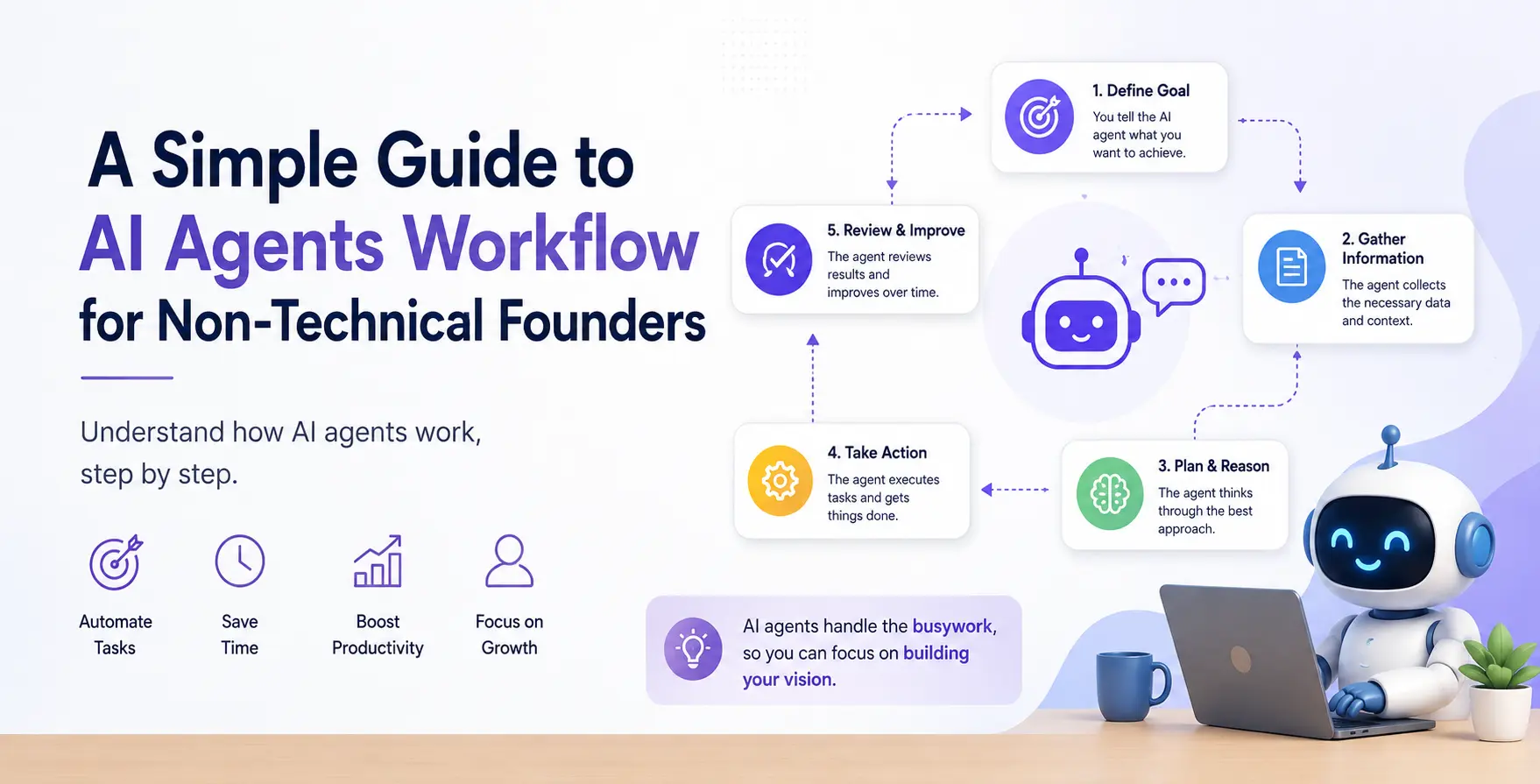
Implementing AI agent workflow requires careful planning and execution. It involves identifying business processes that can be automated and selecting the right AI technology.
Another important step is to train and test the AI agents. This involves providing them with data and testing their performance.
Finally, it is essential to monitor and evaluate the performance of the AI agents. This involves tracking their performance and making adjustments as needed.
- Identify business processes that can be automated
- Select the right AI technology
- Train and test the AI agents
- Monitor and evaluate performance
Challenges and Limitations
There are several challenges and limitations to AI agent workflow. One of the main challenges is the lack of data quality and availability.
Another challenge is the need for skilled professionals to train and maintain the AI agents. This can be a significant cost for businesses.
Finally, there is the risk of bias and errors in the AI agents. This can have significant consequences for businesses and their customers.
- Lack of data quality and availability
- Need for skilled professionals
- Risk of bias and errors
Key Considerations for Non-Technical Founders
Non-technical founders should consider several key factors when implementing AI agent workflow. One of the main factors is the business case for AI.
Another important factor is the technology and infrastructure required. This includes the hardware, software, and networking requirements.
Finally, non-technical founders should consider the talent and skills required. This includes the need for data scientists, engineers, and other professionals.
- Business case for AI
- Technology and infrastructure required
- Talent and skills required
Best Practices for AI Agent Workflow
There are several best practices for AI agent workflow. One of the main best practices is to start small and scale up gradually.
Another important best practice is to focus on business outcomes and metrics. This includes tracking the performance of the AI agents and making adjustments as needed.
Finally, it is essential to monitor and evaluate the performance of the AI agents. This involves tracking their performance and making adjustments as needed.
- Start small and scale up gradually
- Focus on business outcomes and metrics
- Monitor and evaluate performance
Conclusion
AI agent workflow is a powerful technology that can improve business operations and enhance customer experience. It provides several benefits, including improved efficiency, reduced costs, and enhanced customer experience.
However, there are also several challenges and limitations to AI agent workflow. These include the lack of data quality and availability, the need for skilled professionals, and the risk of bias and errors.
Non-technical founders should consider several key factors when implementing AI agent workflow. These include the business case for AI, the technology and infrastructure required, and the talent and skills required.


 In collaboration with