Table of Contents
- Introduction to OpenAI Decisions API
- What is OpenAI Decisions API and how to use it
- The Role of AI in Enterprise Logic
- Key Features of the AI Decision API
- Integrating Decision-Making into Workflows
- Benefits of Business Decision Automation API
- Handling Complex Business Rules
- Best Practices for Model Implementation
- Security and Data Governance
- Optimizing Decision Latency
- Comparison of Traditional vs AI Decision Systems
- Future-Proofing Your Integration Architecture
- Common Implementation Challenges
- Conclusion
Introduction to OpenAI Decisions API
Modern software architecture demands more than just basic data processing; it requires intelligent, context-aware reasoning. The OpenAI Decisions API represents a significant leap forward in how developers can embed complex decision-making capabilities directly into their business applications.
By leveraging advanced reasoning models, organizations can now automate high-stakes choices that previously required human intervention. This shift allows teams to scale operations without sacrificing the nuance required for effective management.
What is OpenAI Decisions API and how to use it
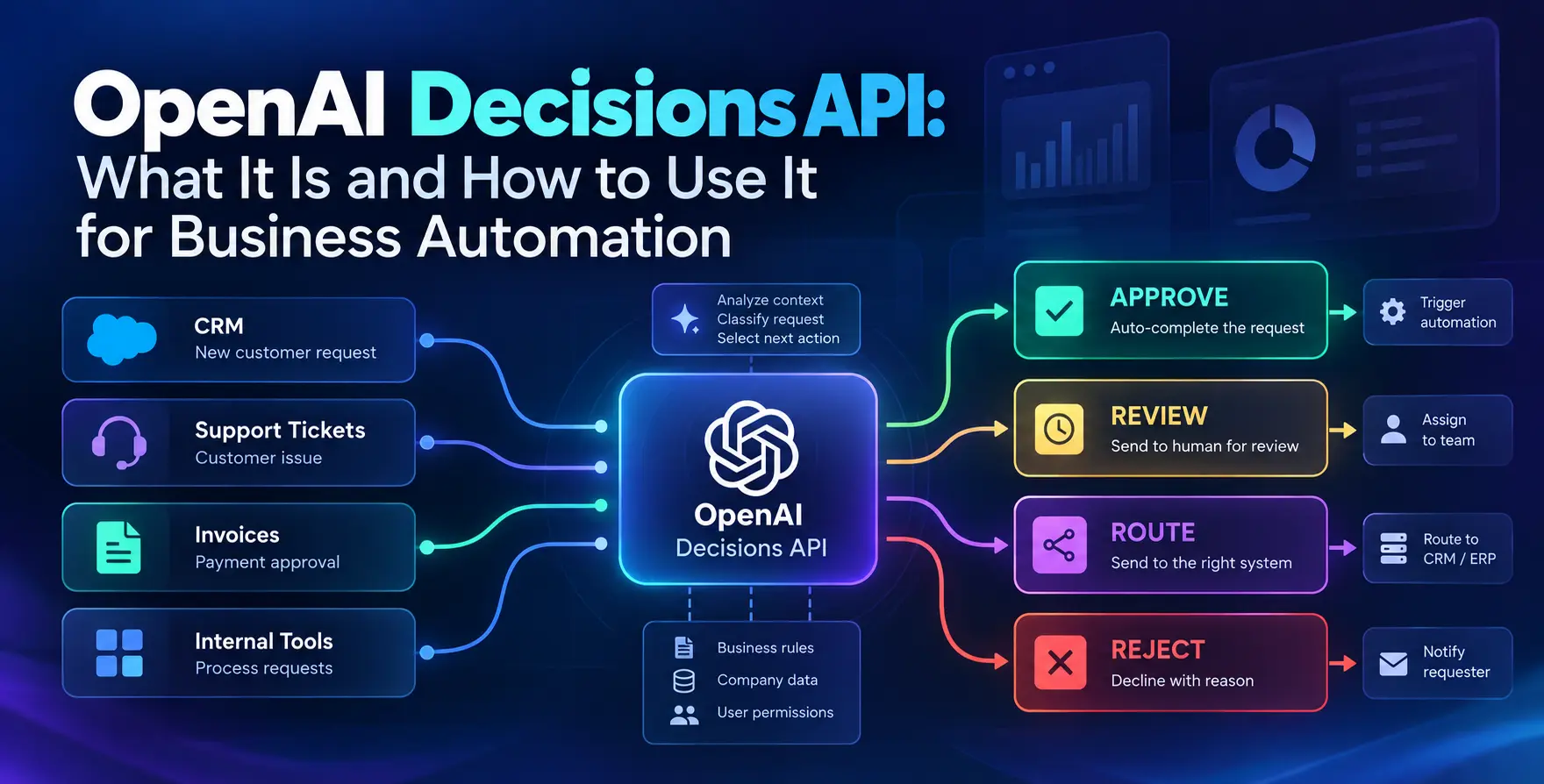
At its core, the what is OpenAI Decisions API and how to use it question revolves around providing a structured way for LLMs to evaluate constraints and goals. Instead of receiving a simple text response, your application receives a structured decision based on your provided parameters.
Developers configure the API by defining the decision criteria, constraints, and the expected output format. Once the context is established, the model analyzes the data and provides a definitive recommendation or action plan.
- Define decision boundaries
- Provide context-specific data
- Handle structured output responses
- Map results to business logic
- Audit the reasoning process
The Role of AI in Enterprise Logic
Traditional software relies on hard-coded rules that often fail when faced with edge cases. Modern AI brings flexibility by interpreting intent and context rather than just following rigid conditional branches.
Integrating these capabilities into your stack allows for more resilient systems that adapt to changing market conditions. As AI development service providers continue to innovate, the reliance on static logic is rapidly diminishing.
Key Features of the AI Decision API
Structured Reasoning
The API forces the model to follow a logical chain rather than generating free-form text. This ensures the output remains consistent and actionable for downstream services.
- Enforces logical consistency
- Reduces hallucination risks
- Provides clear rationales
By enforcing this structure, you gain confidence in the automated decisions being made.
Configurable Constraints
You can define strict operational limits that the model must respect during its analysis. This prevents the system from suggesting actions that violate compliance or company policy.
- Sets hard operational limits
- Defines regulatory guardrails
- Integrates with existing policy stores
These constraints act as a safety net for automated operations.
Integrating Decision-Making into Workflows
Successful business decision automation API deployment relies on seamless integration with existing CI/CD pipelines and backend services. When your application triggers a request, the API must return a result within the constraints of your existing SLA.
Consider how your current api development team manages state and transitions. The decision-making component should act as a specialized microservice within your architecture.
- Connect to existing triggers
- Map decisions to database updates
- Ensure transactional integrity
- Monitor for performance drift
Benefits of Business Decision Automation API
| Benefit |
Traditional Automation |
AI-Powered Decisions |
| Flexibility |
Rigid rules |
Context-aware |
| Scalability |
Manual updates |
Automatic scaling |
| Maintenance |
High effort |
Dynamic learning |
| Accuracy |
Human-dependent |
Data-driven |
| Speed |
Batch processing |
Real-time logic |
Handling Complex Business Rules
Many organizations struggle with rules that are too complex to map into traditional if-else blocks. AI decision API implementations solve this by allowing the model to weigh multiple variables simultaneously.
You can provide the model with a set of historical precedents or policy documents. The model then synthesizes this information to make a decision that aligns with corporate standards.
Best Practices for Model Implementation
Always start by testing the model against historical data to ensure its decision-making logic aligns with your expectations. Validate the outputs rigorously before moving any automated process into a production environment.
- Conduct extensive unit testing
- Define clear fallback mechanisms
- Implement human-in-the-loop steps
- Monitor decision confidence scores
Continuous monitoring ensures the system remains reliable over time.
Security and Data Governance
Securing your integration is paramount when handling sensitive business logic. Use standard api authentication methods like OAuth or scoped API keys to ensure only authorized services can request decisions.
Data governance policies must also be strictly enforced. Ensure that any PII or confidential data sent to the API is properly anonymized or handled according to your internal security protocols.
Optimizing Decision Latency
Latency is critical for real-time applications. To optimize, ensure your requests are as concise as possible while still providing enough context for an accurate decision.
- Use efficient prompt engineering
- Cache repeated decision patterns
- Minimize network round trips
- Scale requests horizontally
Reducing the payload size often leads to faster inference times.
Comparison of Traditional vs AI Decision Systems
Traditional systems excel at deterministic tasks where the outcome is always the same given the input. AI-based systems excel at probabilistic tasks where there is no single right answer.
Combining both approaches often yields the best results. Use traditional code for deterministic validation and AI for the complex reasoning layer.
Future-Proofing Your Integration Architecture
As you build, think about how your api integration strategy will evolve. Avoid tight coupling between your business logic and the specific model provider.
Maintain an abstraction layer that allows you to swap or upgrade models without re-architecting your entire backend. This flexibility ensures your investment in automation remains viable for years to come.
Common Implementation Challenges
One common hurdle is the tendency for models to over-generalize. You must provide specific, high-quality context to ensure the decisions made are relevant to your unique business requirements.
- Model over-generalization
- Integration complexity
- Debugging non-deterministic outputs
- High implementation costs
- Team training requirements
Address these challenges through iterative development and robust observability practices.
Conclusion
The OpenAI Decisions API offers a transformative approach to handling complex business logic. By adopting this technology, your organization can move beyond static rules toward truly intelligent automation.
Start small, test thoroughly, and focus on integrating the API into workflows where reasoning adds the most value. With the right approach, your business will gain a significant competitive edge in operational agility.


 In collaboration with