Table of Contents
- Introduction to OAuth Evolution
- Understanding the Core Differences
- The Shift Toward Security Defaults
- Eliminating Insecure Flows
- Why PKCE is Now Mandatory
- Comparing OAuth 2.0 and 2.1
- Planning Your OAuth 2.1 Migration
- Impact on Client Implementation
- Maintaining API Security Standards
- Best Practices for Modern Authentication
- Common Pitfalls in Implementation
- How OAuth 2.1 Simplifies Security
- Conclusion
Introduction to OAuth Evolution
API security is a moving target that requires constant vigilance from development teams. As we move further into 2026, the industry is shifting away from older, permissive standards toward more restrictive, secure patterns.
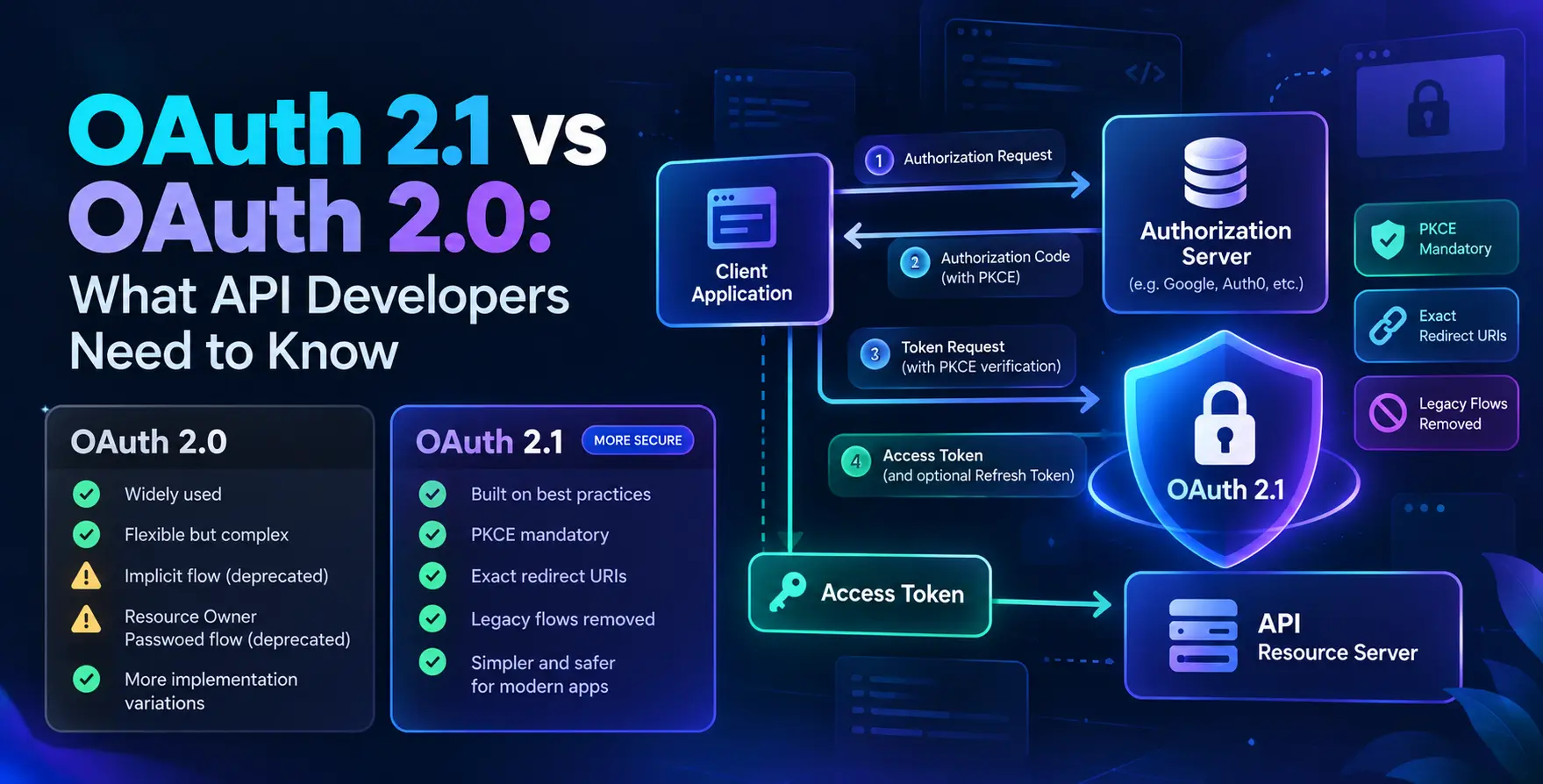
This is where the debate around OAuth 2.1 vs OAuth 2.0 becomes vital for any engineer building modern systems. The newer specification is not a radical invention but rather a consolidation of existing best practices into a single, cohesive standard.
Understanding the Core Differences
At its heart, the update is about removing ambiguity and reducing the attack surface for common web applications. Older implementations often allowed developers to choose between multiple ways to achieve the same result, leading to inconsistent security profiles.
OAuth 2.1 brings clarity by deprecating outdated flows that were prone to misuse. It forces developers to adopt secure-by-default configurations that align with modern web architecture.
- Consolidates scattered security specifications
- Removes legacy insecure grant types
- Simplifies the developer implementation process
- Focuses on current threat models
The Shift Toward Security Defaults
Security best practices evolve faster than the specifications themselves. While OAuth 2.0 was groundbreaking, it left too many doors open for misconfiguration in the hands of inexperienced developers.
OAuth 2.1 addresses this by making the most secure options mandatory. It essentially formalizes what security-conscious architects were already doing voluntarily for years.
Standardized Security Requirements
The new spec mandates specific behaviors that were previously optional or recommended. By removing the guesswork, it significantly lowers the risk of common vulnerabilities.
- Mandatory use of PKCE
- Strict redirect URI matching
- Deprecation of implicit flows
- Authorization code grant as the primary path
These changes ensure that regardless of the team, the resulting implementation meets a high security bar.
Eliminating Insecure Flows
For many years, the industry relied on the Implicit Flow for browser-based applications. While it was convenient for early web development, it is now widely considered insecure due to the exposure of tokens in the URL.
OAuth 2.1 explicitly prohibits the use of the Implicit Flow and the Resource Owner Password Credentials grant. These older methods simply cannot match the security profile required by modern high-traffic APIs.
- Implicit flow is now disallowed
- Password credentials grant is removed
- Refresh token rotation is encouraged
- Bearer token security is tightened
Removing these options forces teams to adopt more robust alternatives that protect against token interception.
Why PKCE is Now Mandatory
The Proof Key for Code Exchange, or PKCE, was originally designed for mobile apps to prevent authorization code injection. It has since proven its worth in almost every other context.
In OAuth 2.1, OAuth PKCE best practices are no longer just recommendations for mobile developers. They are a fundamental requirement for all clients, including server-side and browser-based applications.
Benefits of PKCE
Implementing PKCE ensures that the authorization code cannot be intercepted and used by an attacker, even if they have access to the browser session. It creates a cryptographically secure handshake between the client and the server.
- Prevents code injection attacks
- Requires no client secret for public clients
- Works seamlessly with the authorization code flow
- Protects against token theft
By enforcing this, the standard effectively neutralizes entire classes of common authentication vulnerabilities.
Comparing OAuth 2.1 and 2.0
| Feature |
OAuth 2.0 |
OAuth 2.1 |
| Implicit Flow |
Allowed |
Forbidden |
| PKCE |
Optional |
Mandatory |
| Grant Types |
Many choices |
Minimal set |
| Security Defaults |
Developer choice |
Enforced |
| Complexity |
High |
Reduced |
Planning Your OAuth 2.1 Migration
Starting an OAuth 2.1 migration can feel daunting, but it is largely about pruning old code rather than writing new, complex logic. You need to audit your existing identity providers and client configurations to identify where legacy flows are still in use.
Most modern identity platforms already support the requirements of the newer spec. The heavy lifting is usually on the client side, where you must ensure your SDKs and request patterns are updated to include PKCE parameters.
- Audit all existing client registrations
- Identify usage of deprecated grant types
- Update client-side authentication libraries
- Test with stricter validation rules
A phased approach allows you to secure your infrastructure without breaking existing production traffic prematurely.
Impact on Client Implementation
For developers, the primary change is the inclusion of the code verifier and code challenge in the authorization request. This addition is minimal in terms of code volume but massive in terms of security impact.
Your authentication logic will become more consistent across platforms. Whether you are building a web app, a mobile app, or a desktop client, the standard flow remains uniform.
- Generate a cryptographically random string
- Calculate the SHA-256 hash
- Send the hash with the initial request
- Verify the raw string at the token endpoint
This consistency reduces the learning curve for new team members joining the project.
Maintaining API Security Standards
Adopting this standard is just one part of a broader commitment to security. You should always pair robust authentication with effective monitoring and defense-in-depth strategies.
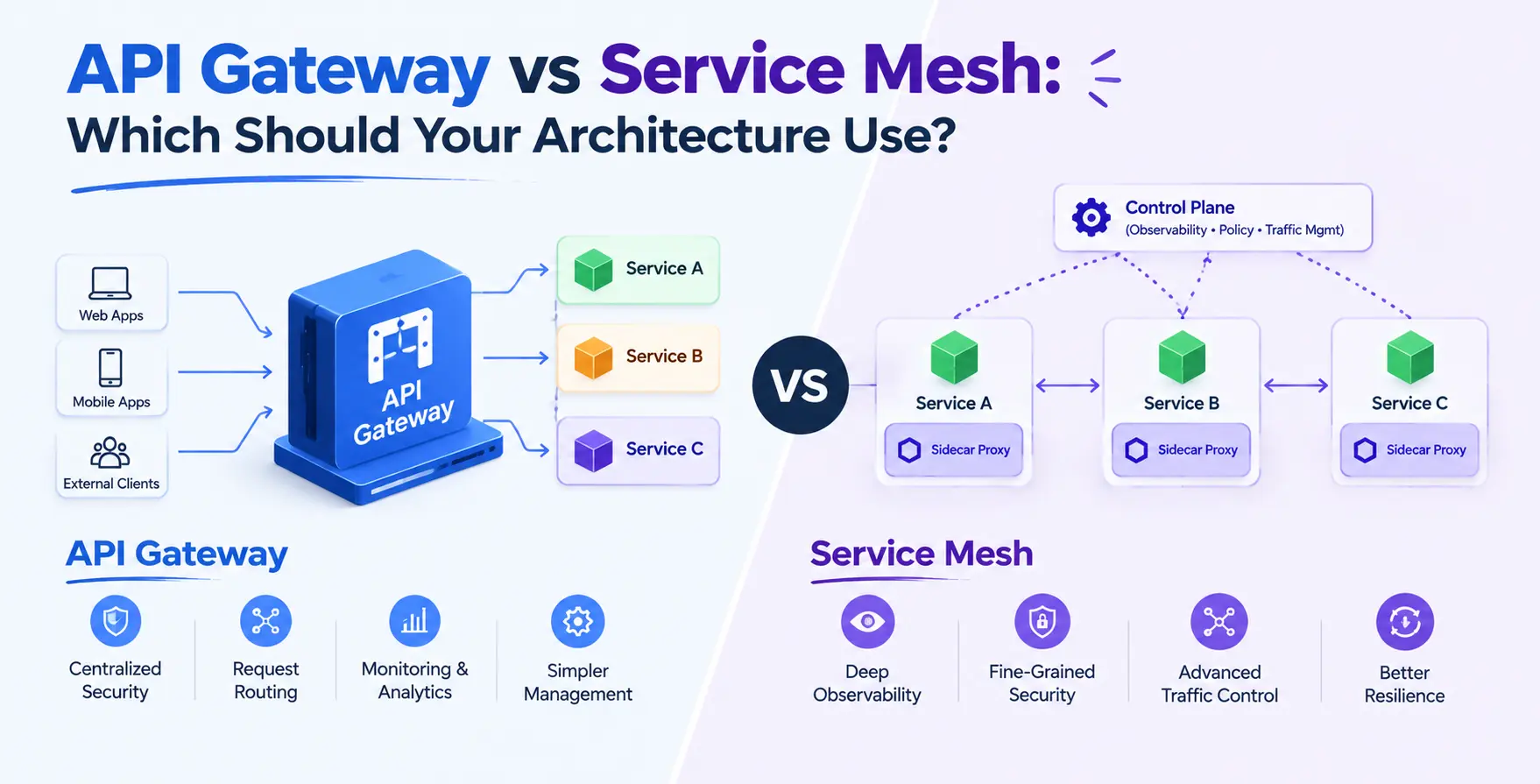
Consider how your authentication layer interacts with your service architecture. If you are managing microservices, you might rely on an API gateway to handle the heavy lifting of token validation, allowing your internal services to focus on business logic.
Always remember that authentication is only as strong as your weakest link. Ensure your token handling logic follows the latest security guidelines consistently.
Best Practices for Modern Authentication
Always prioritize short-lived access tokens over long-lived ones to minimize the impact of a potential breach. Implement token rotation whenever possible to ensure that compromised tokens are invalidated quickly.
Never log sensitive information like authorization codes or tokens in your application logs. Keep your configuration secure by using environment variables for client secrets and never hardcoding them in your source control.
- Use short-lived access tokens
- Implement refresh token rotation
- Enforce strict redirect URI validation
- Regularly audit security configurations
These practices keep your implementation clean and resilient against modern threats.
Common Pitfalls in Implementation
Developers often struggle with the transition because they try to maintain backward compatibility with legacy systems. It is tempting to support both old and new flows simultaneously, but this often leads to configuration drift.
Another common mistake is neglecting to update the client-side libraries. Relying on outdated SDKs can prevent you from implementing modern security features correctly, even if your backend is ready.
- Keeping legacy flows enabled
- Ignoring refresh token rotation
- Hardcoding sensitive configuration details
- Using weak hashing for challenges
Avoid these traps by keeping your dependency list updated and performing regular security reviews of your authentication modules.
How OAuth 2.1 Simplifies Security
Ultimately, the move toward this standard is a move toward simplicity. By stripping away the options that usually lead to trouble, it helps developers build secure systems by accident rather than by extreme effort.
It provides a clear roadmap for what a secure implementation should look like in the modern web. When you remove the noise of obsolete grant types, you are left with a robust, predictable, and highly secure authentication framework.
Conclusion
The transition to the new standard is not just an exercise in compliance. It is a necessary step for any development team that takes API security seriously. By understanding the differences, you can better protect your users and your infrastructure.
Focus your efforts on adopting PKCE and phasing out legacy flows. Your future self, and your security team, will thank you for the reduced attack surface and the increased simplicity of your authentication logic.


 In collaboration with