Table of Contents
- Introduction to Microservices Infrastructure
- Understanding the API Gateway
- Core Responsibilities of an API Gateway
- The Role of a Service Mesh
- Service Mesh vs API Gateway Comparison
- When to Use an API Gateway
- When to Use a Service Mesh
- Key Differences in Traffic Management
- Security Considerations for Modern APIs
- Operational Complexity and Overhead
- Choosing the Right Tool for Your Stack
- Combining Both Approaches
- Final Thoughts
Introduction to Microservices Infrastructure
Modern application development relies heavily on breaking monolithic systems into smaller, independent services. While this shift increases agility, it creates massive challenges for communication, security, and observability.
Developers often struggle to decide how to route traffic and manage inter-service connectivity. Choosing between an API gateway vs service mesh strategy is fundamental to building a resilient system.
Both tools serve distinct purposes in managing application traffic. Understanding their boundaries is critical for successful microservices traffic management.
Understanding the API Gateway
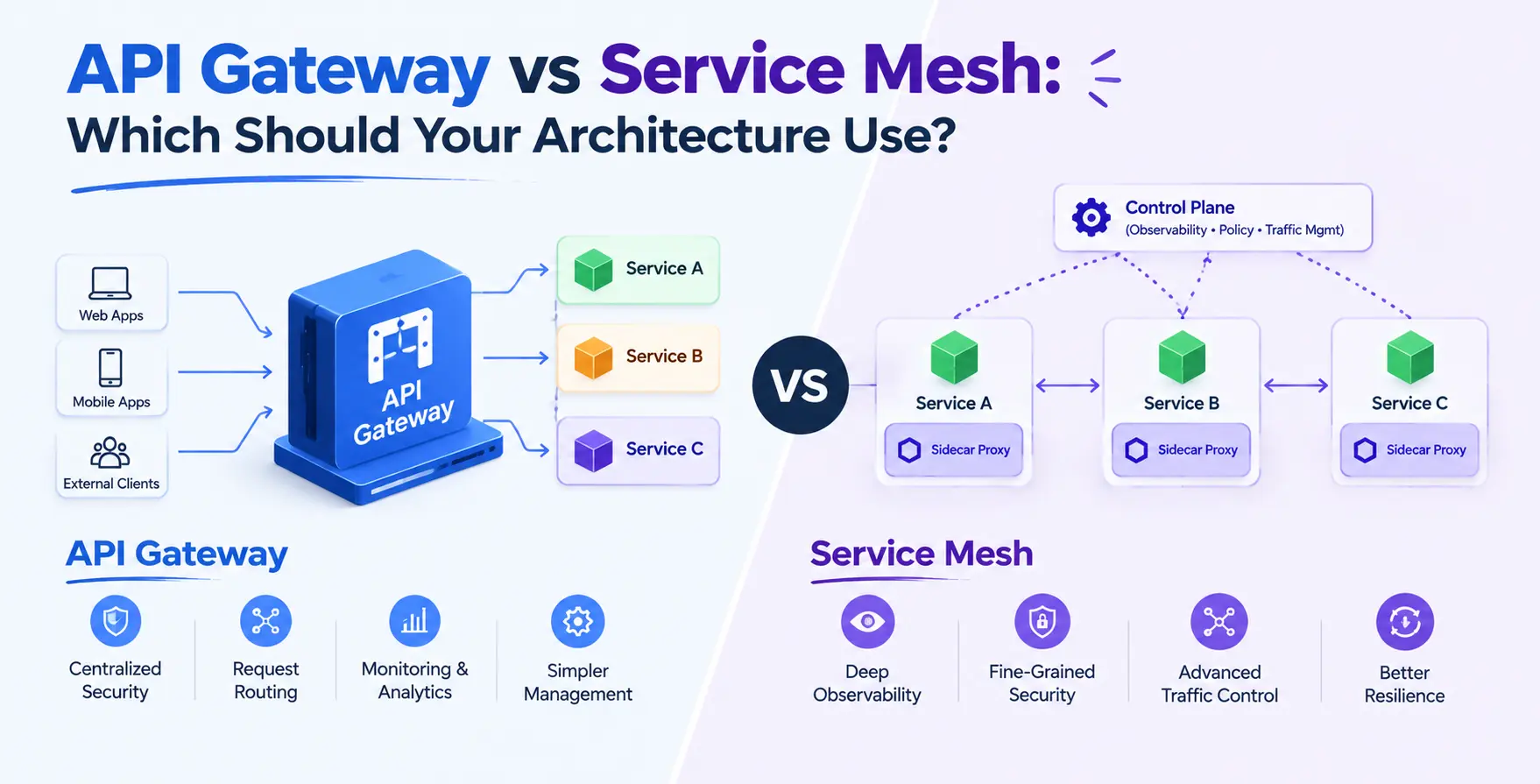
An API gateway acts as the primary entry point for all external client requests. It sits at the edge of your network, shielding internal services from public internet exposure.
Think of it as a reverse proxy that performs essential cross-cutting concerns for all incoming traffic. It ensures that external clients interact with a unified interface rather than individual microservices.
By centralizing these tasks, the gateway simplifies the client-side implementation. It is the gatekeeper of your entire backend ecosystem.
- Provides centralized authentication
- Handles rate limiting
- Manages protocol translation
- Aggregates multiple backend responses
Core Responsibilities of an API Gateway
Traffic Routing and Load Balancing
The gateway routes incoming requests to the appropriate downstream services. It dynamically directs traffic based on request paths or headers.
- Routes requests to specific service versions
- Balances load across service instances
- Simplifies backend service discovery
This approach allows teams to refactor internal services without impacting the public API. Your external clients remain blissfully unaware of internal structural changes.
Request Transformation and Security
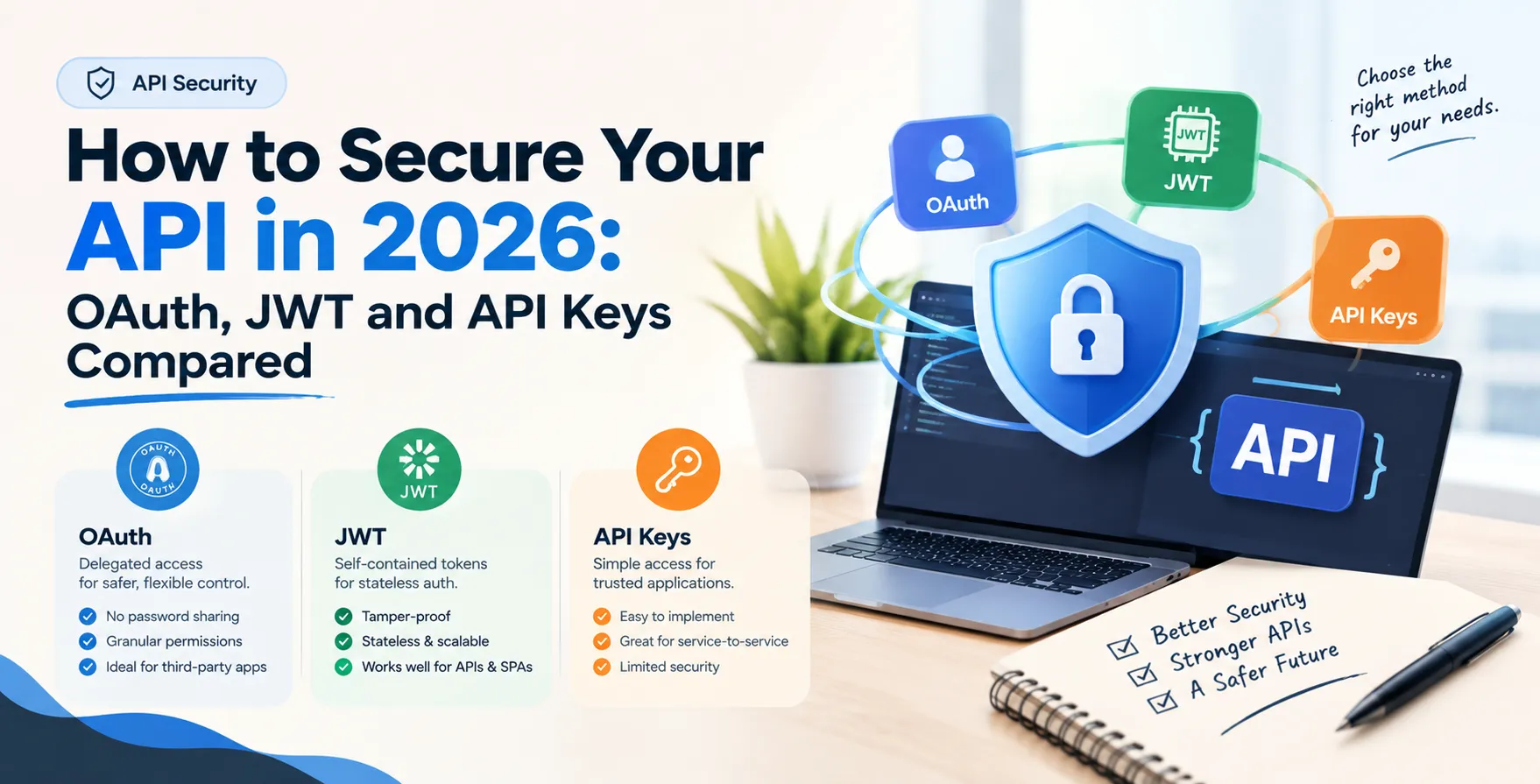
Gateways are essential for enforcing security policies before requests reach your internal network. They handle token validation, encryption, and payload modification.
- Validates OAuth tokens
- Sanitizes incoming request headers
- Converts REST to gRPC if needed
By handling these tasks at the edge, you ensure consistent security policies across all entry points. It keeps your internal microservices lean and focused on business logic.
The Role of a Service Mesh
A service mesh is infrastructure software designed to handle service-to-service communication within the cluster. It operates using a sidecar proxy model to intercept all internal network traffic.
Unlike the gateway, the mesh does not focus on external clients. It focuses on the reliability, observability, and security of internal traffic flows.
It provides granular control over how microservices talk to one another. This is essential when you have hundreds of services interacting in a complex environment.
Service Mesh vs API Gateway Comparison
| Feature |
API Gateway |
Service Mesh |
| Primary Focus |
North-South Traffic |
East-West Traffic |
| Target Audience |
External Clients |
Internal Services |
| Deployment |
Edge of Network |
Sidecar per service |
| Complexity |
Lower |
Higher |
| Visibility |
Request level |
Network level |
| Authentication |
User-level |
Service-to-service |
When to Use an API Gateway
You should prioritize an API gateway when your primary need involves managing external-facing interfaces. It is the standard solution for exposing services to web, mobile, and third-party consumers.
If you need to implement billing, usage quotas, or developer portal integration, the gateway is the right choice. It provides the necessary abstraction for external API management.
Most organizations start with a gateway to handle basic security and routing requirements. It solves the most pressing problems of public-facing API exposure.
- Managing public API endpoints
- Enforcing external security policies
- Supporting legacy client versions
- Aggregating data for mobile apps
When to Use a Service Mesh
A service mesh becomes necessary when your internal network becomes too complex to manage manually. If you have dozens of microservices, tracking service-to-service failures is nearly impossible without one.
It provides advanced traffic control, such as canary releases and circuit breaking, at the infrastructure level. This ensures that a failure in one service does not cascade through the entire system.
Adopting a mesh requires significant operational expertise. Only implement it if your scale justifies the added infrastructure overhead.
- Enforcing mutual TLS for internal traffic
- Implementing advanced circuit breaking
- Observing complex service dependencies
- Enabling sophisticated traffic shifting
Key Differences in Traffic Management
The core distinction lies in the direction of traffic flow. An API gateway manages north-south traffic, which flows from the outside world into your data center.
A service mesh manages east-west traffic, which flows between services inside your private network. Treating these as a single problem often leads to architectural bottlenecks.
Trying to force a gateway to manage internal traffic results in a massive, centralized bottleneck. Conversely, using a mesh for external traffic is often insecure and inefficient.
Security Considerations for Modern APIs
Security requires a layered approach across your entire infrastructure. You cannot rely on a single component to protect your entire architecture.
The gateway handles authentication and authorization for end-users. The service mesh handles identity and encryption between internal services.
Combined, these tools ensure that even if one service is compromised, the attacker cannot easily move laterally through your network. This creates a robust defense-in-depth posture.
- Gateway validates external user tokens
- Mesh enforces internal service identity
- Mesh manages mTLS encryption
- Gateway logs all external access
Operational Complexity and Overhead
Implementing a service mesh introduces significant operational complexity. Each pod in your cluster now includes an additional proxy container that consumes memory and CPU.
You must manage the lifecycle of these proxies alongside your application code. This requires a dedicated platform team to handle configuration, upgrades, and troubleshooting.
In contrast, an API gateway is usually a standalone cluster component. While it requires maintenance, it does not require a sidecar for every single microservice deployment.
Choosing the Right Tool for Your Stack
Your choice depends on the maturity of your architecture. Start by mapping out your traffic patterns and identifying your biggest pain points.
If you are struggling with external exposure and authentication, focus on the gateway first. If your internal network is unreliable and unobservable, look into a service mesh.
Never introduce both simultaneously unless you have a mature platform team. Complexity is the enemy of stability in distributed systems.
Combining Both Approaches
Many mature organizations use both tools in tandem. The API gateway sits at the edge, while the service mesh handles internal communication.
The gateway forwards requests to a service, which then participates in the mesh for any subsequent calls. This provides a comprehensive traffic management solution for complex systems.
This hybrid model allows you to leverage the strengths of each technology. It is the gold standard for large-scale enterprise deployments.
Final Thoughts
The decision between an API gateway and a service mesh is not about choosing one over the other. It is about understanding the specific traffic management needs of your microservices ecosystem.
Start simple with an API gateway to handle your external interfaces effectively. As your internal network grows in complexity, evaluate a service mesh to maintain reliability and security.
By clearly separating the responsibilities of edge management and internal connectivity, you build a system that is both scalable and maintainable. Focus on solving the right problems at the right layer of your infrastructure.


 In collaboration with