Table of Contents
- Introduction
- Why Background Processing Matters
- Understanding the Web Application Task Queue
- Key Components of a Robust System
- Choosing the Right Messaging Broker
- Handling Job Failures and Retries
- Designing for Idempotency
- Scaling Your Job Workers
- Monitoring and Observability
- Managing Long-Running Tasks
- Security Considerations
- Common Pitfalls to Avoid
- Best Practices for High Reliability
- Conclusion
Introduction
In modern web development, keeping your application responsive is a top priority. When users trigger actions that require heavy computation or external API calls, you cannot make them wait for the process to finish. This is where you need to offload work to a background process.
Learning how to build a reliable background job system for web applications allows you to decouple request processing from task execution. By moving time-consuming operations out of the main request cycle, you improve user experience and system throughput significantly.
Why Background Processing Matters
Web servers are designed to handle short-lived requests efficiently. When a request takes several seconds or minutes, you tie up server resources, leading to timeouts and a degraded user experience. Offloading tasks is essential for maintaining application performance.
A well-architected background job system ensures that your user-facing interface remains snappy even during high traffic. It also provides a buffer against sudden spikes in demand by smoothing out the processing load over time.
- Prevents server request timeouts
- Improves overall application responsiveness
- Allows asynchronous task execution
- Facilitates better resource utilization
Understanding the Web Application Task Queue
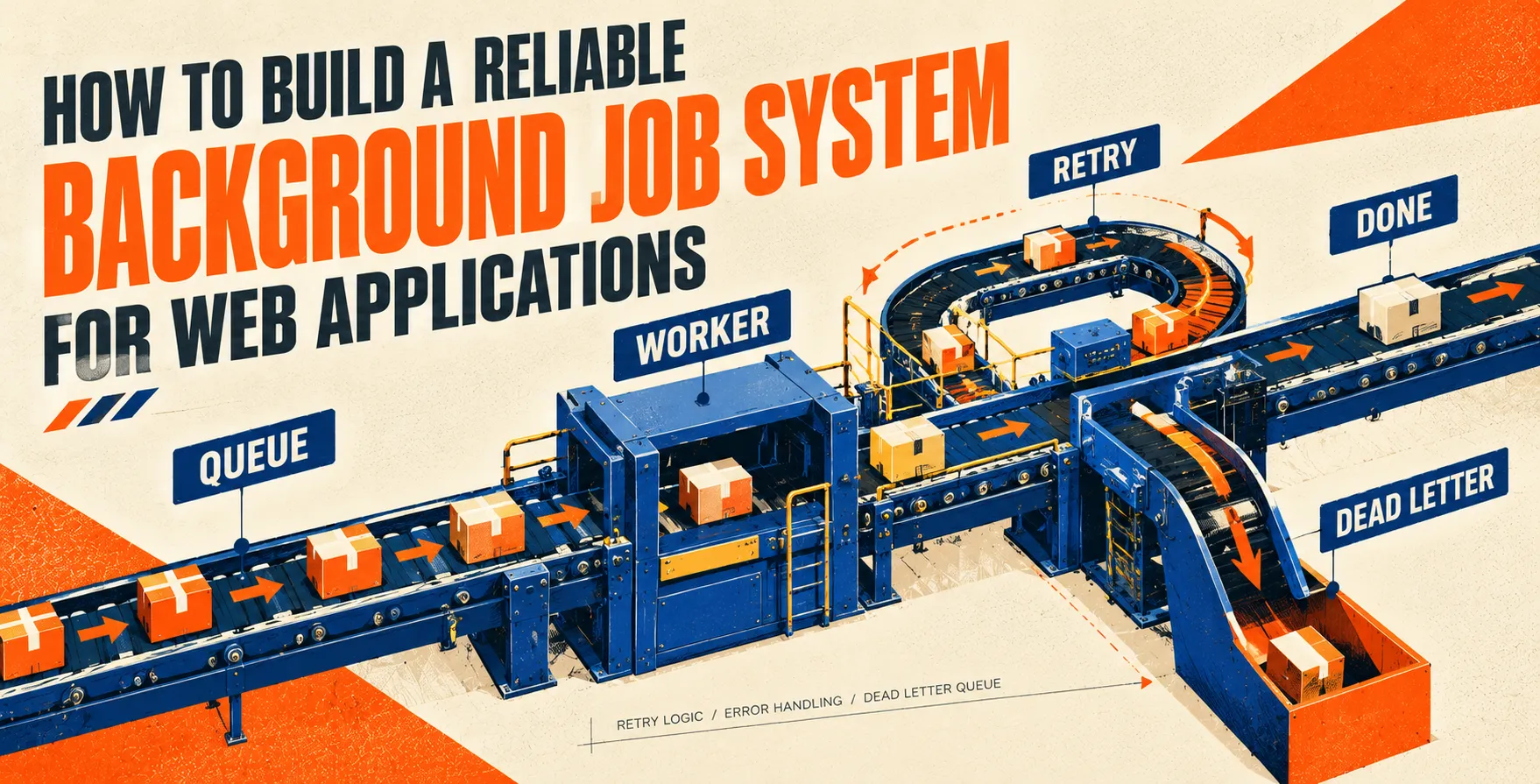
The heart of any background processing architecture is the web application task queue. This component acts as a buffer between your web application and the worker processes that execute the actual tasks. It ensures that no work is lost even if your workers are busy or temporarily offline.
When an action is requested, the application pushes a message onto the queue instead of executing the code immediately. A separate worker process then pulls this message and performs the work independently. This flow is the standard pattern for building scalable software development services.
Key Components of a Robust System
A reliable system requires more than just a queue; it needs a series of interconnected parts that manage the lifecycle of a task. You need a way to define, enqueue, execute, and monitor each job effectively.
Queue Producers
The producers are typically your web application instances. They create job payloads and push them into the queue. This phase must be extremely fast to avoid latency in the main execution loop.
- Standardizes job data formats
- Handles connection pooling to brokers
- Serializes complex data structures
Job Workers
Workers are the background processes that consume tasks from the queue. They can be scaled independently based on the current load or the volume of pending tasks in the system.
- Pulls tasks from brokers
- Executes business logic
- Handles error states and retries
Choosing the Right Messaging Broker
Your choice of messaging broker determines the reliability and throughput of your background job processing. Common options range from simple in-memory stores like Redis to robust enterprise message brokers like RabbitMQ or Kafka.
Selecting the right tool depends on your specific requirements for persistence, delivery guarantees, and throughput. For many teams, Redis provides an excellent balance of speed and simplicity, while Kafka is better suited for high-volume streaming data.
| Broker Type |
Primary Use Case |
Reliability |
| Redis |
Low latency, simple tasks |
High speed |
| RabbitMQ |
Complex routing, durability |
Guaranteed delivery |
| Kafka |
High throughput, logs |
High fault tolerance |
| Amazon SQS |
Managed, serverless |
High scalability |
Handling Job Failures and Retries
Failures are inevitable in any distributed system. Your background job system must be equipped to handle transient errors like network timeouts, database deadlocks, or service unavailability gracefully.
Implementing an exponential backoff strategy for retries prevents you from overwhelming failing downstream services. When a job fails, the system should catch the exception, log the failure, and schedule the job for a later attempt.
- Configurable retry limits
- Exponential backoff intervals
- Dead letter queues for failed tasks
- Alerting mechanisms for persistent failures
Designing for Idempotency
An idempotent operation is one that can be performed multiple times without changing the result beyond the initial execution. This is critical in background processing where network issues might cause a job to be delivered more than once.
You should design your worker logic to check for existing records or state flags before taking action. This ensures that even if a worker processes the same job twice due to a retry, your database or external APIs do not end up in an inconsistent state.
Scaling Your Job Workers
The ability to scale your workers is a primary benefit of using a task-based architecture. As the volume of incoming work fluctuates, you can dynamically increase or decrease the number of worker containers or processes to maintain low latency.
If you are running on modern cloud infrastructure, you might leverage auto-scaling based on queue depth metrics. This ensures that you are only paying for the compute power you actually need while keeping your application responsive under heavy load.
Monitoring and Observability
You cannot manage what you cannot see. Effective monitoring for your background infrastructure involves tracking metrics like queue length, worker utilization, job processing duration, and error rates.
Establishing clear visibility allows you to identify bottlenecks before they impact your end users. If your queues are growing faster than workers can process them, you know immediately that you need to increase your worker capacity or optimize your job logic.
- Tracks queue depth in real-time
- Logs worker status and health
- Monitors job latency trends
- Alerts on high failure rates
Managing Long-Running Tasks
Some tasks, such as generating large reports or processing video files, can take significant time. These require special handling to ensure they do not block standard, shorter-lived background jobs.
You should categorize your tasks by duration and assign them to dedicated queues. This prevents long-running jobs from clogging the system and delaying the execution of time-sensitive notifications or emails.
Security Considerations
Securing your job system is often overlooked during initial development. You must ensure that the communication between your web application, the message broker, and the workers is encrypted and properly authenticated.
Never pass sensitive user data in clear text within job payloads. Instead, pass a reference or ID that the worker can use to securely fetch the required information from a database or a secure vault service.
Common Pitfalls to Avoid
Many teams fall into traps when building their first background processing infrastructure. Avoiding these common mistakes can save you significant time and effort in long-term maintenance and support.
- Ignoring serialization limits
- Hardcoding task priorities
- Blocking the main thread
- Overloading the message broker
- Failing to handle orphaned tasks
Best Practices for High Reliability
Reliability is built through careful planning and rigorous testing. Start by writing comprehensive tests for your worker logic, covering both success and failure scenarios to ensure your retry logic behaves as expected.
Regularly perform load testing on your queuing infrastructure to understand its breaking points. By proactively managing your technical debt, you ensure that your background systems remain a robust asset rather than a hidden maintenance burden.
Conclusion
Building a reliable background job system is a foundational step in creating scalable web applications. By mastering the art of decoupling tasks and implementing robust retry mechanisms, you ensure that your platform remains responsive and resilient under pressure.
Focus on idempotency, monitoring, and proper queue management as you scale your infrastructure. With these practices in place, you can confidently handle increasing workloads while delivering a seamless experience to your users.


 In collaboration with