Table of Contents
- Introduction
- Understanding the Freemium Model
- Understanding the Free Trial Model
- Key Differences: Freemium vs Free Trial
- Evaluating Conversion Metrics in 2026
- When to Choose Freemium
- When to Choose Free Trial
- The Reverse Trial Strategy
- Impact on User Acquisition Costs
- Engineering Considerations for Product Limits
- Optimizing Onboarding for Retention
- Selecting the Best SaaS Pricing Model
- Conclusion
Choosing the right user acquisition funnel determines whether your software startup thrives or burns capital unnecessarily. Founders must balance rapid user growth against server infrastructure costs and sales execution speed.
This article analyzes freemium vs free trial models to help you pick the right framework for your product in 2026. Understanding conversion dynamics allows software teams to build targeted gating mechanisms that maximize revenue retention.
Introduction
Modern software companies face tighter capital markets and rising acquisition costs. Selecting the wrong acquisition funnel can stall ARR growth for months and waste engineering cycles.
Conversion rates depend directly on how quickly users experience core product value. Technical teams must build gatekeeping systems that actively support the company growth motion.
Founders must evaluate several fundamental factors before altering their product funnel architecture.
- Target market segment size
- Average contract value expectations
- Product time to value
- Monthly active infrastructure costs
Aligning technical architecture with monetization strategy ensures sustainable long-term unit economics.
Understanding the Freemium Model
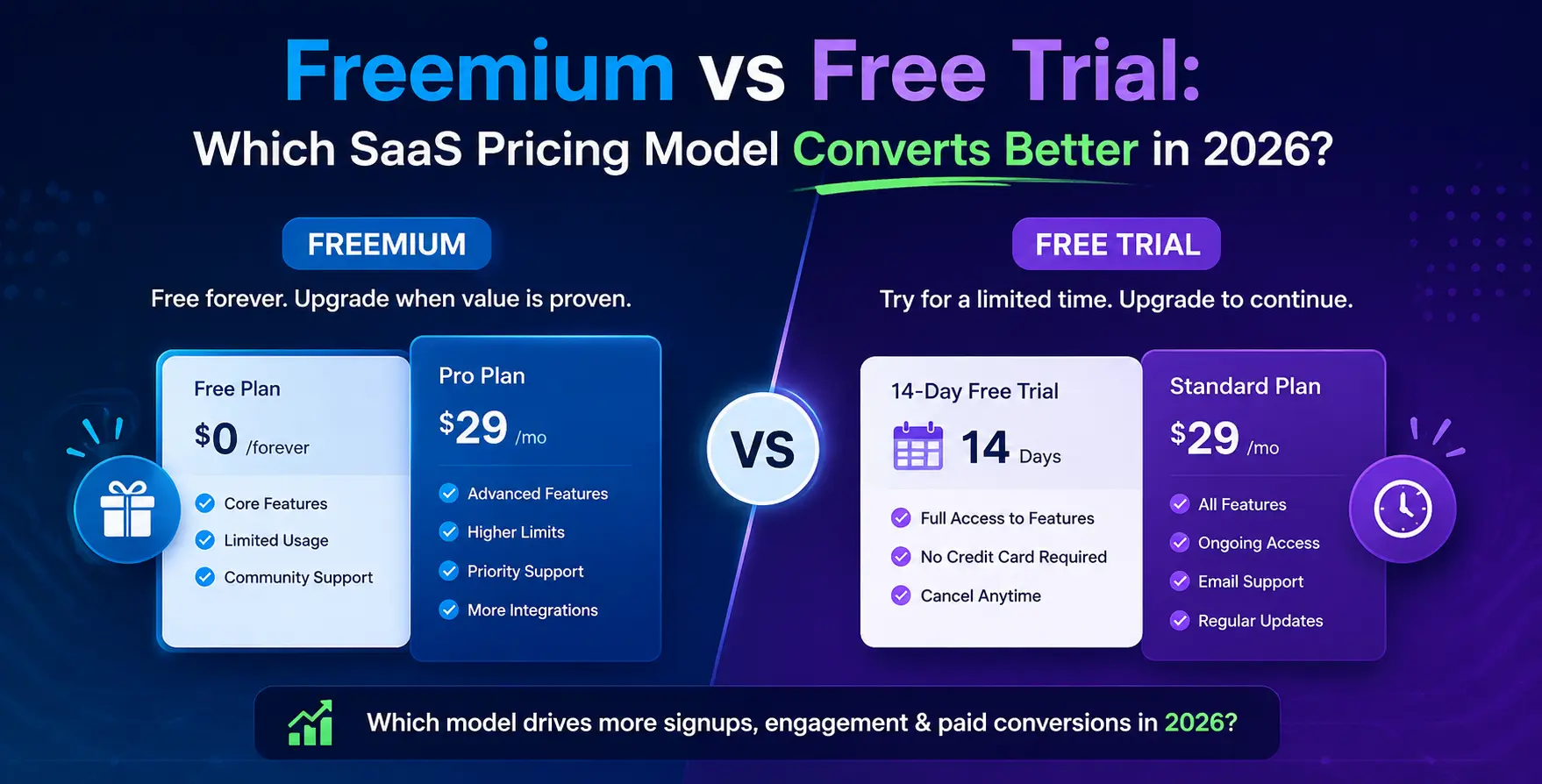
The freemium model offers a core set of software features to users indefinitely without charging a recurring fee. Upgrades are required to unlock advanced functionality, higher operational usage limits, or enterprise security options.
This strategy relies on massive top-of-funnel traffic volume to generate paid conversions over extended evaluation periods. Because non-paying users consume server infrastructure indefinitely, engineering efficiency is critical to maintain healthy gross margins.
Understanding the Free Trial Model
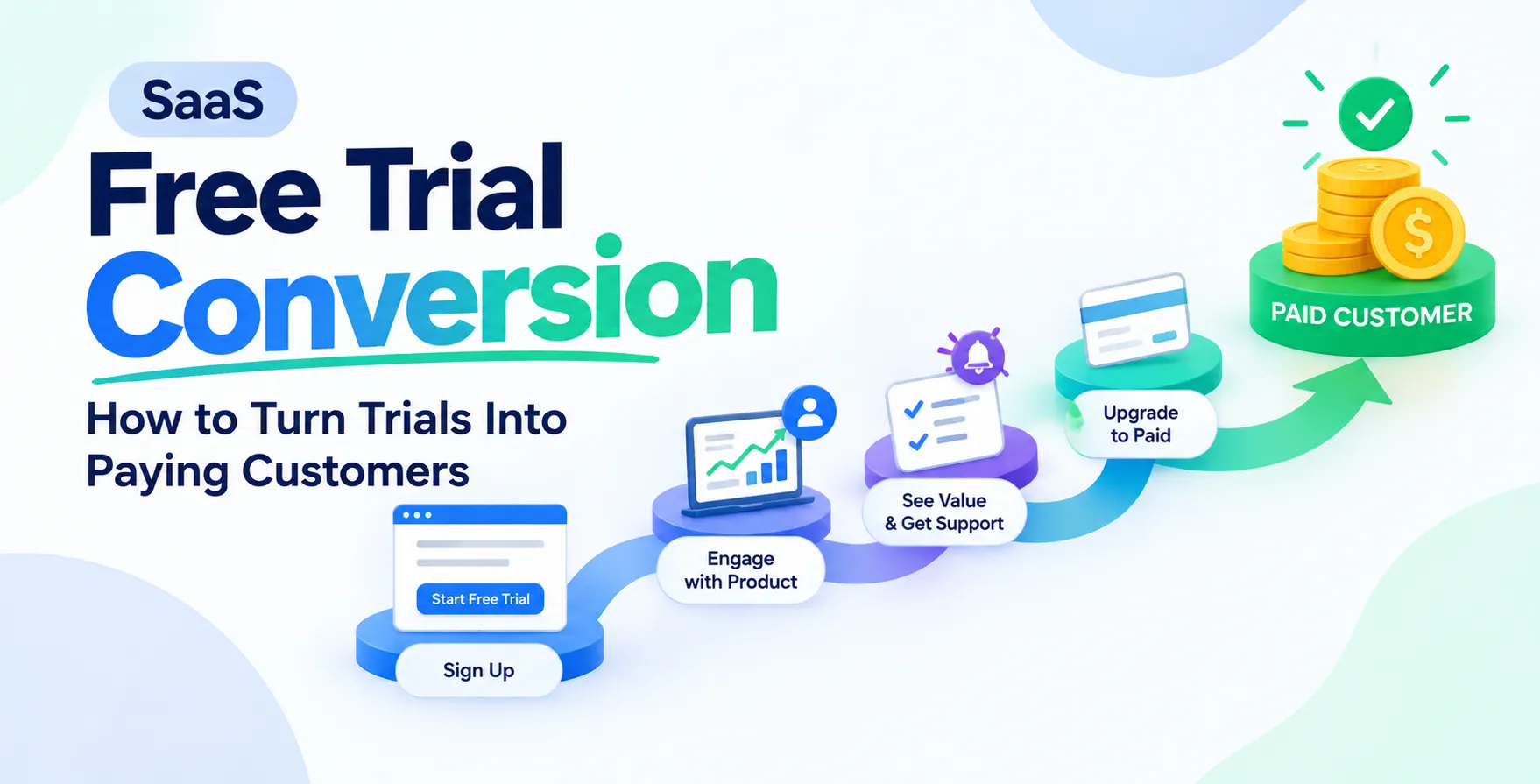
A free trial gives users complete access to software capabilities for a limited time window, typically seven to fourteen days. Once the trial expires, system access is revoked unless the user enters a valid payment method.
Time-bound access creates immediate buying urgency for prospective enterprise customers and power users.
- Time limited full feature access
- Direct push toward purchase decision
This model filters out low-intent leads early in the customer evaluation lifecycle.
Key Differences: Freemium vs Free Trial
Direct comparison helps clarify which approach fits your go-to-market trade-offs and technical capabilities.
| Evaluation Dimension |
Freemium Pricing Model |
Free Trial Model |
| Access Duration |
Unlimited time limit |
Strict time window limit |
| Feature Scope |
Restricted core feature set |
Complete platform feature access |
| Conversion Timeline |
Months to years per account |
Seven to thirty days maximum |
| Primary Funnel Goal |
Viral user acquisition volume |
Immediate paid revenue conversion |
| Customer Support Burden |
High free ticket volume |
Focused qualified sales leads |
| Marginal Hosting Cost |
Higher long-term compute overhead |
Lower short-term evaluation cost |
Evaluating these structural tradeoffs prevents unexpected operational overhead during rapid platform scaling.
Evaluating Conversion Metrics in 2026
Conversion benchmark expectations have shifted significantly across B2B software markets. Building an effective SaaS pricing strategy 2026 requires tracking active product usage rather than simple signup tallies.
Product-led telemetry provides clear indicators of user engagement prior to paywall encounters. Engineering teams that track activation milestones predict recurring revenue outcomes far more accurately.
Essential conversion metrics include several key platform health indicators.
- Signup to activated user rate
- Free user retention after thirty days
- Paywall impression and encounter frequency
- Account upgrade conversion speed
- Average revenue per active unit
Continuous telemetry monitoring helps product teams identify friction points in the user journey.
When to Choose Freemium
Choosing a permanent free tier makes strategic sense when product dynamics naturally drive viral expansion across teams.
High Product Virality
Products that naturally spread through user collaboration benefit heavily from permanent free access. When existing users invite colleagues into workspace boards, customer acquisition costs drop dramatically.
- Built-in multi-user collaboration tools
- Public content sharing features enabled
- Strong organic word of mouth
Viral mechanics offset the ongoing expense of hosting non-paying user accounts indefinitely.
Low Marginal Cost
Software architectures with minimal storage and compute costs per account suit permanent free tiers. Infrastructure overhead per non-paying user must remain virtually negligible.
- Static asset hosting setups
- Efficient client-side compute logic
- Optimized database query structures
- Automated self-service support paths
Keeping hosting costs low preserves overall company margins during user base expansion.
When to Choose Free Trial
Time-limited trials work best for complex software products targeting mid-market or enterprise buyers. These buyers evaluate solutions with time-limited evaluation cycles, dedicated budgets, and immediate implementation schedules.
High operational costs per account, such as intensive API calls or dedicated database instances, make permanent free options financially unviable. Enforcing a strict trial deadline forces buying committees to complete evaluation activities efficiently.
The Reverse Trial Strategy
The reverse trial model combines elements of both traditional pricing approaches to maximize funnel conversions. Users start with full premium feature access for a limited time before defaulting to a permanent free tier if they do not convert.
This hybrid strategy lets users experience complete platform value upfront without requiring initial credit card entry.
Implementing a reverse trial offers specific tactical advantages for growing software teams.
- Eliminates upfront payment friction completely
- Showcases premium features from day one
- Creates feature loss awareness upon expiration
- Retains non-converting users in free tier
- Maintains long-term user database engagement
- Smooths pathway for future account upgrades
Product analytics guide automated feature gating decisions after the initial trial period expires.
Impact on User Acquisition Costs
Customer acquisition spend directly dictates startup cash runways and financial payback windows. Freemium models generate substantial top-of-funnel volume organically but require continuous capital to support payback period sustainability.
Free trial motions spend more on targeted paid acquisition but achieve faster cash flow recovery. Balancing user acquisition spend against operational server costs determines long-term company health.
Key acquisition cost dynamics include several critical operational variables.
- Paid campaign cost efficiency
- Organic search referral volumes
- Infrastructure cost per free active account
- Sales rep trial engagement expenses
Engineering Considerations for Product Limits
Implementing robust feature gating requires clean architectural separation between billing engines and core product functionality. Codebases should utilize dynamic feature flags rather than hardcoded conditional statements scattered across application logic.
Rate limiting, multi-tenant data isolation, and usage tracking services must execute reliably under heavy loads. Real-time event pipelines track customer usage thresholds to trigger automated paywalls accurately.
Optimizing Onboarding for Retention
High user activation rates drive sustainable revenue growth across both pricing strategies. Engineering and product managers frequently analyze how to increase SaaS conversions without rebuilding core infrastructure.
Streamlining initial user onboarding to deliver immediate value builds daily user habits quickly. Guiding users to their primary activation event minimizes early drop-off rates.
Proven onboarding optimization techniques include several key product interventions.
- Interactive product walkthrough checklists
- Contextual in-app feature highlights
- Automated milestone email sequences
Selecting the Best SaaS Pricing Model
Identifying the best SaaS pricing model depends on your target customer profile, sales cycle length, and infrastructure economics. No single pricing strategy guarantees conversion success without cross-functional alignment between engineering and growth teams.
Testing pricing structures iteratively through cohort analysis exposes clear user preferences over time. Modern cloud architectures support flexible feature toggling to accelerate go-to-market experiments safely.
Decision criteria for final model selection include critical platform checkpoints.
- Total addressable market size evaluation
- Customer time to value willingness
- Cloud infrastructure cost per user account
- Internal sales team capacity constraints
- Competitor pricing and positioning structures
Regular pricing audits keep acquisition channels aligned with long-term financial targets.
Conclusion
Choosing between freemium and free trial models is an evolving technical and commercial strategy. Aligning engineering implementation with product-led growth metrics establishes a strong foundation for sustainable expansion in 2026.
By prioritizing rapid time to value, infrastructure efficiency, and friction-free onboarding, software teams can maximize revenue conversion under either framework.


 In collaboration with