Table of Contents
- Introduction to Docker and Virtual Machines
- What are Docker Containers?
- What are Virtual Machines?
- Docker vs Virtual Machines: Key Differences
- Benefits of Using Docker Containers
- Benefits of Using Virtual Machines
- Challenges of Docker Containers vs Virtual Machines
- Real-Life Examples of Docker and Virtual Machines
- How to Choose Between Docker and Virtual Machines
- Best Practices for Implementing Docker or Virtual Machines
- Future of Docker and Virtual Machines in Software Development
- Conclusion
Introduction to Docker and Virtual Machines
Software development teams face numerous challenges in managing and deploying applications efficiently.
Docker and Virtual Machines are two popular solutions that help teams streamline their development processes.
Understanding the differences between Docker vs Virtual Machines is crucial for making informed decisions.
What are Docker Containers?
Docker containers are lightweight and portable, allowing for easy deployment of applications.
They provide a consistent and reliable way to deploy software, reducing the complexity of managing dependencies.
- Lightweight and portable
- Easy deployment of applications
- Consistent and reliable software deployment
What are Virtual Machines?
Virtual Machines (VMs) are software emulations of physical machines, providing a complete operating system environment.
VMs offer a high level of isolation and security, making them suitable for applications that require strict resource control.
- Software emulations of physical machines
- Complete operating system environment
- High level of isolation and security
Docker vs Virtual Machines: Key Differences
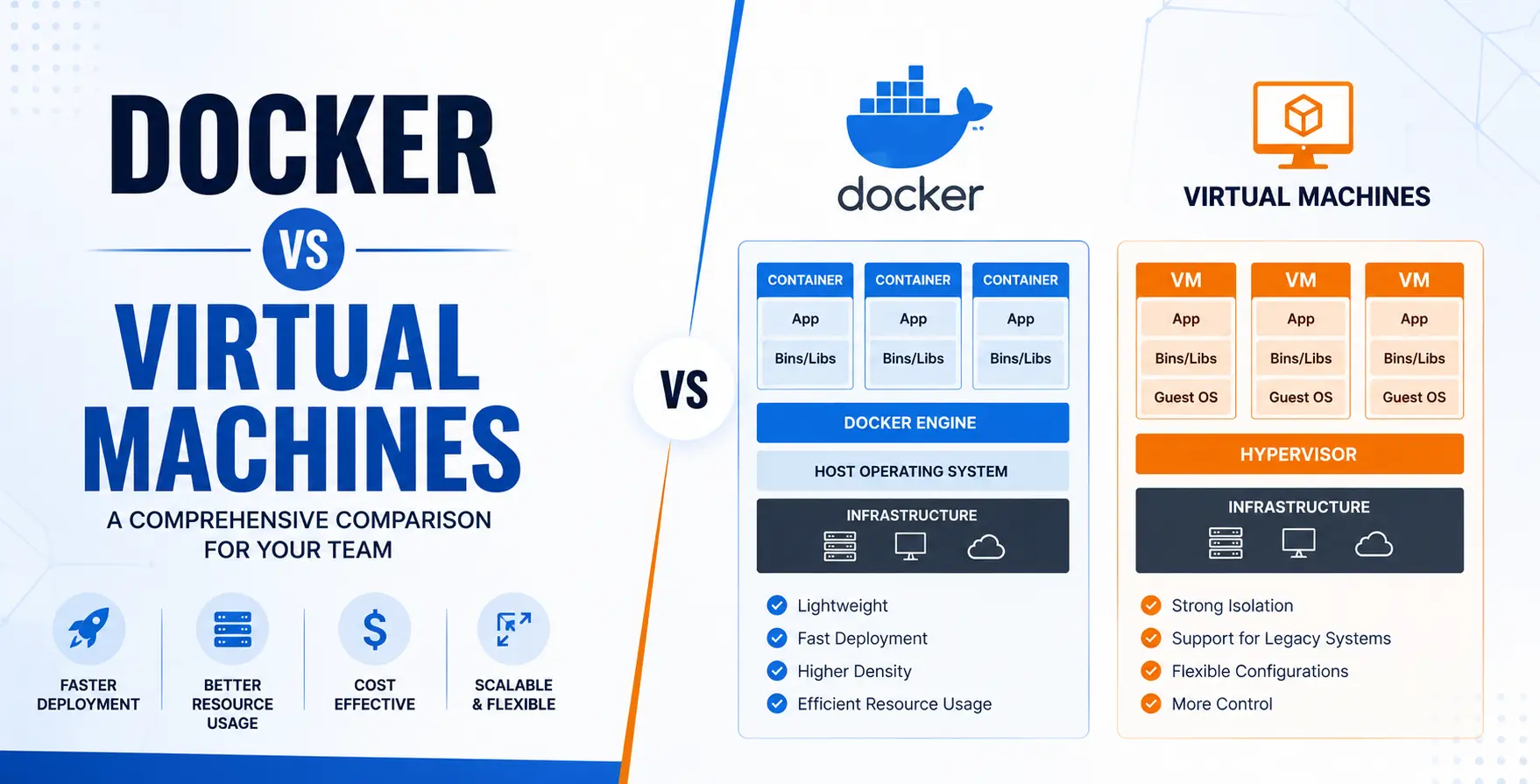
The Docker vs Virtual Machine debate centers around their distinct approaches to application deployment and management.
Docker containers are ideal for applications that require rapid deployment and scaling, while Virtual Machines are better suited for applications that demand strict resource control and isolation.
| Docker Containers |
Virtual Machines |
| Lightweight and portable |
Resource-intensive and complex |
| Easy deployment and scaling |
High level of isolation and security |
| Shared kernel and operating system |
Complete operating system environment |
Benefits of Using Docker Containers
Docker containers offer numerous benefits, including rapid deployment, efficient resource utilization, and simplified application management.
- Rapid deployment and scaling
- Efficient resource utilization
- Simplified application management
- Consistent and reliable software deployment
- Easy integration with DevOps tools
Benefits of Using Virtual Machines
Virtual Machines provide a high level of isolation and security, making them suitable for applications that require strict resource control and separation.
- High level of isolation and security
- Strict resource control and separation
- Complete operating system environment
- Suitable for legacy applications
Challenges of Docker Containers vs Virtual Machines
Both Docker containers and Virtual Machines pose unique challenges, including complexity, resource requirements, and compatibility issues.
- Complexity and steep learning curve
- Resource requirements and performance overhead
- Compatibility issues with certain applications
- Security concerns and vulnerability management
Real-Life Examples of Docker and Virtual Machines
Many organizations have successfully implemented Docker containers and Virtual Machines to improve their software development and deployment processes.
For example, companies like Netflix and Amazon use Docker containers to deploy and manage their applications, while others like VMware and Microsoft rely on Virtual Machines for their infrastructure needs.
How to Choose Between Docker and Virtual Machines
When deciding between Docker and Virtual Machines, consider factors such as application requirements, deployment complexity, and resource utilization.
- Assess application requirements and complexity
- Evaluate deployment and scaling needs
- Consider resource utilization and performance requirements
- Choose the best approach based on specific use cases
Best Practices for Implementing Docker or Virtual Machines
Implementing Docker or Virtual Machines requires careful planning, execution, and maintenance to ensure optimal performance and efficiency.
- Start with a clear understanding of the chosen technology
- Develop a comprehensive implementation plan
- Monitor and optimize performance regularly
- Ensure security and vulnerability management
- Continuously evaluate and improve the implementation
Conclusion
The Docker vs Virtual Machine debate is complex, and the choice between the two ultimately depends on specific use cases and requirements.
By understanding the benefits and challenges of each, software development teams can make informed decisions to improve their application deployment and management processes.
Whether using Docker containers or Virtual Machines, the key to success lies in careful planning, execution, and maintenance.


 In collaboration with