Table of Contents
- Introduction to Server-Side Rendering
- What is Server-Side Rendering?
- Benefits of Server-Side Rendering
- Challenges of Server-Side Rendering
- SSR vs CSR: Which is Better?
- How Server-Side Rendering Impacts SEO
- SEO Friendly Web Development with SSR
- Website Performance Optimization with SSR
- Best Practices for Implementing Server-Side Rendering
- Common Mistakes to Avoid in SSR Implementation
- Future of Server-Side Rendering
- Conclusion
- Final Thoughts on Server-Side Rendering
Introduction to Server-Side Rendering
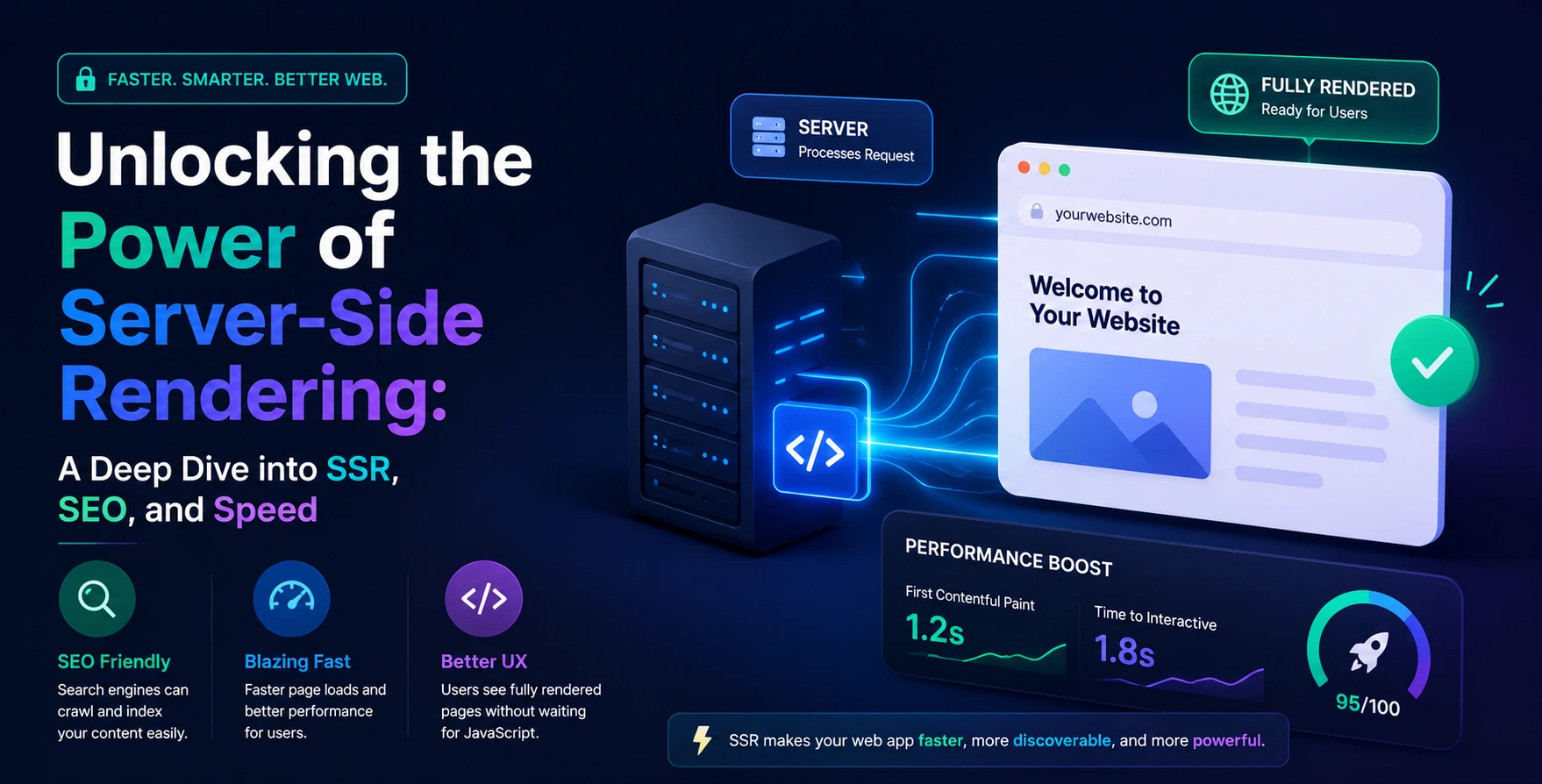
Server-side rendering is a technique used in web development to improve the performance and SEO of a website.
It involves rendering the website's content on the server before sending it to the client's browser.
This approach has several benefits, including improved page loading speed and better search engine ranking.
What is Server-Side Rendering?
Server-side rendering is a process where the server generates the HTML of a web page on each request.
This approach is different from client-side rendering, where the browser generates the HTML.
Server-side rendering provides better control over the HTML and can improve the website's performance and SEO.
- Improved page loading speed
- Better search engine ranking
- Improved user experience
Benefits of Server-Side Rendering
Server-side rendering has several benefits, including improved page loading speed and better search engine ranking.
It also provides better control over the HTML and can improve the website's performance and SEO.
Additionally, server-side rendering can improve the user experience by providing a faster and more responsive website.
- Improved website performance
- Better search engine ranking
- Improved user experience
- Better control over HTML
Challenges of Server-Side Rendering
Server-side rendering also has some challenges, including increased server load and complexity.
It requires more resources and can be more difficult to implement and maintain.
However, the benefits of server-side rendering can outweigh the challenges.
- Increased server load
- Complexity
- Higher resource requirements
SSR vs CSR: Which is Better?
Server-side rendering and client-side rendering are two different approaches to rendering a website.
Server-side rendering is better for SEO and performance, while client-side rendering is better for dynamic and interactive websites.
The choice between SSR and CSR depends on the specific needs and requirements of the website.
- Server-side rendering is better for SEO
- Client-side rendering is better for dynamic websites
- Server-side rendering is better for performance
- Client-side rendering is better for interactive websites
- Server-side rendering is more complex
How Server-Side Rendering Impacts SEO
Server-side rendering can improve a website's SEO by providing better control over the HTML and improving the page loading speed.
It can also improve the website's search engine ranking by providing a faster and more responsive website.
However, server-side rendering requires careful planning and implementation to ensure that it does not negatively impact the website's SEO.
- Improved search engine ranking
- Better control over HTML
- Improved page loading speed
SEO Friendly Web Development with SSR
Server-side rendering can be used to improve the SEO of a website by providing better control over the HTML and improving the page loading speed.
It can also improve the website's search engine ranking by providing a faster and more responsive website.
However, server-side rendering requires careful planning and implementation to ensure that it does not negatively impact the website's SEO.
Website Performance Optimization with SSR
Server-side rendering can be used to improve the performance of a website by reducing the amount of data that needs to be transferred between the server and the client.
It can also improve the website's loading speed by providing a faster and more responsive website.
However, server-side rendering requires careful planning and implementation to ensure that it does not negatively impact the website's performance.
Best Practices for Implementing Server-Side Rendering
There are several best practices for implementing server-side rendering, including using a framework or library, optimizing the server-side code, and using caching.
It is also important to carefully plan and implement the server-side rendering to ensure that it does not negatively impact the website's SEO or performance.
Additionally, it is important to test and monitor the website's performance and SEO after implementing server-side rendering.
- Use a framework or library
- Optimize the server-side code
- Use caching
- Carefully plan and implement the server-side rendering
- Test and monitor the website's performance and SEO
Common Mistakes to Avoid in SSR Implementation
There are several common mistakes to avoid when implementing server-side rendering, including not optimizing the server-side code, not using caching, and not carefully planning and implementing the server-side rendering.
It is also important to avoid overloading the server with too many requests and to ensure that the website's performance and SEO are not negatively impacted.
Additionally, it is important to test and monitor the website's performance and SEO after implementing server-side rendering.
- Not optimizing the server-side code
- Not using caching
- Not carefully planning and implementing the server-side rendering
- Overloading the server with too many requests
Conclusion
Server-side rendering is a powerful technique for improving the performance and SEO of a website.
It provides better control over the HTML and can improve the website's search engine ranking and loading speed.
However, server-side rendering requires careful planning and implementation to ensure that it does not negatively impact the website's SEO or performance.


 In collaboration with