Table of Contents
- Introduction
- The Evolution of Client-Side Web Apps
- Trend 1: Server-Driven UI and Zero-Bundle Components
- Trend 2: AI-Assisted Real-Time Code Generation
- Trend 3: WebAssembly and Edge-Native Frontend Runtimes
- Trend 4: Micro-Frontends with Module Federation 2.0
- Trend 5: Native Spatial UI and WebXR Support
- Trend 6: Signal-Based State Management Dominance
- Trend 7: Hardened Web Security and Automated CSP
- Modern Frontend Frameworks Comparison
- Key Technical Challenges for Engineering Teams
- Preparing Your Stack for the Future
- Conclusion
Introduction
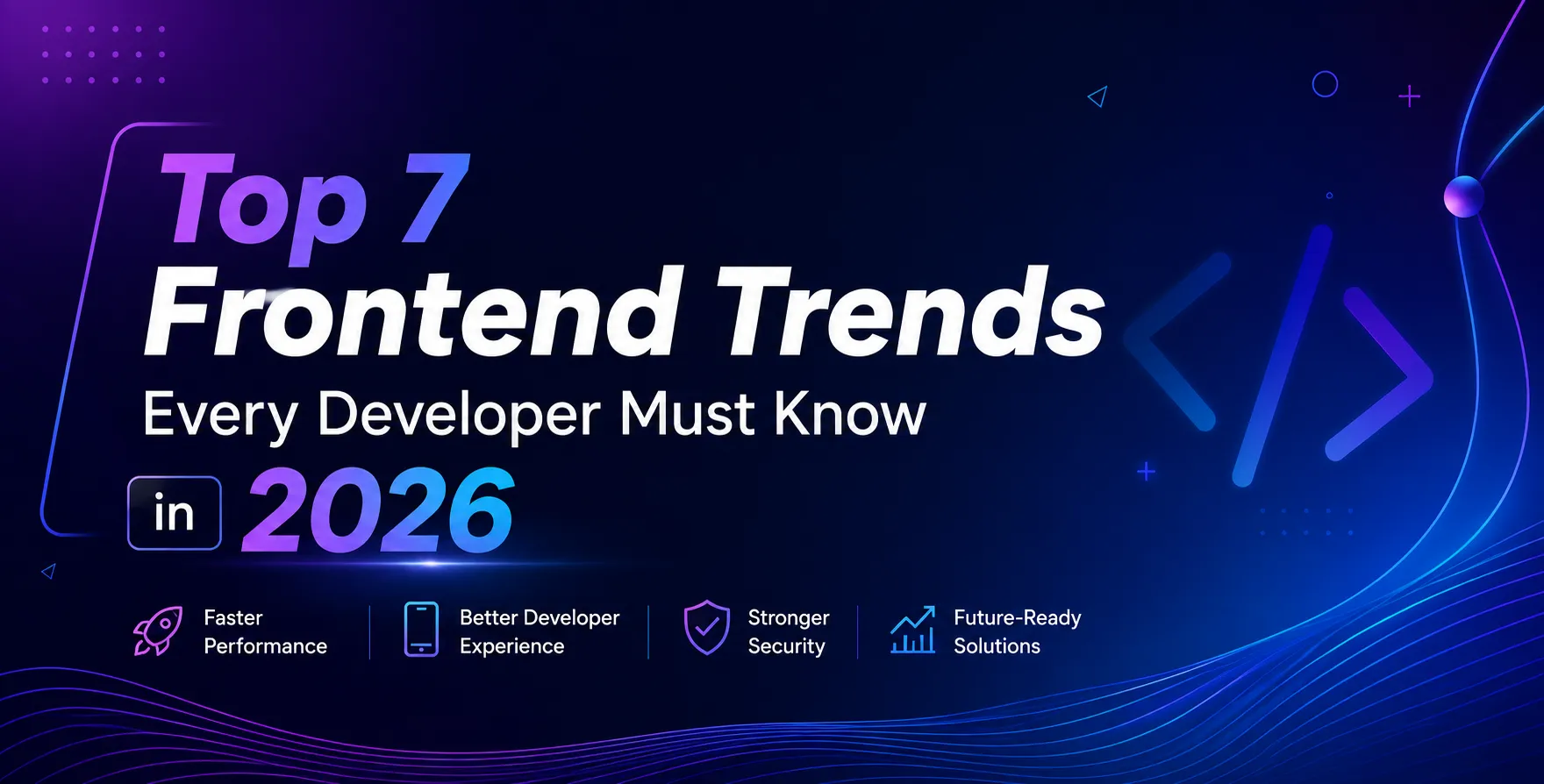
The web development landscape moves at a rapid pace every single year. Engineering teams must continuously adapt to maintain high performance and clean architecture.
Understanding key frontend development trends 2026 helps software architects build scalable web applications. Staying updated ensures your engineering stack remains highly competitive and easy to maintain.
These technology shifts change how senior engineers build user interfaces and manage complex state.
- Accelerates initial page load speeds
- Improves real-time engineering team productivity
Let's examine the primary technological shifts reshaping modern frontend engineering today.
The Evolution of Client-Side Web Apps
Web application architecture has shifted away from heavy single-page applications toward modern hybrid delivery models. Early client-rendered apps suffered from bloated JavaScript bundles and delayed initial content renders.
Modern engineering patterns push heavy computation to edge networks while drastically minimizing client work. Today's software industry prioritizes instant interaction without sacrificing enterprise features.
As a result, understanding the future of frontend development requires mastering dynamic edge-rendering patterns.
Trend 1: Server-Driven UI and Zero-Bundle Components
Server-driven rendering has evolved far beyond traditional server-side web pages. Modern architectures execute layout logic on isolated edge nodes before shipping raw HTML to browsers.
This pattern eliminates massive client JavaScript dependencies while preserving dynamic client interactivity. Developers write component trees that evaluate automatically based on real-time user permissions and location.
- Eliminates unnecessary client bundle overhead
- Streams rendered HTML fragments from edge networks
- Reduces mobile client browser execution work
- Enhances first contentful paint loading scores
- Simplifies complex backend system integrations
Adopting zero-bundle components transforms web application responsiveness across low-power mobile hardware.
Trend 2: AI-Assisted Real-Time Code Generation
Artificial intelligence tools are no longer limited to simple inline code completions. Enterprise IDE integrations generate entire accessible UI components directly from design system tokens.
Development teams leverage automated UI generation to bypass repetitive layout setup. Frontend engineers can focus on complex state synchronization, data security, and core business rules.
This streamlined workflow significantly reduces sprint shipping cycles for complex administrative dashboards.
Trend 3: WebAssembly and Edge-Native Frontend Runtimes
Heavy computational workloads are transitioning into compiled WebAssembly modules running inside browser threads. Modern applications process high-definition video, render complex geometry, and execute encryption client-side.
By utilizing the latest frontend technologies, browser applications achieve near-native desktop performance levels.
- Executes C++ and Rust code inside browser engines
- Delivers consistent sixty frames per second user interfaces
- Offloads complex data calculations from application servers
- Enables offline-first web application software capabilities
WebAssembly unlocks advanced browser capability targets that were previously impossible with plain JavaScript.
Trend 4: Micro-Frontends with Module Federation 2.0
Enterprise platforms require separate engineering teams to deploy application features fully autonomously. Module Federation 2.0 standardizes how isolated codebases share dependencies and runtime memory safely.
Independent Deployment Pipelines
Autonomous feature teams ship client updates without re-compiling the core application wrapper.
- Decouples enterprise continuous integration build triggers
- Isolates runtime script deployment failure risks
This strict separation allows software organizations to scale developer bandwidth smoothly across regions.
Shared Runtime Dependencies
Runtime sharing prevents loading redundant framework packages across separate federated feature modules.
- Deduplicates shared runtime component library files
- Enforces strict runtime semantic version validation
- Reduces cross-module dynamic asset network transfers
Smart dependency federation preserves application loading speed across complex distributed web apps.
Trend 5: Native Spatial UI and WebXR Support
Spatial computing platforms require web engineers to design layouts for three-dimensional environments. Modern browser engines provide native canvas primitives for rendering interactive spatial application windows.
Developers adapt traditional flat layouts into responsive volumetric components that float in physical space. WebXR specifications allow single-codebase web applications to render seamlessly across desktop screens and immersive hardware.
Building spatial web interfaces requires mastering new user input patterns and modern WebGL pipelines.
Trend 6: Signal-Based State Management Dominance
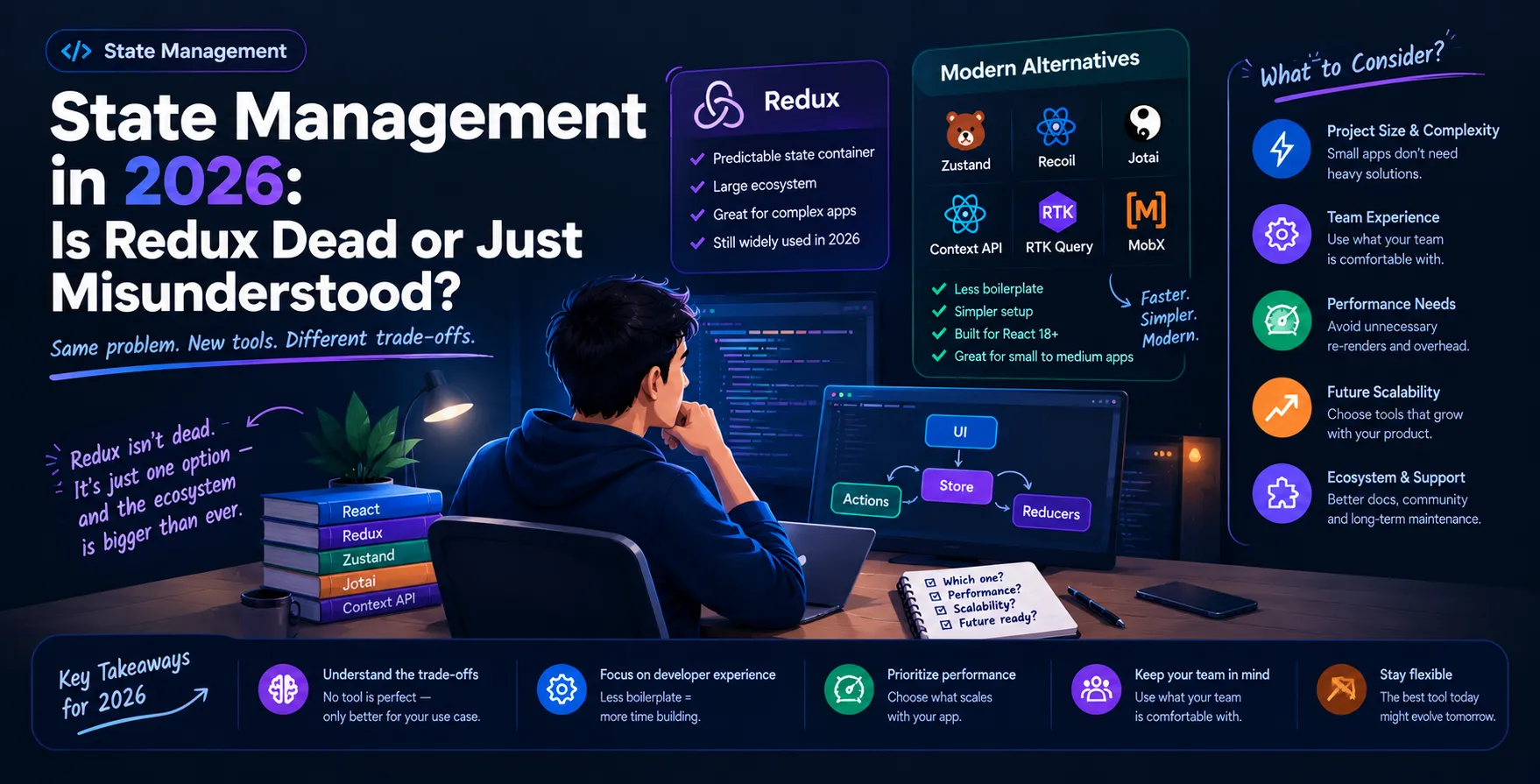
Fine-grained reactivity models have largely replaced heavy top-down component re-rendering cycles. Signals track granular state dependencies automatically without complex global store boilerplate.
When evaluating modern frontend frameworks, fine-grained signals stand out as the unified standard for state tracking.
- Updates precise DOM nodes directly without full re-renders
- Bypasses expensive virtual DOM diffing algorithm steps
- Eliminates prop drilling across complex component trees
- Simplifies asynchronous data dependency tracking logic
- Reduces client browser memory usage during updates
- Improves execution speed inside massive data grid tables
Signal patterns offer predictable execution and vastly improved browser render performance for web apps.
Trend 7: Hardened Web Security and Automated CSP
Browser security requirements are stricter than ever due to sophisticated supply chain vulnerability risks. Web applications require automated Content Security Policies and real-time script integrity verification.
Modern frontend build tooling embeds cryptographic nonces directly into static rendering pipelines seamlessly.
- Blocks unauthorized third-party script execution paths
- Enforces strict cross-origin isolation headers everywhere
- Prevents cross-site scripting attack vectors automatically
- Secures sensitive local browser data storage mechanisms
Modern Frontend Frameworks Comparison
Selecting the right application architecture directly impacts system performance, long-term maintainability, and team velocity.
| Framework Paradigm |
Primary Rendering Mechanism |
Best Enterprise Use Case |
| Server-Centric Hybrid |
Edge Server HTML Streaming |
Content-heavy enterprise portals |
| Signal-Driven Reactive |
Fine-Grained Direct DOM Updates |
Real-time collaborative application apps |
| Compile-Time Native |
Zero-Framework Compiled JavaScript |
High-performance embedded widgets |
| WebAssembly Hybrid |
Compiled Binary In-Browser Execution |
Complex web media editing platforms |
| Web Component Standard |
Native Browser Shadow DOM |
Cross-framework design systems |
Evaluating these structural tradeoffs ensures your architecture aligns perfectly with long-term engineering targets.
Key Technical Challenges for Engineering Teams
Migrating legacy frontend architectures to modern standards presents notable engineering and team obstacles. Engineering leaders must balance rapid shipping speed with strict client performance budgets.
- Managing micro-frontend dependency version drift
- Reducing client application bundle hydration delays
- Enforcing strict web application security headers
- Training development teams on fine-grained signal patterns
- Optimizing WebAssembly binary loading strategies
Proactively addressing these engineering challenges prevents long-term technical debt from accumulating over time.
Preparing Your Stack for the Future
Upgrading your application architecture requires continuous incremental modernizations rather than total system rewrites. Senior developers must analyze operational bottlenecks and adopt web platform standards systematically.
Focusing on native browser capabilities guarantees durable maintainability across shifting developer ecosystems.
- Adopt fine-grained reactive state patterns early
- Automate edge delivery script optimization tools
Building modular and resilient web software positions your team for sustained long-term engineering success.
Conclusion
Staying ahead in web development requires embracing modern edge execution, fine-grained reactivity, and hardened web security. Implementing these core concepts enables engineering teams to build fast, reliable, and maintainable applications.
By systematically modernizing your technical stack, your developer team can deliver superior web experiences that scale effortlessly into the future.


 In collaboration with