Table of Contents
- Introduction to Prompt Engineering
- What is Prompt Engineering?
- Real-Life Examples of Prompt Engineering
- How Prompt Engineering Works
- Why Prompt Engineering is Important
- What are Effective AI Prompts?
- What are Common Mistakes in Prompt Engineering?
- Types of Prompt Engineering
- Prompt Engineering for ChatGPT
- Basic Prompt Engineering Tips for Beginners
- Advanced Prompt Engineering Techniques
- Conclusion
Introduction to Prompt Engineering
Prompt engineering is a crucial aspect of getting the most out of AI models like ChatGPT.
It involves crafting the right input to get the desired output. This is not as simple as it sounds.
Good prompt engineering requires understanding how AI models work and what they can do.
- Improves AI model performance
- Enhances output quality
- Saves time and effort
What is Prompt Engineering?
Prompt engineering is the process of designing and optimizing the input prompts for AI models.
This includes understanding the model's capabilities, limitations, and biases. It also involves testing and refining the prompts.
The goal is to get the best possible output from the model.
- Understanding AI model capabilities
- Designing effective prompts
- Testing and refining prompts
Real-Life Examples of Prompt Engineering
Let's consider a simple example. You want to use ChatGPT to generate a story.
A poorly designed prompt might be "write a story." A better prompt would be "write a science fiction story about a character who discovers a new planet."
This prompt provides more context and guidance for the AI model.
- Provides context for the AI model
- Guides the output
- Improves output quality
How Prompt Engineering Works
Prompt engineering works by leveraging the strengths of AI models while minimizing their weaknesses.
This involves understanding how the model processes input and generates output. It also involves designing prompts that play to the model's strengths.
Effective prompt engineering can significantly improve the quality of the output.
- Understanding AI model strengths and weaknesses
- Designing prompts that leverage model strengths
- Minimizing model weaknesses
Why Prompt Engineering is Important
Prompt engineering is important because it can make or break the performance of an AI model.
A well-designed prompt can get the best out of the model, while a poorly designed prompt can result in subpar output.
Investing time and effort into prompt engineering can pay off in the long run.
- Improves AI model performance
- Enhances output quality
- Saves time and effort in the long run
What are Effective AI Prompts?
Effective AI prompts are those that are clear, concise, and well-designed.
They provide the right amount of context and guidance for the AI model. They also take into account the model's strengths and weaknesses.
Learning how to write AI prompts is a crucial skill for anyone working with AI models.
- Clear and concise language
- Well-designed structure
- Takes into account model strengths and weaknesses
What are Common Mistakes in Prompt Engineering?
Common mistakes in prompt engineering include using vague or ambiguous language, failing to provide context, and not testing and refining prompts.
These mistakes can result in subpar output and wasted time and effort.
Avoiding these mistakes is crucial for effective prompt engineering.
- Vague or ambiguous language
- Failure to provide context
- Not testing and refining prompts
Types of Prompt Engineering
There are several types of prompt engineering, including Zero-Shot Prompting, Few-Shot Prompting, and Chain-of-Thought Prompting.
Each type has its own strengths and weaknesses, and the right type to use depends on the specific use case and AI model.
Understanding the different types of prompt engineering is essential for effective prompt design.
- Zero-Shot Prompting: provides no examples
- Few-Shot Prompting: provides a few examples
- Chain-of-Thought Prompting: provides a series of examples
Prompt Engineering for ChatGPT
Prompt engineering for ChatGPT involves designing prompts that take into account the model's strengths and weaknesses.
This includes using clear and concise language, providing context, and testing and refining prompts.
Learning how to write effective prompts for ChatGPT is a valuable skill for anyone working with the model.
- Clear and concise language
- Provides context
- Tests and refines prompts
Basic Prompt Engineering Tips for Beginners
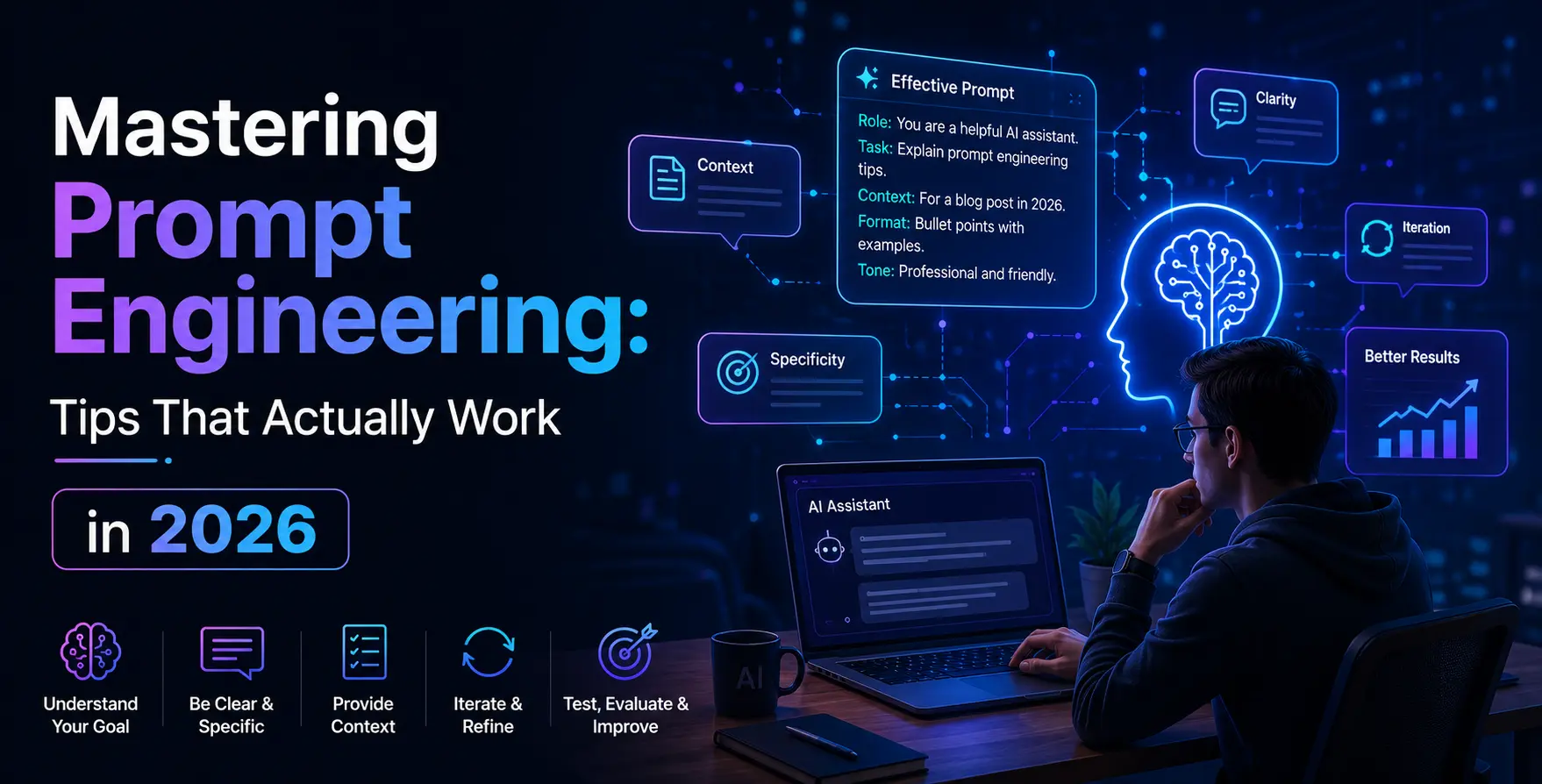
If you're new to prompt engineering, here are some basic tips to get you started. First, use clear and concise language in your prompts.
Second, provide context for the AI model. Third, test and refine your prompts to get the best results.
Following these tips can help you improve your prompt engineering skills and get the most out of your AI models.
- Use clear and concise language
- Provide context
- Test and refine prompts
- Keep prompts simple and focused
- Avoid ambiguity and jargon
Advanced Prompt Engineering Techniques
For more advanced prompt engineering techniques, consider using techniques like prompt chaining and prompt embedding.
These techniques can help you design more complex and effective prompts. However, they require a deeper understanding of the AI model and its capabilities.
Learning these techniques can take time and practice, but they can be powerful tools for prompt engineering.
- Prompt Chaining: chaining multiple prompts together
- Prompt Embedding: embedding prompts within each other
- Prompt Optimization: optimizing prompts for better performance
Conclusion
Prompt engineering is a crucial aspect of working with AI models like ChatGPT. By learning how to write effective prompts, you can get the most out of your models and achieve better results.
Remember to use clear and concise language, provide context, and test and refine your prompts. With practice and experience, you can become proficient in prompt engineering and unlock the full potential of your AI models.
Start with the basics and gradually move on to more advanced techniques. With time and effort, you can master the art of prompt engineering and achieve success with your AI projects.


 In collaboration with