Table of Contents
- Introduction
- What Is an AI-Powered Mobile App?
- Why Businesses Are Investing in AI Mobile App Development
- Key Technologies Behind AI-Powered Mobile Apps
- Planning Your AI App Development Project
- Step-by-Step Process to Build an AI-Powered Mobile App
- Designing an Effective User Experience
- Artificial Intelligence App Development Best Practices
- Common Challenges and Solutions
- Future Trends in AI-Powered Mobile Apps
- Conclusion
Introduction
Artificial intelligence is changing the way mobile applications operate and interact with users. From intelligent chatbots and recommendation engines to voice assistants and predictive analytics, AI technologies are helping businesses deliver smarter and more personalized experiences.
As customer expectations continue to evolve, organizations are increasingly investing in AI Mobile App Development to create applications that can learn from data, automate tasks, and improve decision-making processes.
Whether you are a startup founder, entrepreneur, or business leader, understanding the AI App Development process can help you build innovative solutions that stand out in a competitive market.
This guide explains everything you need to know about creating AI-Powered Mobile Apps, including planning, technology selection, development strategies, and implementation best practices.
- Improve customer engagement
- Deliver personalized experiences
- Automate repetitive tasks
- Increase operational efficiency
- Enhance business decision-making
What Is an AI-Powered Mobile App?
An AI-powered mobile app is a mobile application that uses artificial intelligence technologies to perform tasks that typically require human intelligence. These applications can analyze data, recognize patterns, understand natural language, and make intelligent recommendations.
Unlike traditional applications that follow predefined rules, AI-Powered Mobile Apps continuously improve by learning from user interactions and data.
Examples include virtual assistants, recommendation systems, fraud detection tools, healthcare applications, smart scheduling systems, and personalized shopping experiences.
| Traditional Mobile App |
AI-Powered Mobile App |
| Rule-based functionality |
Data-driven intelligence |
| Static user experience |
Personalized experiences |
| Limited automation |
Advanced automation |
| Fixed workflows |
Adaptive behavior |
Why Businesses Are Investing in AI Mobile App Development
Businesses across industries are adopting AI Mobile App Development because intelligent applications can provide significant competitive advantages. AI helps organizations improve customer experiences, reduce operational costs, and increase productivity.
Modern consumers expect applications to understand their preferences, anticipate their needs, and provide personalized recommendations. AI technologies make these capabilities possible.
- Enhanced customer satisfaction
- Improved personalization
- Increased efficiency
- Better business insights
- Scalable automation
As artificial intelligence becomes more accessible, AI Mobile App Development continues to be a strategic investment for businesses seeking long-term growth.
Key Technologies Behind AI-Powered Mobile Apps
Building intelligent mobile applications requires a combination of technologies that enable learning, automation, and decision-making capabilities.
The success of AI App Development often depends on selecting the right technologies based on project goals and user requirements.
| Technology |
Purpose |
| Machine Learning |
Pattern recognition and predictions |
| Natural Language Processing |
Understanding human language |
| Computer Vision |
Image and video analysis |
| Speech Recognition |
Voice-based interactions |
| Predictive Analytics |
Data-driven forecasting |
Planning Your AI App Development Project
Successful AI App Development begins with careful planning. Before writing code or selecting technologies, businesses should clearly define objectives, target audiences, and expected outcomes.
Start by identifying the problem your application will solve. The most successful AI projects focus on delivering measurable value to users rather than simply adding AI for marketing purposes.
During the planning phase, consider user needs, available data, development resources, and long-term scalability requirements.
- Define business goals
- Identify target users
- Evaluate data availability
- Select appropriate AI technologies
- Create a development roadmap
Step-by-Step Process to Build an AI-Powered Mobile App
Building successful AI-Powered Mobile Apps requires a structured development process that combines business strategy, design, development, testing, and deployment.
Following a systematic approach helps reduce risks and improves the likelihood of delivering a successful product.
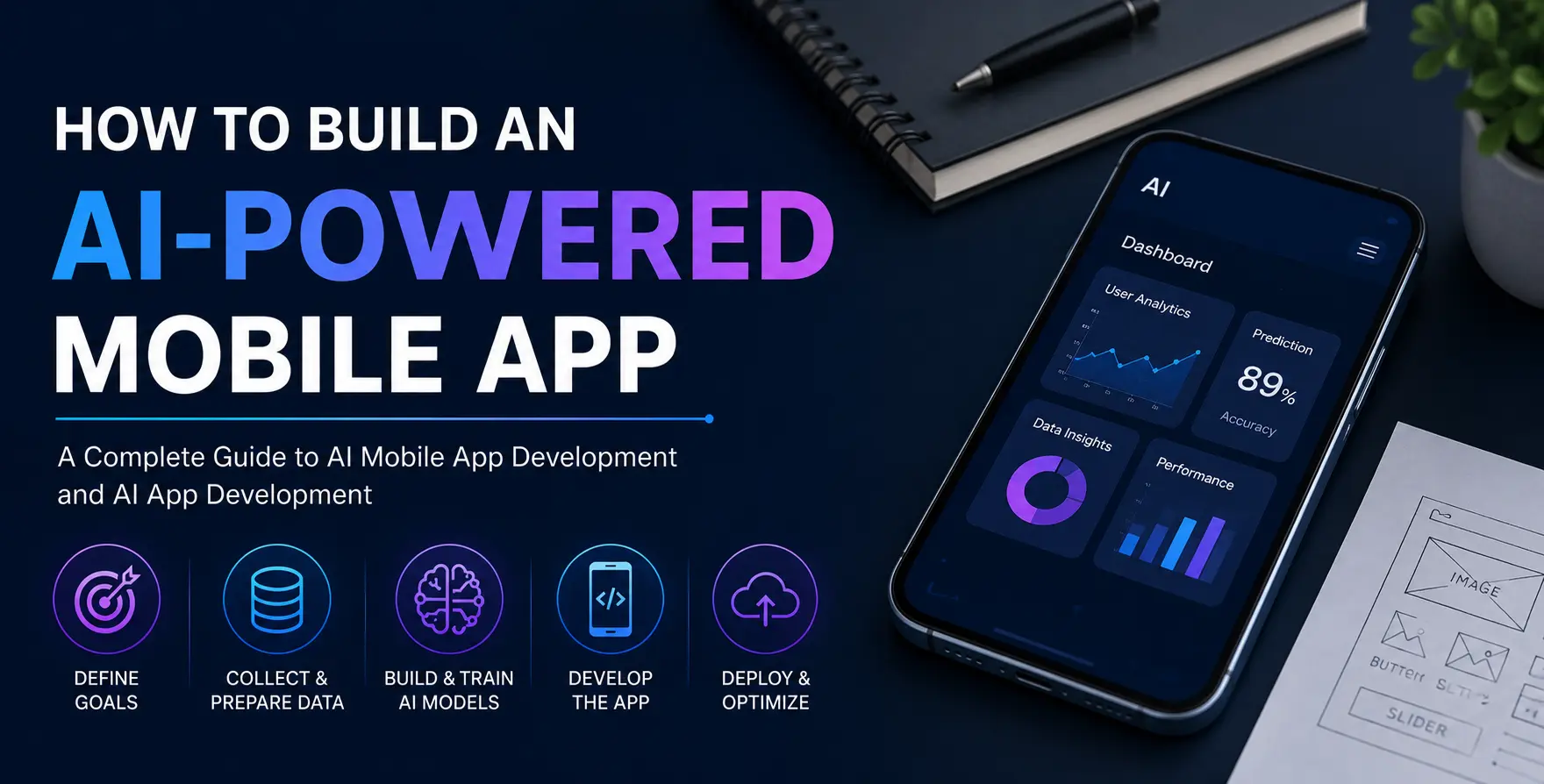
- Define the problem and objectives
- Gather and prepare data
- Select AI technologies and tools
- Design the application architecture
- Develop AI models and features
- Build the mobile application
- Test and optimize performance
- Deploy and monitor the solution
Each stage plays an important role in ensuring the success of Artificial Intelligence App Development projects.
Designing an Effective User Experience
While artificial intelligence can make applications smarter, user experience determines whether people will actually use and trust those features. A well-designed interface helps users understand how AI works and how it benefits them.
Successful AI-Powered Mobile Apps focus on simplicity, transparency, and usability. Users should feel confident when interacting with AI-driven functionality.
- Keep interfaces simple and intuitive
- Provide clear feedback to users
- Make AI recommendations understandable
- Allow users to maintain control
- Design for accessibility and inclusivity
A user-centered design approach helps improve engagement and increases the long-term success of AI-powered applications.
Artificial Intelligence App Development Best Practices
Organizations involved in Artificial Intelligence App Development should follow proven best practices to maximize performance, security, and user satisfaction.
| Best Practice |
Benefit |
| Use high-quality data |
Improves AI accuracy |
| Prioritize security |
Protects sensitive information |
| Test AI models regularly |
Maintains performance |
| Monitor user feedback |
Enhances user experience |
| Design for scalability |
Supports future growth |
Following these best practices helps businesses build reliable, scalable, and user-friendly AI solutions that deliver measurable value.
Common Challenges and Solutions
Although AI offers significant opportunities, organizations often encounter challenges during AI Mobile App Development. Understanding these obstacles can help teams prepare effective solutions.
| Challenge |
Solution |
| Limited training data |
Collect and clean quality datasets |
| High development complexity |
Start with focused AI features |
| User trust concerns |
Provide transparency and explanations |
| Performance issues |
Optimize models and infrastructure |
| Security risks |
Implement strong security measures |
Addressing these challenges early can reduce development risks and improve project outcomes.
Future Trends in AI-Powered Mobile Apps
The future of AI-Powered Mobile Apps looks promising as artificial intelligence technologies continue to evolve. Businesses are increasingly exploring new ways to deliver intelligent, personalized, and proactive experiences.
Several trends are expected to shape the future of AI App Development in the coming years.
- Advanced conversational AI assistants
- Hyper-personalized user experiences
- Real-time predictive analytics
- Voice-first mobile interactions
- Enhanced computer vision capabilities
- Improved on-device AI processing
Organizations that invest in innovation today will be better positioned to take advantage of these emerging opportunities.
Conclusion
Artificial intelligence is transforming mobile technology and creating new possibilities for businesses and users alike. From intelligent automation to personalized recommendations, AI-Powered Mobile Apps are redefining digital experiences.
Successful AI Mobile App Development requires careful planning, the right technology stack, high-quality data, and a strong focus on user experience. Businesses must also follow proven AI App Development strategies to ensure long-term success.
By following the steps and best practices discussed in this guide, organizations can approach Artificial Intelligence App Development with confidence and build innovative mobile applications that deliver real business value.


 In collaboration with