Table of Contents
- Introduction
- What is a PWA?
- What is a Native App?
- Key Differences Between PWAs and Native Apps
- Benefits of Progressive Web App Development
- Benefits of Custom Mobile App Development
- Performance and Speed Comparison
- User Experience and Engagement
- Strategic Feature Comparison
- Cost and Time to Market
- How to Choose for Your Business
- Real-World Use Cases
- Conclusion
Introduction
Choosing the right mobile strategy is critical for modern business growth. Companies must decide between universal web accessibility and platform performance. In 2026, technology choices directly impact user acquisition and budget allocation.
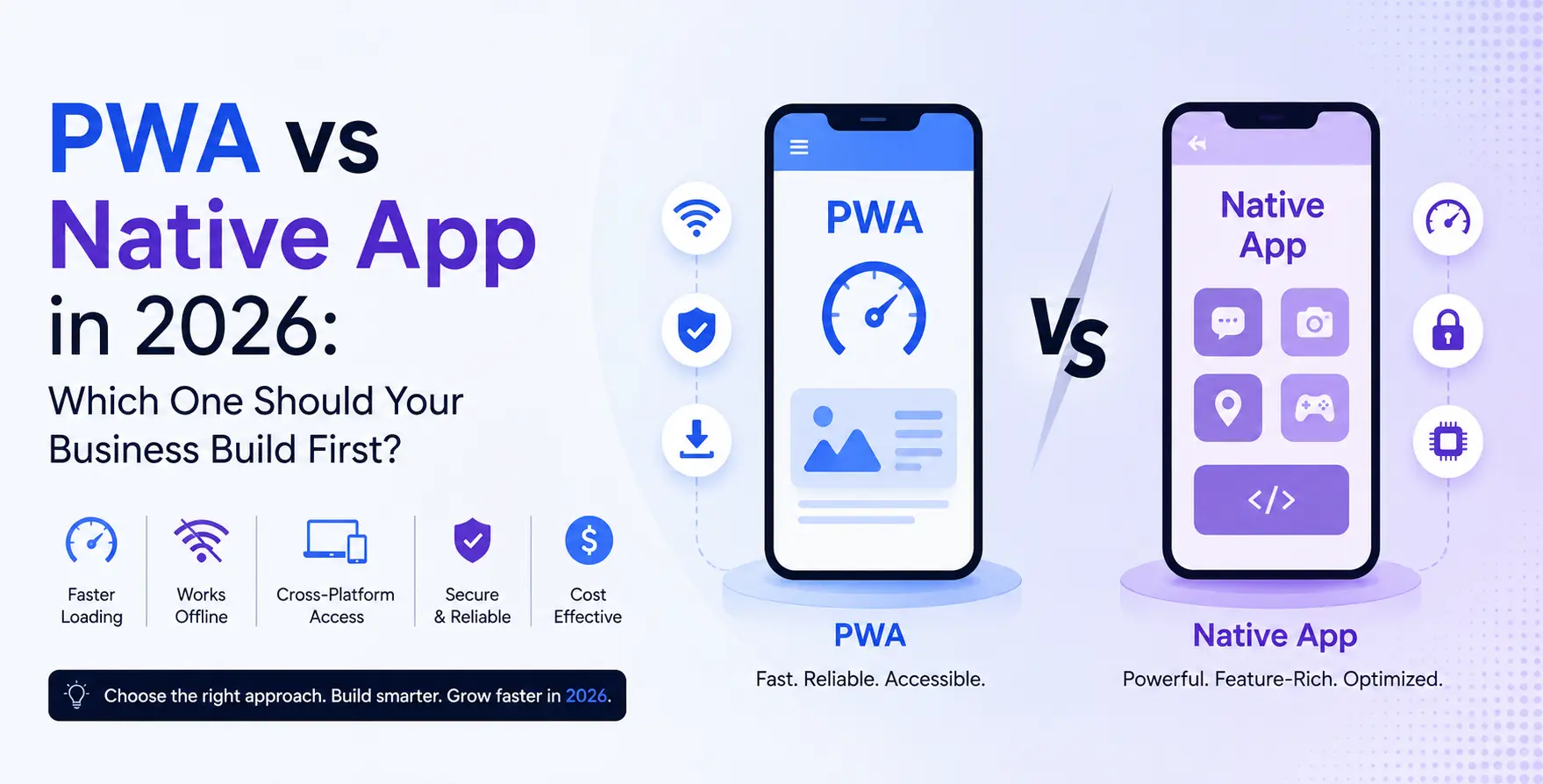
Understanding the debate around PWA vs Native App solutions helps executive teams make informed decisions. Both paths offer unique advantages depending on your target audience.
- Expands digital reach quickly
- Optimizes development resources
What is a PWA?
A progressive web app runs inside a browser while mimicking native application behavior. It uses modern web standards to deliver responsive experiences across devices. Users access features seamlessly without manual application store searches.
Users can install a web app on home screens without visiting traditional app stores. This eliminates installation friction and reduces user drop-off during onboarding. Conversion rates often improve due to instant load times.
Businesses leverage Progressive Web App Development to build single codebases that work everywhere. It combines search engine discoverability with app-like functionality across desktop and mobile browsers.
What is a Native App?
Native applications are built specifically for target operating systems like iOS or Android. Developers write separate codebases using language tools like Swift, Kotlin, or React Native. This grants direct access to underlying operating system interfaces.
Mobile operating systems optimize native code execution for high performance. Users enjoy fluid animations, immediate touch feedback, and deep system integrations.
- Direct access to hardware features
- High graphics performance for gaming
- Full support for store distribution
- Superior offline background sync
- Enhanced data security protocols
Key Differences Between PWAs and Native Apps
Evaluating technology options requires comparing fundamental capabilities and distribution models across platforms. Decisions hinge on performance requirements, hardware dependencies, and initial deployment budgets.
Understanding these technical distinctions prevents costly architectural changes later in your product roadmap.
| Feature |
PWA |
Native App |
| Distribution |
Web browser URL |
App Store / Google Play |
| Installation |
Instant home screen shortcut |
Store download required |
| Offline Access |
Cached web content |
Full offline capability |
| Device Hardware |
Limited API access |
Complete hardware integration |
| Development Cost |
Single web codebase |
Separate iOS/Android builds |
| Update Process |
Instant web deploy |
Store review approval |
Benefits of Progressive Web App Development
Web applications deliver immediate value to modern enterprises seeking rapid expansion. Lower initial investment and instant deployment cycles give companies a strong competitive edge in crowded markets.
Search engines index web app pages directly, driving organic traffic without paid advertising acquisition costs. Updates launch immediately across all user devices without waiting for store reviews.
- Lower total development costs
- Faster time to market
- Zero store commissions
- Search engine indexability
- Automatic updates for users
- Cross platform compatibility
Partnering with an experienced PWA Development Company ensures your web application meets strict performance benchmarks across all popular browsers.
Benefits of Custom Mobile App Development
Building tailored mobile software grants full control over performance and hardware integration. High-growth enterprises often choose Custom Mobile App Development to deliver uncompromised user experiences.
Native apps excel at complex computational tasks like real-time video processing or Bluetooth hardware communication. They provide reliable access to native device APIs without browser middleware limitations.
App store placement also builds brand credibility and trust among security-conscious consumers. Higher retention rates and push notification engagement often offset the initial engineering investment.
Performance and Speed Comparison
Performance directly influences conversion rates and long-term user retention. Native code executes directly on device hardware, offering consistent frame rates and instant touch responsiveness under heavy data loads.
Web applications rely on browser rendering engines, which introduces minor overhead during complex animations. However, modern caching strategies make basic web apps feel almost instant.
- Native apps render complex UI elements faster
- PWAs rely heavily on browser engine speeds
- Native builds consume less battery during intensive tasks
- PWAs require smaller initial file downloads
User Experience and Engagement
User expectation shapes modern software architecture choices. Platform capabilities dictate how deeply an application integrates into daily user routines.
Device Hardware Access
Native platforms grant unrestricted access to device cameras, sensors, and secure elements.
- Advanced camera control
- Biometric authentication integration
- Bluetooth peripheral connectivity
- Background location tracking
These features allow deep interaction with physical user environments and external hardware accessories.
Offline Availability
Offline handling varies greatly between web technology and compiled code bases.
- Basic cached content access
- Full database background synchronization
Native software handles extended offline periods and background data sync far more reliably.
Strategic Feature Comparison
Selecting your tech stack requires evaluating essential feature requirements against platform constraints. Modern web standards close many historical feature gaps every year.
Web apps handle essential user interactions effectively across modern mobile and desktop browsers.
- Push notifications on desktop and mobile
- Camera access for basic scanning
- Geolocation for location services
- Offline access for cached pages
If your product requires heavy background processing or complex hardware interaction, native architecture remains the superior choice.
Cost and Time to Market
Budget constraints and launch timelines strongly influence early technology choices. Building a single web application costs significantly less than creating dual native projects for iOS and Android.
Web builds deploy immediately without waiting for app store approval processes. This speed allows startup teams to test features and iterate quickly based on real user feedback.
Dual native builds require specialized platform developers and separate maintenance cycles. This increases ongoing operational expenses and team headcount over long development timelines.
How to Choose for Your Business
Follow these structured evaluation steps to pick your primary build path effectively.
- Define core hardware integration requirements
- Analyze target user distribution channels
- Evaluate available development budget constraints
- Determine launch timeline requirements
Matching technical requirements with clear business goals ensures successful product execution.
Real-World Use Cases
Different industries favor distinct application architectures based on operational goals and user engagement patterns.
Choosing the right format depends heavily on how users discover and interact with your software product.
- E-commerce stores driving web traffic
- Media publishers delivering articles quickly
- Enterprise SaaS tools requiring basic mobile access
- High performance mobile games
- Fintech platforms requiring hardware security
Conclusion
Deciding between progressive web apps and native software depends on business goals, budget, and feature needs. Web applications offer cost-effective reach, while native builds deliver maximum hardware control.
Evaluate your target audience expectations carefully before starting development. Making the right choice early sets your digital product up for long-term scalability and market success.


 In collaboration with