Table of Contents
- Introduction
- What is Flutter?
- What is React Native?
- Flutter vs React Native Performance
- Key Features of Flutter
- Key Features of React Native
- Choosing Between Flutter and React Native
- Real-World Examples of Flutter and React Native
- Challenges in Flutter and React Native Development
- Future of Mobile App Development
- Best Practices for Flutter and React Native Development
- Conclusion
Introduction
Mobile app development is a rapidly evolving field. Two popular frameworks, Flutter and React Native, are widely used for building cross-platform mobile apps.
Understanding the strengths and weaknesses of each framework is crucial for making an informed decision. In this article, we will explore Flutter vs React Native in 2026.
We will delve into their performance, features, and real-world examples to help you choose the best framework for your needs.
What is Flutter?
What is Flutter? It is an open-source mobile app development framework created by Google. Flutter uses the Dart programming language and allows developers to build natively compiled applications for mobile, web, and desktop.
Flutter provides a rich set of pre-built widgets and a strong focus on user experience. It is known for its fast development cycle and hot reload feature.
What is React Native?
What is React Native? It is an open-source framework for building native mobile apps using React and JavaScript. React Native allows developers to build apps for both Android and iOS using a single codebase.
React Native provides a wide range of third-party libraries and a large community of developers. It is known for its flexibility and ease of use.
Flutter vs React Native Performance
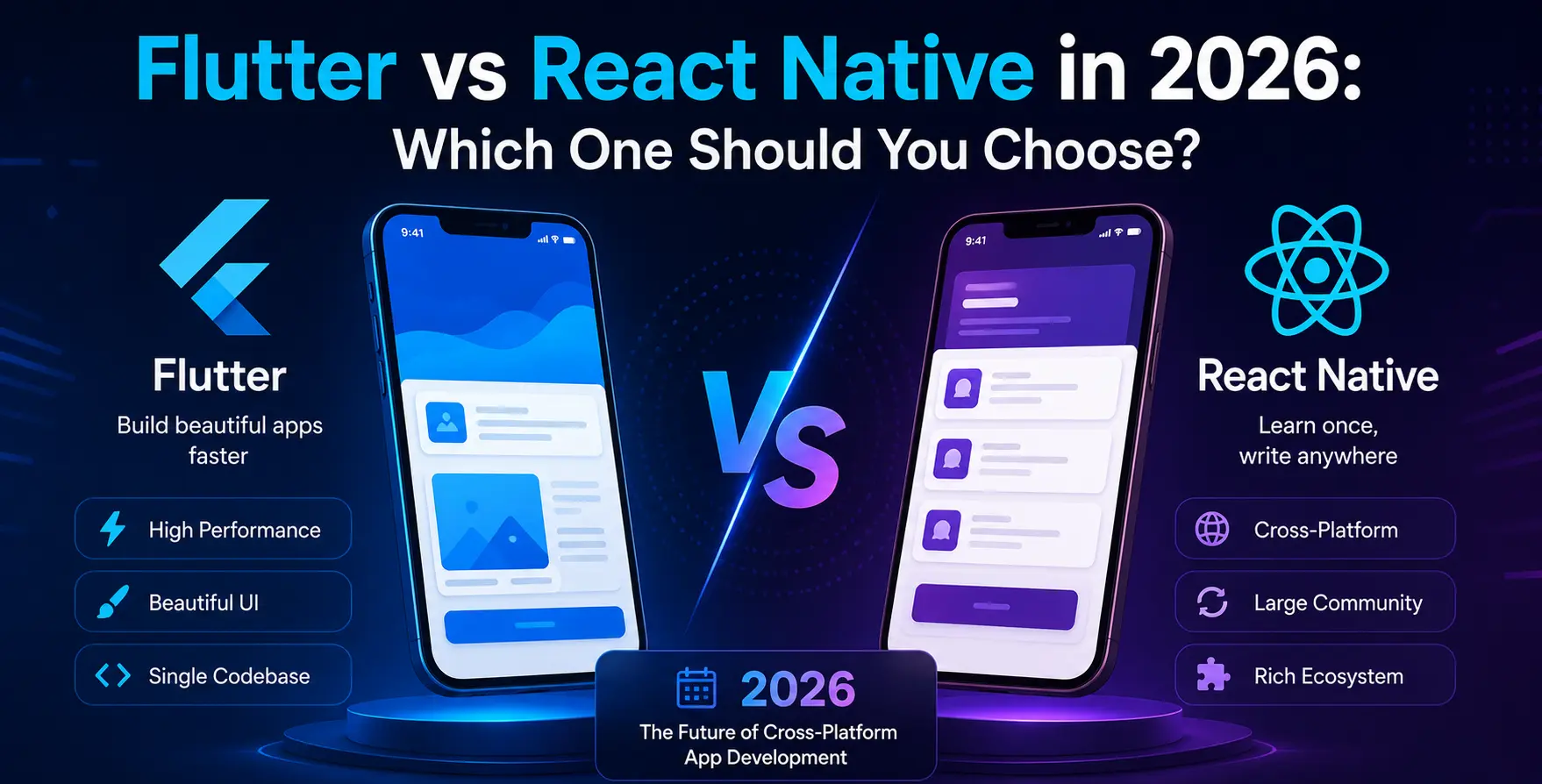
When it comes to performance, Flutter vs React Native is a crucial comparison. Flutter uses a custom rendering engine, which provides better performance and faster rendering.
React Native, on the other hand, uses a bridge to communicate with native components, which can lead to slower performance.
- Flutter: faster rendering and better performance
- React Native: slower performance due to bridge communication
Key Features of Flutter
Flutter has several key features that make it a popular choice for mobile app development. Some of these features include:
- Hot reload feature for fast development
- Rich set of pre-built widgets
- Strong focus on user experience
- Cross-platform compatibility
- Fast and efficient rendering
Key Features of React Native
React Native also has several key features that make it a popular choice for mobile app development. Some of these features include:
- Wide range of third-party libraries
- Large community of developers
- Flexibility and ease of use
- Cross-platform compatibility
- Fast development cycle
Choosing Between Flutter and React Native
Choosing between Flutter and React Native depends on your specific needs and goals. If you prioritize performance and fast development, Flutter may be the better choice.
If you prioritize flexibility and ease of use, React Native may be the better choice.
- Flutter: better for high-performance apps
- React Native: better for complex and customizable apps
Real-World Examples of Flutter and React Native
Both Flutter and React Native have been used in real-world applications. Some examples of Flutter apps include Google Ads and Alibaba.
Some examples of React Native apps include Facebook and Instagram.
- Flutter: Google Ads, Alibaba
- React Native: Facebook, Instagram
Challenges in Flutter and React Native Development
Both Flutter and React Native have their own set of challenges. Some of the challenges in Flutter development include the steep learning curve of Dart.
Some of the challenges in React Native development include the complexity of native module integration.
- Flutter: steep learning curve of Dart
- React Native: complexity of native module integration
Future of Mobile App Development
The future of mobile app development is rapidly evolving. New technologies and frameworks are emerging, and the demand for skilled developers is increasing.
Both Flutter and React Native are well-positioned to play a major role in the future of mobile app development.
Best Practices for Flutter and React Native Development
Following best practices is crucial for successful Flutter and React Native development. Some best practices include:
- Using a consistent coding style
- Testing and debugging thoroughly
- Optimizing performance and battery life
- Using secure and reliable storage
- Following platform guidelines and conventions
Conclusion
In conclusion, Flutter vs React Native is a crucial comparison for mobile app developers. Both frameworks have their strengths and weaknesses, and the choice between them depends on specific needs and goals.
By understanding the performance, features, and real-world examples of each framework, developers can make an informed decision and build high-quality mobile apps.


 In collaboration with